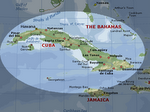
MARSHALL, Minn. — Kari Howe, regional economic development program specialist with the Minnesota Department of Employment and Economic Development, was part of the Minnesota Agriculture and Rural Leadership program international mission to Cuba Feb. 15 - 25
Howe of Bemidji was a member of the 36-person MARL Class V delegation that departed from Minneapolis for Miami on Feb. 15.
Florida provided a preamble for the group of the culture and agriculture it would see in Cuba. The group spent Monday and Tuesday in Florida to learn about U.S. agricultural industries comparable to those it would see in Cuba.
The charter flight from Miami to Havana departed on Wednesday.
“This was a valuable experience for MARL participants,” said Tim Alcorn, MARL executive director. “Our time in Florida was a great primer for the Cuba agriculture we saw. We left Cuba with a far better feel for the economic issues facing the communist country as a result of the U.S. embargo that has been in place since the Cuban revolution in 1959.”
MARL program leader Mike Liepold said the current state of U.S. and Cuban relations impacted the trip. “It was like being in time travel. There was 100 years of technology differences living side by side everywhere, Liepold said.
“There were 1950 Chevys all over. We saw 20,000-acre farms, next to people working fields with oxen. We saw homes constructed with marble interiors and basic one-room houses in the country. We met with government farm managers and workers as well as a few independent growers. It was meeting with the Cuban people that we found especially memorable. The trip was truly a life-changing experience,” he said.
The group’s agenda during its nine days in Cuba included stops that helped participants understand the country’s food distribution systems, both the staple commodity grain markets for the ration stores and the higher value restaurant and tourist food markets. Both are current markets for Minnesota farmers. Estimates place the growth potential of the market at over $1 billion if the current travel ban were ended.
Examples of food distribution system stops include a farmers’ market where Cubans with higher incomes purchase food to supplement the rations of staples provided by the government. Also, a grocery much like a U.S. supermarket, but with far more limited types and quantities of food available, including processed and frozen foods. The market and store were busy, but only a small percentage of Cubans can afford to purchase food at either business.
The group also saw portions of the Cuban agricultural production systems, including a state-run farm called Finca Cimex, where vegetables and ornamental plants, primarily cactus, are grown.
The time spent learning about the cane sugar industry in Florida proved beneficial as a stop was made at a closed cane sugar mill. Nearly half of the mills in Cuba were shuttered from 2000–2009. While the local mill was closed, cane is still produced in the area for processing at a different mill 200 kilometers away.
The Cuban market also holds good potential for tourism, which translates into demand for higher quality foods, particularly dairy and meat products that Minnesota could provide in the future. Cuban restaurant menus already heavily feature pork, chicken and cheese, but good quality beef and dairy products are in short supply. The proximity to Cuba gives the U.S. a natural advantage in the delivery of fresh, high quality food products simply because of transportation advantages.
However, the barrier to shipping beef, dairy, and many other products for that matter, into Cuba is price. The route that many products must take to get to Cuba under the U.S. trade embargo makes them extremely expensive, which places U.S. products at a competitive disadvantage when trying to serve the tourists to the country, who come primarily from Canada and Europe, with a smaller percentage from Mexico and South American countries.
The state of relations with Cuba is an ongoing political process in the U.S. Congress. While the MARL group was in Cuba, U.S. Rep. Collin Peterson, chairman of the U.S. House Agriculture Committee, was preparing legislation for introduction to make the sale of agricultural products to Cuba easier. Also included in the bill is language to ease the tight travel restrictions that prevent most U.S. citizens from being allowed to travel to Cuba.
The MARL program is a public-private partnership. Southwest Minnesota State University administers it and the University of Minnesota Extension coordinates the curriculum. The program is privately funded. Class members pay a participation fee, but the majority of funding comes from contributions from private sector associations, organizations, businesses, corporations, foundations, and individuals provide the majority of the funds to operate the program.
Two-thirds of the participants are agricultural producers and the other third are agribusiness people and other types of rural leaders.
http://www.bemidjipioneer.com/event/article/id/100016621/
Sunday, March 7, 2010


Thursday, February 25, 2010
H.R. 4645 Travel Restriction Reform and Export Enhancement Act
Travel Restriction Reform and Export Enhancement Act (Introduced in House)
HR 4645 IH
111th CONGRESS
2d Session
H. R. 4645
To remove obstacles to legal sales of United States agricultural commodities to Cuba and to end travel restrictions on all Americans to Cuba.
IN THE HOUSE OF REPRESENTATIVES
February 23, 2010
Mr. PETERSON (for himself, Mr. MORAN of Kansas, Ms. DELAURO, Mrs. EMERSON, Mr. DELAHUNT, Mr. FLAKE, Mr. MCGOVERN, Mr. BERMAN, Mr. BERRY, Ms. EDDIE BERNICE JOHNSON of Texas, Mr. CHILDERS, Mr. MINNICK, Mr. BOSWELL, Ms. HERSETH SANDLIN, Mr. SCOTT of Georgia, Mr. MASSA, Mr. BRIGHT, Mr. ELLSWORTH, Mr. HOLDEN, Mr. KAGEN, Mr. SNYDER, Mr. POMEROY, Mr. KIND, Mr. DAVIS of Tennessee, Mr. BOUSTANY, Mr. COSTA, Mr. BISHOP of Georgia, Mr. ROSS, Mr. TANNER, Mr. JOHNSON of Illinois, Mr. RYAN of Ohio, Mr. HINCHEY, Ms. LEE of California, and Mr. BOUCHER) introduced the following bill; which was referred to the Committee on Foreign Affairs, and in addition to the Committees on Agriculture and Financial Services, for a period to be subsequently determined by the Speaker, in each case for consideration of such provisions as fall within the jurisdiction of the committee concerned
A BILL
To remove obstacles to legal sales of United States agricultural commodities to Cuba and to end travel restrictions on all Americans to Cuba.
Be it enacted by the Senate and House of Representatives of the United States of America in Congress assembled,
SECTION 1. SHORT TITLE.
This Act may be cited as the `Travel Restriction Reform and Export Enhancement Act'.
SEC. 2. TRAVEL TO CUBA.
(a) In General- On and after the date of the enactment of this Act, and subject to subsection (b)--
(1) the President may not regulate or prohibit, directly or indirectly, travel to or from Cuba by United States citizens or lawful permanent residents, or any of the transactions incident to such travel; and
(2) any regulation in effect on such date of enactment that regulates or prohibits travel to or from Cuba by United States citizens or lawful permanent residents or transactions incident to such travel shall cease to have any force or effect.
(b) Exceptions- Subsection (a) shall not apply in a case in which the United States is at war with Cuba, armed hostilities between the two countries are in progress, or there is imminent danger to the public health or the physical safety of United States travelers.
(c) Applicability- This section applies to actions taken by the President before the date of the enactment of this Act that are in effect on such date of enactment, and to actions taken on or after such date.
(d) Inapplicability of Other Provisions- The provisions of this section apply notwithstanding section 102(h) of the Cuban Liberty and Democratic Solidarity (LIBERTAD) Act of 1996 (22 U.S.C. 6032(h)) and section 910(b) of the Trade Sanctions Reform and Export Enhancement Act of 2000 (22 U.S.C. 7210(b)).
SEC. 3. CLARIFICATION OF PAYMENT TERMS UNDER THE TRADE SANCTIONS REFORM AND EXPORT ENHANCEMENT ACT OF 2000.
Section 908(b)(4) of the Trade Sanctions Reform and Export Enhancement Act of 2000 (22 U.S.C. 7207(b)(4)) is amended--
(1) in subparagraph (B), by striking `and' at the end;
(2) in subparagraph (C), by striking the period at the end and inserting `; and'; and
(3) by adding at the end the following:
`(D) the term `payment of cash in advance' means, notwithstanding any other provision of law, the payment by the purchaser of an agricultural commodity or product and the receipt of such payment by the seller prior to--
`(i) the transfer of title of such commodity or product to the purchaser; and
`(ii) the release of control of such commodity or product to the purchaser.'.
SEC. 4. AUTHORIZATION OF DIRECT TRANSFERS BETWEEN CUBAN AND UNITED STATES FINANCIAL INSTITUTIONS UNDER THE TRADE SANCTIONS REFORM AND EXPORT ENHANCEMENT ACT OF 2000.
Notwithstanding any other provision of law, the President may not restrict direct transfers from a Cuban financial institution to a United States financial institution executed in payment for a product authorized for sale under the Trade Sanctions Reform and Export Enhancement Act of 2000 (22 U.S.C. 7201 et seq.).
HR 4645 IH
111th CONGRESS
2d Session
H. R. 4645
To remove obstacles to legal sales of United States agricultural commodities to Cuba and to end travel restrictions on all Americans to Cuba.
IN THE HOUSE OF REPRESENTATIVES
February 23, 2010
Mr. PETERSON (for himself, Mr. MORAN of Kansas, Ms. DELAURO, Mrs. EMERSON, Mr. DELAHUNT, Mr. FLAKE, Mr. MCGOVERN, Mr. BERMAN, Mr. BERRY, Ms. EDDIE BERNICE JOHNSON of Texas, Mr. CHILDERS, Mr. MINNICK, Mr. BOSWELL, Ms. HERSETH SANDLIN, Mr. SCOTT of Georgia, Mr. MASSA, Mr. BRIGHT, Mr. ELLSWORTH, Mr. HOLDEN, Mr. KAGEN, Mr. SNYDER, Mr. POMEROY, Mr. KIND, Mr. DAVIS of Tennessee, Mr. BOUSTANY, Mr. COSTA, Mr. BISHOP of Georgia, Mr. ROSS, Mr. TANNER, Mr. JOHNSON of Illinois, Mr. RYAN of Ohio, Mr. HINCHEY, Ms. LEE of California, and Mr. BOUCHER) introduced the following bill; which was referred to the Committee on Foreign Affairs, and in addition to the Committees on Agriculture and Financial Services, for a period to be subsequently determined by the Speaker, in each case for consideration of such provisions as fall within the jurisdiction of the committee concerned
A BILL
To remove obstacles to legal sales of United States agricultural commodities to Cuba and to end travel restrictions on all Americans to Cuba.
Be it enacted by the Senate and House of Representatives of the United States of America in Congress assembled,
SECTION 1. SHORT TITLE.
This Act may be cited as the `Travel Restriction Reform and Export Enhancement Act'.
SEC. 2. TRAVEL TO CUBA.
(a) In General- On and after the date of the enactment of this Act, and subject to subsection (b)--
(1) the President may not regulate or prohibit, directly or indirectly, travel to or from Cuba by United States citizens or lawful permanent residents, or any of the transactions incident to such travel; and
(2) any regulation in effect on such date of enactment that regulates or prohibits travel to or from Cuba by United States citizens or lawful permanent residents or transactions incident to such travel shall cease to have any force or effect.
(b) Exceptions- Subsection (a) shall not apply in a case in which the United States is at war with Cuba, armed hostilities between the two countries are in progress, or there is imminent danger to the public health or the physical safety of United States travelers.
(c) Applicability- This section applies to actions taken by the President before the date of the enactment of this Act that are in effect on such date of enactment, and to actions taken on or after such date.
(d) Inapplicability of Other Provisions- The provisions of this section apply notwithstanding section 102(h) of the Cuban Liberty and Democratic Solidarity (LIBERTAD) Act of 1996 (22 U.S.C. 6032(h)) and section 910(b) of the Trade Sanctions Reform and Export Enhancement Act of 2000 (22 U.S.C. 7210(b)).
SEC. 3. CLARIFICATION OF PAYMENT TERMS UNDER THE TRADE SANCTIONS REFORM AND EXPORT ENHANCEMENT ACT OF 2000.
Section 908(b)(4) of the Trade Sanctions Reform and Export Enhancement Act of 2000 (22 U.S.C. 7207(b)(4)) is amended--
(1) in subparagraph (B), by striking `and' at the end;
(2) in subparagraph (C), by striking the period at the end and inserting `; and'; and
(3) by adding at the end the following:
`(D) the term `payment of cash in advance' means, notwithstanding any other provision of law, the payment by the purchaser of an agricultural commodity or product and the receipt of such payment by the seller prior to--
`(i) the transfer of title of such commodity or product to the purchaser; and
`(ii) the release of control of such commodity or product to the purchaser.'.
SEC. 4. AUTHORIZATION OF DIRECT TRANSFERS BETWEEN CUBAN AND UNITED STATES FINANCIAL INSTITUTIONS UNDER THE TRADE SANCTIONS REFORM AND EXPORT ENHANCEMENT ACT OF 2000.
Notwithstanding any other provision of law, the President may not restrict direct transfers from a Cuban financial institution to a United States financial institution executed in payment for a product authorized for sale under the Trade Sanctions Reform and Export Enhancement Act of 2000 (22 U.S.C. 7201 et seq.).
Tuesday, February 9, 2010
Is travel legislation in trouble?
Cuba travel bill buried in political agenda
1:05am EST
By Esteban Israel
WASHINGTON (Reuters) - A bipartisan drive in Congress to end a Cold War-era travel ban on Cuba was buried during the healthcare reform debate but its supporters hope to dig it out this year.
Sponsors of two bills allowing Americans to travel freely to Cuba, introduced last year in the Senate and the House of Representatives, say a flood of dollars from the pro-embargo Cuban-American lobby might also have played a part.
"Support has not waned but it's clear that the debate over healthcare has consumed the first year of the (Obama) administration and has had a similar impact in terms of congressional action," Representative Bill Delahunt, a Democrat and one of the authors of the bill, told Reuters.
Co-sponsor Jeff Flake, a Republican representative, said the votes were there to pass the Freedom to Travel to Cuba Act this year but the Democratic majority in the House was divided over whether to take it to the floor for a vote.
"This is not an issue that is at the top of their agenda or anywhere close and it's also an issue that splits part of their caucus," he said. "I still think it could happen this year."
The bill has 178 backers in the House, 40 votes short of the 218 needed but still a "big number," Flake said.
If passed, the act would be a bold step toward ending the 48-year U.S. trade embargo against Cuba and likely would flood the communist-run Caribbean island with American tourists attracted by its beaches and revolutionary mystique.
The U.S. National Tour Association estimates at least 850,000 Americans would fly to Cuba, just 90 miles off the Florida coast, in the first year after sanctions were lifted. U.S. and Cuban tour operators will meet next month in the Mexican resort of Cancun to draw up plans for that day.
The Cuba travel bills were introduced last year as President Barack Obama promised to "recast" troubled relations with Cuba. But the expectations raised when Obama lifted travel restrictions for Cuba-Americans are now all but gone.
"MONEY TALKS"
The explanation may lay, in part, in a strategy change by Cuban-Americans opposed to the Castro leadership. In the last few years, they have given Democratic lawmakers generous donations in the hopes of preventing any relaxation of the U.S. trade embargo.
Public Campaign, a non-partisan group, estimated hardline Cuban-Americans gave more than $10 million in contributions to politicians since 2004.
Mauricio Claver-Carone, director of the pro-embargo U.S.-Cuba Democracy Public Action Committee, sees a clear link between those money flows and the apparent stall of the bills.
"There is undoubtedly a connection," he told Reuters. "One of our goals was to break the political barrier and make Cuba policy a bipartisan issue."
U.S. tourism would be a life-line for the cash-strapped Cuban government, he said, allowing it to almost double the island's gross domestic product in the first year.
Divisions among Democrats emerged in November when 53 representatives signed a letter against any changes in the U.S. Cuba policy based on human rights concerns.
Public Campaign said 51 of the 53 had received a total of more than $850,000 in contributions from the U.S.-Cuba Democracy Public Action Committee and other pro-embargo donors.
"The letter, I think, was a strong indication the votes are not there," Representative Debbie Wasserman Schultz, a Democrat from Florida who gathered the signatures, told Reuters.
"I have about 20 more Democrats who didn't sign the letter but would not vote to lift the travel ban. That, combined with the overwhelming majority of Republicans, indicates the votes are just not there."
Supporters of the bill acknowledge the Public Action Committee has been effective.
"They've always had money and, in Washington, money talks," said Delahunt.
BACKGROUND NOISE
Supporters of the bill play down the impact of recent rifts between Washington and Havana, notably Cuba's detention last December of a U.S. contractor accused of distributing illegal satellite communications gear.
Cuban President Raul Castro, who took over from his ailing older brother Fidel in 2008, said the contractor incident showed Obama was committed to destroying the island's socialist system, just as his 10 predecessors were.
The renewed tension was reflected in The Washington Post's editorial page, where a recent piece said the travel bill should be frozen until Cuba frees the detained contractor.
But supporters called it "background noise" and said the act was not so much about rewarding the Cuban government as guaranteeing the right of Americans to travel.
Senator Byron Dorgan, a Democrat whose bill has 38 co-sponsors, said the current policy only punishes Americans.
"This describes the goofy position we put ourselves in by inhibiting the right of the American people to travel," Dorgan said. "Do you think there will be a ghost of a chance of saying we are going to now restrict the right of the American people to travel to China? You will be run out of town."
(Editing by John O'Callaghan)
http://www.reuters.com/article/idUSTRE6180PP20100209
My comment:
The key to success in Congress is the leadership role of the President. He needs to reverse the Bush Administration's crippling restrictions on educational, cultural, religious and humanitarian people-to-people travel. He should also make clear that he is prepared to sign legislation to end all travel restrictions.
John McAuliff
Fund for Reconciliation and Development
1:05am EST
By Esteban Israel
WASHINGTON (Reuters) - A bipartisan drive in Congress to end a Cold War-era travel ban on Cuba was buried during the healthcare reform debate but its supporters hope to dig it out this year.
Sponsors of two bills allowing Americans to travel freely to Cuba, introduced last year in the Senate and the House of Representatives, say a flood of dollars from the pro-embargo Cuban-American lobby might also have played a part.
"Support has not waned but it's clear that the debate over healthcare has consumed the first year of the (Obama) administration and has had a similar impact in terms of congressional action," Representative Bill Delahunt, a Democrat and one of the authors of the bill, told Reuters.
Co-sponsor Jeff Flake, a Republican representative, said the votes were there to pass the Freedom to Travel to Cuba Act this year but the Democratic majority in the House was divided over whether to take it to the floor for a vote.
"This is not an issue that is at the top of their agenda or anywhere close and it's also an issue that splits part of their caucus," he said. "I still think it could happen this year."
The bill has 178 backers in the House, 40 votes short of the 218 needed but still a "big number," Flake said.
If passed, the act would be a bold step toward ending the 48-year U.S. trade embargo against Cuba and likely would flood the communist-run Caribbean island with American tourists attracted by its beaches and revolutionary mystique.
The U.S. National Tour Association estimates at least 850,000 Americans would fly to Cuba, just 90 miles off the Florida coast, in the first year after sanctions were lifted. U.S. and Cuban tour operators will meet next month in the Mexican resort of Cancun to draw up plans for that day.
The Cuba travel bills were introduced last year as President Barack Obama promised to "recast" troubled relations with Cuba. But the expectations raised when Obama lifted travel restrictions for Cuba-Americans are now all but gone.
"MONEY TALKS"
The explanation may lay, in part, in a strategy change by Cuban-Americans opposed to the Castro leadership. In the last few years, they have given Democratic lawmakers generous donations in the hopes of preventing any relaxation of the U.S. trade embargo.
Public Campaign, a non-partisan group, estimated hardline Cuban-Americans gave more than $10 million in contributions to politicians since 2004.
Mauricio Claver-Carone, director of the pro-embargo U.S.-Cuba Democracy Public Action Committee, sees a clear link between those money flows and the apparent stall of the bills.
"There is undoubtedly a connection," he told Reuters. "One of our goals was to break the political barrier and make Cuba policy a bipartisan issue."
U.S. tourism would be a life-line for the cash-strapped Cuban government, he said, allowing it to almost double the island's gross domestic product in the first year.
Divisions among Democrats emerged in November when 53 representatives signed a letter against any changes in the U.S. Cuba policy based on human rights concerns.
Public Campaign said 51 of the 53 had received a total of more than $850,000 in contributions from the U.S.-Cuba Democracy Public Action Committee and other pro-embargo donors.
"The letter, I think, was a strong indication the votes are not there," Representative Debbie Wasserman Schultz, a Democrat from Florida who gathered the signatures, told Reuters.
"I have about 20 more Democrats who didn't sign the letter but would not vote to lift the travel ban. That, combined with the overwhelming majority of Republicans, indicates the votes are just not there."
Supporters of the bill acknowledge the Public Action Committee has been effective.
"They've always had money and, in Washington, money talks," said Delahunt.
BACKGROUND NOISE
Supporters of the bill play down the impact of recent rifts between Washington and Havana, notably Cuba's detention last December of a U.S. contractor accused of distributing illegal satellite communications gear.
Cuban President Raul Castro, who took over from his ailing older brother Fidel in 2008, said the contractor incident showed Obama was committed to destroying the island's socialist system, just as his 10 predecessors were.
The renewed tension was reflected in The Washington Post's editorial page, where a recent piece said the travel bill should be frozen until Cuba frees the detained contractor.
But supporters called it "background noise" and said the act was not so much about rewarding the Cuban government as guaranteeing the right of Americans to travel.
Senator Byron Dorgan, a Democrat whose bill has 38 co-sponsors, said the current policy only punishes Americans.
"This describes the goofy position we put ourselves in by inhibiting the right of the American people to travel," Dorgan said. "Do you think there will be a ghost of a chance of saying we are going to now restrict the right of the American people to travel to China? You will be run out of town."
(Editing by John O'Callaghan)
http://www.reuters.com/article/idUSTRE6180PP20100209
My comment:
The key to success in Congress is the leadership role of the President. He needs to reverse the Bush Administration's crippling restrictions on educational, cultural, religious and humanitarian people-to-people travel. He should also make clear that he is prepared to sign legislation to end all travel restrictions.
John McAuliff
Fund for Reconciliation and Development
Thursday, January 14, 2010
Questions about detained DAI subcontractor
The subcontractor is named, but little else is clear
La Alborada - January 13
It has taken a long time, but finally the subcontractor has been named. He is Alan P. Gross, head of Joint Business Development Center (JBDC) in the Chevy Chase suburb of Washington, D.C.
The New York Times and the Washington Post both covered the news yesterday in reports not from wire services but by respective teams of assigned staff writers, each including a team member in Mexico City. The Times gave as its primary source unnamed "American officials"; the Post cited "former colleagues and other sources." It sounds like the State Department gave selected information to the two chosen newspapers, but not for attribution, and did so in Mexico City --not in New York and Washington-- for whatever reasons.
The reports suggested the understanding that readers should reach. That is, essentially, that Gross is a social worker who likes to help people in other countries, and would certainly not be a government agent. The Times transmitted the unofficial official story this way: "American officials say that Mr. Gross had gone to Cuba as part of a United States government program and was providing encouragement and financial assistance to religious nonprofit groups...[the unnamed officials] flatly dispute any allegations that he is a spy."
The Times cited also unnamed people who know Gross: "Mr. Gross has visited Cuba several times, delivering computer and satellite equipment to three Jewish community groups, according to people with knowledge of his work...The people who know about his work, who spoke on the condition of anonymity because they were not authorized to comment on the matter, said Mr. Gross was sent to research how the groups were making use of the equipment he had previously distributed to them."
This information contradicts the version of the American officials. While the officials talked about "encouragement and financial assistance," people "with knowledge of his work" said that Gross was sent to research how groups were making use of the computer and satellite equipment he had previously delivered. And the latter statement, of course, contradicts earlier assertions from the contracting company, DAI, that Gross was in Havana handing out equipment to underserved Cubans. As we point out below, all of this is contradicted in turn by the Post's account.
The Times did cite someone by name, a friend, who offered that "The Alan I know is someone who is concerned only about helping improve the human condition, not meddling in people’s politics." But another unidentified source, an unnamed "aide to a Democratic Senator," opined that "This is the kind of thing we do all over the world when we are trying to reach people their governments don’t want us to reach. It’s naïve to think that if we asked Cuba for permission, we’d get it."
The Post, for its part, cited its own unidentified sources to the effect that Gross was "working on a U.S. government project to help the island's Jewish community access the Internet." Matching the Times, it also cited an acquaintance's opinion that Gross was innocent: "It was probably pure naiveness, innocence -- not seeing anything wrong with what he was doing...He's definitely not a shrewd, calculating person. He's someone who genuinely gets into situations because he thinks he can help."
The Post's unnamed "sources familiar with Gross' work" explained that "he was helping Cubans download music, access Wikipedia and read the Encyclopaedia Britannica, which was provided on flash drives. The project is also aimed at helping members of the small Cuban Jewish community communicate among themselves and with Jews overseas," activities different from those mentioned by all of the other sources cited. The president of the contracting corporation, Development Alternatives, said that Gross "was trying to facilitate communications in 'a nonviolent, non-dissident religious organization."
Given the kaleidoscopic series of opinions, we looked on Internet for information on Gross' corporation. A direct link to the company was inactive, but on a page in cache, dated November 24, 2009, the company had this to say about itself:
The World Is Your Marketplace!
JBDC provides practical 21st century solutions to business, government, associations, and humanitarian aid organizations, globally. JBDC brings three decades of experience from completing successful results-oriented projects in more than 50 countries, with expertise in:
1. Economic and Community Development
2. New Media Technical Implementation Strategies
3. Rural Internet Access and Intranet Development
4. Global Managed VSAT Services
5. Business and ICT Development Services
6. Trade Facilitation
JBDC is described elsewhere as "a 501(c)(3) non-profit corporation that fosters economic strength and independence of emerging free-market business communities," and, more specifically, in these terms:
JBDC brings 21st century solutions to business, associations, government and aid organizations in emerging markets, globally.
JBDC is dedicated to designing, funding and implementing programs to advance economic and business development locally and globally. In recent years JBDC has supported Internet connectivity in locations where there was little or no access. In the past two years JBDC has installed more than 60 satellite terminals, bringing Internet access, email, VoIP, fax and the like to remote locations in Iraq, Afghanistan, Armenia, and Kuwait.
The site also lists the following areas of operation for JDBC: "Africa, Caribbean, Latin America, Middle East, Fr. Soviet Union." The areas of work are listed on another site as "Iraq, Afghanistan, Central and Eastern Europe, Former Soviet Union, Middle East".
The latter site, with information dated 2005, provides the following data, which highlight the underlying tension between JDBC's status as a tax-exempt non-profit organization helping people to communicate and its market-driven and business-oriented mission:
Chief Executive Profile
Mr. Gross is founder and executive director of JBDC. He has worked in nearly 60 countries in areas of economic and business development, trade and investment, market development, institutional monitoring and evaluation, and organizational development.
Mission
Advance the business, economic and independent development of emerging communities as they progress toward free-market economies and enterprise systems. Foster the development of private enterprise in emerging markets by using reliable, results-oriented business practices.
Programs
These are to be accomplished by infusing human, technical and financial capital in "next phase" businesses. JBDC sponsors MicroNet, providing broadband internet access for microenterprises in remote locations, globally. JBDC collaborates with private industry to address development issues with 21st century solutions.
Accomplishments for Fiscal Year Ending December 31, 2005
1. Established new VSAT installations in Afghanistan, Armenia, Iraq and Kuwait.
2. Continues to support MicroNet activities and USAID-funded IQCs, such as RAISE PLUS and AMAP.
3. Continued support for humanitarian activities in Cuba, Palestine and Israel.
Objectives for Fiscal Year Beginning January 1, 2006
1. Secure new funding as appropriate to accomplish mission.
2. Expand operations in new target countries.
3. Manage ongoing activities worldwide.
For calendar year 2004, the company reported revenue of $405,419 in Program Services (Contributions and Government Grants were zero). Apparently, its micro-clients were able to come up with almost half a million dollars collectively to pay for the company's services that year.
In sum, we now know the name of the subcontractor, but not what his company really does, although the company itself says that it focuses on creating access to Internet through its own satellite network. Mr. Gross is described as a social worker, but his small charitable company, ranging worldwide, advances expert market-driven "solutions." Information published by the Times and the Post is contradictory internally to the respective reports and between them, as well as compared to what the company that contracted him says. "American officials" were a source for both newspaper stories, but declined to identify themselves.
Surely, there is more to this story.
We still have not heard from Cuba. New and contradictory information from that country, but from named officials, can be expected.
La Alborada - January 13
It has taken a long time, but finally the subcontractor has been named. He is Alan P. Gross, head of Joint Business Development Center (JBDC) in the Chevy Chase suburb of Washington, D.C.
The New York Times and the Washington Post both covered the news yesterday in reports not from wire services but by respective teams of assigned staff writers, each including a team member in Mexico City. The Times gave as its primary source unnamed "American officials"; the Post cited "former colleagues and other sources." It sounds like the State Department gave selected information to the two chosen newspapers, but not for attribution, and did so in Mexico City --not in New York and Washington-- for whatever reasons.
The reports suggested the understanding that readers should reach. That is, essentially, that Gross is a social worker who likes to help people in other countries, and would certainly not be a government agent. The Times transmitted the unofficial official story this way: "American officials say that Mr. Gross had gone to Cuba as part of a United States government program and was providing encouragement and financial assistance to religious nonprofit groups...[the unnamed officials] flatly dispute any allegations that he is a spy."
The Times cited also unnamed people who know Gross: "Mr. Gross has visited Cuba several times, delivering computer and satellite equipment to three Jewish community groups, according to people with knowledge of his work...The people who know about his work, who spoke on the condition of anonymity because they were not authorized to comment on the matter, said Mr. Gross was sent to research how the groups were making use of the equipment he had previously distributed to them."
This information contradicts the version of the American officials. While the officials talked about "encouragement and financial assistance," people "with knowledge of his work" said that Gross was sent to research how groups were making use of the computer and satellite equipment he had previously delivered. And the latter statement, of course, contradicts earlier assertions from the contracting company, DAI, that Gross was in Havana handing out equipment to underserved Cubans. As we point out below, all of this is contradicted in turn by the Post's account.
The Times did cite someone by name, a friend, who offered that "The Alan I know is someone who is concerned only about helping improve the human condition, not meddling in people’s politics." But another unidentified source, an unnamed "aide to a Democratic Senator," opined that "This is the kind of thing we do all over the world when we are trying to reach people their governments don’t want us to reach. It’s naïve to think that if we asked Cuba for permission, we’d get it."
The Post, for its part, cited its own unidentified sources to the effect that Gross was "working on a U.S. government project to help the island's Jewish community access the Internet." Matching the Times, it also cited an acquaintance's opinion that Gross was innocent: "It was probably pure naiveness, innocence -- not seeing anything wrong with what he was doing...He's definitely not a shrewd, calculating person. He's someone who genuinely gets into situations because he thinks he can help."
The Post's unnamed "sources familiar with Gross' work" explained that "he was helping Cubans download music, access Wikipedia and read the Encyclopaedia Britannica, which was provided on flash drives. The project is also aimed at helping members of the small Cuban Jewish community communicate among themselves and with Jews overseas," activities different from those mentioned by all of the other sources cited. The president of the contracting corporation, Development Alternatives, said that Gross "was trying to facilitate communications in 'a nonviolent, non-dissident religious organization."
Given the kaleidoscopic series of opinions, we looked on Internet for information on Gross' corporation. A direct link to the company was inactive, but on a page in cache, dated November 24, 2009, the company had this to say about itself:
The World Is Your Marketplace!
JBDC provides practical 21st century solutions to business, government, associations, and humanitarian aid organizations, globally. JBDC brings three decades of experience from completing successful results-oriented projects in more than 50 countries, with expertise in:
1. Economic and Community Development
2. New Media Technical Implementation Strategies
3. Rural Internet Access and Intranet Development
4. Global Managed VSAT Services
5. Business and ICT Development Services
6. Trade Facilitation
JBDC is described elsewhere as "a 501(c)(3) non-profit corporation that fosters economic strength and independence of emerging free-market business communities," and, more specifically, in these terms:
JBDC brings 21st century solutions to business, associations, government and aid organizations in emerging markets, globally.
JBDC is dedicated to designing, funding and implementing programs to advance economic and business development locally and globally. In recent years JBDC has supported Internet connectivity in locations where there was little or no access. In the past two years JBDC has installed more than 60 satellite terminals, bringing Internet access, email, VoIP, fax and the like to remote locations in Iraq, Afghanistan, Armenia, and Kuwait.
The site also lists the following areas of operation for JDBC: "Africa, Caribbean, Latin America, Middle East, Fr. Soviet Union." The areas of work are listed on another site as "Iraq, Afghanistan, Central and Eastern Europe, Former Soviet Union, Middle East".
The latter site, with information dated 2005, provides the following data, which highlight the underlying tension between JDBC's status as a tax-exempt non-profit organization helping people to communicate and its market-driven and business-oriented mission:
Chief Executive Profile
Mr. Gross is founder and executive director of JBDC. He has worked in nearly 60 countries in areas of economic and business development, trade and investment, market development, institutional monitoring and evaluation, and organizational development.
Mission
Advance the business, economic and independent development of emerging communities as they progress toward free-market economies and enterprise systems. Foster the development of private enterprise in emerging markets by using reliable, results-oriented business practices.
Programs
These are to be accomplished by infusing human, technical and financial capital in "next phase" businesses. JBDC sponsors MicroNet, providing broadband internet access for microenterprises in remote locations, globally. JBDC collaborates with private industry to address development issues with 21st century solutions.
Accomplishments for Fiscal Year Ending December 31, 2005
1. Established new VSAT installations in Afghanistan, Armenia, Iraq and Kuwait.
2. Continues to support MicroNet activities and USAID-funded IQCs, such as RAISE PLUS and AMAP.
3. Continued support for humanitarian activities in Cuba, Palestine and Israel.
Objectives for Fiscal Year Beginning January 1, 2006
1. Secure new funding as appropriate to accomplish mission.
2. Expand operations in new target countries.
3. Manage ongoing activities worldwide.
For calendar year 2004, the company reported revenue of $405,419 in Program Services (Contributions and Government Grants were zero). Apparently, its micro-clients were able to come up with almost half a million dollars collectively to pay for the company's services that year.
In sum, we now know the name of the subcontractor, but not what his company really does, although the company itself says that it focuses on creating access to Internet through its own satellite network. Mr. Gross is described as a social worker, but his small charitable company, ranging worldwide, advances expert market-driven "solutions." Information published by the Times and the Post is contradictory internally to the respective reports and between them, as well as compared to what the company that contracted him says. "American officials" were a source for both newspaper stories, but declined to identify themselves.
Surely, there is more to this story.
We still have not heard from Cuba. New and contradictory information from that country, but from named officials, can be expected.
Thursday, December 17, 2009
Legislation Will Ease Ag Exports
Bill should help exports to Cuba
Dec 16, 2009 9:37 AM, By David Bennett, Farm Press Editorial Staff
Under the leadership of Montana Sen. Max Baucus, chairman of the Senate Finance Committee, senators said the department’s interpretation of the phrase “payment of cash in advance” was incorrect and would, contrary to their intent, stymie trade.
Agriculture trade between the United States and Cuba is expected to increase under a provision inserted into the massive appropriations bill for fiscal year 2010.
The provision — Section 619 of H.R. 3288, the Consolidated Appropriations Act, 2010 — essentially explains how Congress intends the U.S. Treasury Department to interpret a key phrase in legislation passed earlier this year.
Under the leadership of Montana Sen. Max Baucus, chairman of the Senate Finance Committee, senators said the department’s interpretation of the phrase “payment of cash in advance” was incorrect and would, contrary to their intent, stymie trade.
“For the second year in a row, Congress has been very explicit in expressing its intentions to the Obama administration about U.S. agricultural trade with Cuba,” said Betsy Ward, USA Rice Federation president and CEO. “Though these directives have been single-year policies, we strongly support them for the ongoing momentum they provide to pass comprehensive U.S.-Cuba trade-and-travel legislation.”
As a measure of what’s at stake, USA Rice says Cuba is potentially a 400,000 to 600,000 ton-per-year market for U.S. rice.
With the blessing of the Obama administration and aimed at easing travel and trade with Cuba, Congress placed three items in the fiscal 2009 omnibus bill. Several of the items had to do with travel to Cuba and one concerned agriculture-related sales.
(For more, see Easing Cuban trade and travel.)
The Obama administration implemented the travel provisions in late summer.
The agriculture trade item wasn’t accepted as easily with the Treasury Department’s vow to continue rules put in by the Bush administration in 2005, requiring Cuba to pay for U.S. agricultural commodities prior to shipment through onerous, third-party transactions. With the newly inserted provision, Cuba will be able to wire payments directly to the United States while commodities are being shipped.
President Obama is expected to sign the bill Dec. 18.
Asked if the earlier objections by some Cuban-American politicians to weakening the trade embargo had eased, one rice industry insider says, “I don’t know they’ve quieted down. They haven’t changed their minds, at all. But this is being done (even though) the opposition is still there.”
Looking at the possibility of a massive increase in agricultural exports to Cuba, “hopefully there won’t be any more shadow dancing or tightrope walking in terms of how Treasury implements this language,” says the insider.
For more on Cuba/U.S. trade, see http://deltafarmpress.com/searchresults/?ord=d&terms=Cuba+trade.
e-mail: dbennett@farmpress.com
http://deltafarmpress.com/rice/rice-trade-1216/
Dec 16, 2009 9:37 AM, By David Bennett, Farm Press Editorial Staff
Under the leadership of Montana Sen. Max Baucus, chairman of the Senate Finance Committee, senators said the department’s interpretation of the phrase “payment of cash in advance” was incorrect and would, contrary to their intent, stymie trade.
Agriculture trade between the United States and Cuba is expected to increase under a provision inserted into the massive appropriations bill for fiscal year 2010.
The provision — Section 619 of H.R. 3288, the Consolidated Appropriations Act, 2010 — essentially explains how Congress intends the U.S. Treasury Department to interpret a key phrase in legislation passed earlier this year.
Under the leadership of Montana Sen. Max Baucus, chairman of the Senate Finance Committee, senators said the department’s interpretation of the phrase “payment of cash in advance” was incorrect and would, contrary to their intent, stymie trade.
“For the second year in a row, Congress has been very explicit in expressing its intentions to the Obama administration about U.S. agricultural trade with Cuba,” said Betsy Ward, USA Rice Federation president and CEO. “Though these directives have been single-year policies, we strongly support them for the ongoing momentum they provide to pass comprehensive U.S.-Cuba trade-and-travel legislation.”
As a measure of what’s at stake, USA Rice says Cuba is potentially a 400,000 to 600,000 ton-per-year market for U.S. rice.
With the blessing of the Obama administration and aimed at easing travel and trade with Cuba, Congress placed three items in the fiscal 2009 omnibus bill. Several of the items had to do with travel to Cuba and one concerned agriculture-related sales.
(For more, see Easing Cuban trade and travel.)
The Obama administration implemented the travel provisions in late summer.
The agriculture trade item wasn’t accepted as easily with the Treasury Department’s vow to continue rules put in by the Bush administration in 2005, requiring Cuba to pay for U.S. agricultural commodities prior to shipment through onerous, third-party transactions. With the newly inserted provision, Cuba will be able to wire payments directly to the United States while commodities are being shipped.
President Obama is expected to sign the bill Dec. 18.
Asked if the earlier objections by some Cuban-American politicians to weakening the trade embargo had eased, one rice industry insider says, “I don’t know they’ve quieted down. They haven’t changed their minds, at all. But this is being done (even though) the opposition is still there.”
Looking at the possibility of a massive increase in agricultural exports to Cuba, “hopefully there won’t be any more shadow dancing or tightrope walking in terms of how Treasury implements this language,” says the insider.
For more on Cuba/U.S. trade, see http://deltafarmpress.com/searchresults/?ord=d&terms=Cuba+trade.
e-mail: dbennett@farmpress.com
http://deltafarmpress.com/rice/rice-trade-1216/
Tuesday, December 8, 2009
Sen. John Kerry Op Ed Calls for Non-Tourist and All Travel
Open Cuba to U.S. travelers
By John Kerry, special to the St. Petersburg Times
Published Monday, December 7, 2009
For nearly 20 years after the fall of Saigon, the Vietnam War took a less bloody but equally hostile form. The United States and Vietnam had no diplomatic relations. Vietnamese assets were frozen. Trade was embargoed. But in 1995 the United States normalized relations with Vietnam. The Cold War had ended, and we even signed a trade deal with a country where 58,000 Americans had given their lives.
The result? A Vietnam that is less isolated, more market-oriented, and, yes, freer — though it has miles to go.
Yet when it comes to a small impoverished island 90 miles off the coast of Florida, we cling to a policy that has manifestly failed for nearly 50 years.
While our Cuba policy has largely stood still, reality has changed dramatically. Today, the Cuban "threat" is a faint shadow, change is afoot in the Cuban leadership, and — importantly — Cuban-Americans increasingly seek broad, far-reaching interaction across the Florida Straits.
We need a Cuba policy that looks forward, brings our strengths to bear, and builds on what works to help the Cuban people shape their country's future.
Democracy in Cuba rightly remains an American policy goal. But for 47 years, our embargo in the name of democracy has produced no democracy at all. Too often, our rhetoric and policies have actually furnished the Castro regime with an all-purpose excuse to draw attention away from its many shortcomings. We have played to Fidel Castro's strengths, not ours.
Fortunately, we know there is a different strategy that can succeed. The Clinton administration refocused policy around what matters: on the Cuban people, not the Castro brothers; on the future, not the past; and on America's long-term national interests, not the political expediencies of a given moment.
We improved cooperation on issues like migration and fighting drug trafficking. Family travel in both directions skyrocketed, and the regime's portrayal of us as the neighborhood bully was readily debunked. Americans helped repair a synagogue roof, and Baltimore Orioles players visiting Cuba for an exhibition game gave children bats and balls — gestures of American generosity.
As promised, the Obama administration has expanded licenses for Cuban-Americans — albeit only Cuban-Americans — to travel to Cuba. Controls on family remittances, gift parcels and telecommunications transactions have been loosened as well. Mid-level talks about immigration and postal relations have resumed. And we've turned off an Orwellian electronic billboard flashing political messages from our Interests Section in Havana.
These are positive steps, but they are only a start. So what comes next?
First, at a minimum, the administration should reinvigorate people-to-people relations. When announcing expanded family travel, the president said, "There are no better ambassadors for freedom than Cuban-Americans." True, but there are 299 million other Americans whose challenging minds, economic success, love for democracy and solid values make them proud ambassadors as well.
Second, the administration should review the programs that the Bush administration funded generously to substitute for people-to-people diplomacy.
The Senate Foreign Relations Committee is already considering how best to reform Radio and TV Martí. After 18 years TV Martí still has no significant audience in Cuba. U.S. civil society programs may have noble objectives, but we need to examine whether we're achieving them.
In addition, I am announcing my support for the Freedom to Travel to Cuba Act. Nowhere else in the world are Americans forbidden by their own government to travel. Americans who can get a visa are free to travel to Iran, Iraq, Sudan, and even North Korea. This act does not lift the embargo or normalize relations. It merely stops our government from regulating or prohibiting travel to or from Cuba, except in certain obviously inappropriate circumstances.
Free travel is also good policy inside Cuba. Visiting Europeans and Canadians have already had a significant impact by increasing the flow of information and hard currency to ordinary Cubans. Americans can be even greater catalysts of change.
Studies of change in Eastern and Central Europe find the more outside contact a country has, the more peaceful and durable its democratic transition. That's one reason why all of Cuba's major prodemocracy groups support free travel, as do longtime Castro critics like Freedom House and Human Rights Watch. A majority of Cuban-Americans have joined the rest of the country in supporting travel to Cuba by all American citizens.
Today, we have a choice: seek solace in old rhetoric, ignore change and resist it, or mold it and channel it into a new policy to help achieve our goals. After 50 years of failure, it's time to try something new.
John Kerry, D-Mass., is chairman of the Senate Foreign Relations Committee.
© 2009 • All Rights Reserved • St. Petersburg Times
http://www.tampabay.com/opinion/columns/open-cuba-to-us-travelers/1057098#
By John Kerry, special to the St. Petersburg Times
Published Monday, December 7, 2009
For nearly 20 years after the fall of Saigon, the Vietnam War took a less bloody but equally hostile form. The United States and Vietnam had no diplomatic relations. Vietnamese assets were frozen. Trade was embargoed. But in 1995 the United States normalized relations with Vietnam. The Cold War had ended, and we even signed a trade deal with a country where 58,000 Americans had given their lives.
The result? A Vietnam that is less isolated, more market-oriented, and, yes, freer — though it has miles to go.
Yet when it comes to a small impoverished island 90 miles off the coast of Florida, we cling to a policy that has manifestly failed for nearly 50 years.
While our Cuba policy has largely stood still, reality has changed dramatically. Today, the Cuban "threat" is a faint shadow, change is afoot in the Cuban leadership, and — importantly — Cuban-Americans increasingly seek broad, far-reaching interaction across the Florida Straits.
We need a Cuba policy that looks forward, brings our strengths to bear, and builds on what works to help the Cuban people shape their country's future.
Democracy in Cuba rightly remains an American policy goal. But for 47 years, our embargo in the name of democracy has produced no democracy at all. Too often, our rhetoric and policies have actually furnished the Castro regime with an all-purpose excuse to draw attention away from its many shortcomings. We have played to Fidel Castro's strengths, not ours.
Fortunately, we know there is a different strategy that can succeed. The Clinton administration refocused policy around what matters: on the Cuban people, not the Castro brothers; on the future, not the past; and on America's long-term national interests, not the political expediencies of a given moment.
We improved cooperation on issues like migration and fighting drug trafficking. Family travel in both directions skyrocketed, and the regime's portrayal of us as the neighborhood bully was readily debunked. Americans helped repair a synagogue roof, and Baltimore Orioles players visiting Cuba for an exhibition game gave children bats and balls — gestures of American generosity.
As promised, the Obama administration has expanded licenses for Cuban-Americans — albeit only Cuban-Americans — to travel to Cuba. Controls on family remittances, gift parcels and telecommunications transactions have been loosened as well. Mid-level talks about immigration and postal relations have resumed. And we've turned off an Orwellian electronic billboard flashing political messages from our Interests Section in Havana.
These are positive steps, but they are only a start. So what comes next?
First, at a minimum, the administration should reinvigorate people-to-people relations. When announcing expanded family travel, the president said, "There are no better ambassadors for freedom than Cuban-Americans." True, but there are 299 million other Americans whose challenging minds, economic success, love for democracy and solid values make them proud ambassadors as well.
Second, the administration should review the programs that the Bush administration funded generously to substitute for people-to-people diplomacy.
The Senate Foreign Relations Committee is already considering how best to reform Radio and TV Martí. After 18 years TV Martí still has no significant audience in Cuba. U.S. civil society programs may have noble objectives, but we need to examine whether we're achieving them.
In addition, I am announcing my support for the Freedom to Travel to Cuba Act. Nowhere else in the world are Americans forbidden by their own government to travel. Americans who can get a visa are free to travel to Iran, Iraq, Sudan, and even North Korea. This act does not lift the embargo or normalize relations. It merely stops our government from regulating or prohibiting travel to or from Cuba, except in certain obviously inappropriate circumstances.
Free travel is also good policy inside Cuba. Visiting Europeans and Canadians have already had a significant impact by increasing the flow of information and hard currency to ordinary Cubans. Americans can be even greater catalysts of change.
Studies of change in Eastern and Central Europe find the more outside contact a country has, the more peaceful and durable its democratic transition. That's one reason why all of Cuba's major prodemocracy groups support free travel, as do longtime Castro critics like Freedom House and Human Rights Watch. A majority of Cuban-Americans have joined the rest of the country in supporting travel to Cuba by all American citizens.
Today, we have a choice: seek solace in old rhetoric, ignore change and resist it, or mold it and channel it into a new policy to help achieve our goals. After 50 years of failure, it's time to try something new.
John Kerry, D-Mass., is chairman of the Senate Foreign Relations Committee.
© 2009 • All Rights Reserved • St. Petersburg Times
http://www.tampabay.com/opinion/columns/open-cuba-to-us-travelers/1057098#
Monday, December 7, 2009
Christiane Amanpour's CNN Interviews on Travel
AMANPOUR: Welcome back.
Fifty years after Fidel Castro declared Cuba a communist state, the US embargo remains. But the Castro brothers retain their iron grip.
It's been a fraught history between the two nations, from the Bay of Pigs invasion to the Cuban missile crisis. But for the first time now, a US president has been elected without making concessions to the powerful Cuban-American lobby.
In a moment, we'll talk to a US congressman who's trying to change American policy on Cuba - Howard Berman, chairman of the House Foreign Affairs Committee.
(BEGIN VIDEOTAPE)
We asked the Cuban government representatives to join us, but they all told us they were not available at this time. We hope that they will in the future.
But right now we're joined here in our studio by Jose Miguel Vivanco, the director of Human Rights Watch Americas Division, which just published a highly critical report on Cuba. And from Washington, US Congressman Howard Berman, who joined us from Capitol Hill and who's been holding those hearings.
Welcome both gentlemen to our program.
Congressman Berman, if I could ask you, what precisely is the point of your hearings? What can you achieve?
REP. HOWARD BERMAN (D), CALIFORNIA: I'd like the Congress to re-examine the ban on travel. Americans can go to a country, Iran, that is developing a nuclear weapon that is the leading state sponsor of terrorism. During the Cold War, we never restricted the ability of Americans to go to the Soviet Union or other Soviet block countries.
I think our current policy interferes with what I consider a fundamental American right, the right of American citizens to travel.
AMANPOUR: And just to be clear, Congressman, if you lift the ban on Americans traveling, in a sense, de facto, the embargo collapses, correct?
BERMAN: No. I think the embargo and the travel ban are two very separate issues. There are all kinds of items - we have an embargo on Iran right now. We don't have a travel ban on Americans going to Iran.
AMANPOUR: OK.
BERMAN: And they're - they're are two separable (ph) issues.
AMANPOUR: All right. Let me turn to Jose Miguel Vivanco who's just come back from Cuba. You've written a highly critical report for Human Rights Watch called "New Castro, Same Cuba." What did you find there?
JOSE MIGUEL VIVANCO, DIRECTOR, HUMAN RIGHTS WATCH, AMERICAS: Well, the conclusion is that under Raul Castro, essentially is the same type of repression that has been ongoing in Cuba for 50 years under Fidel Castro is - is very much in place.
AMANPOUR: More specifically?
VIVANCO: Specifically going after anybody who disagrees with the system. You know, in other words, you have a system - a totalitarian system that negates the exercise of fundamental freedoms and rights. No - no free speech, no right to association, no right to, you know, to create a union, labor rights, no political rights to elect, you know, anybody who is not endorsed or official candidate of a.
AMANPOUR: So do you - do you believe that the travel ban should be lifted, for instance, as Congressman Berman says?
VIVANCO: Absolutely. And we submitted, actually, a - a letter to the committee of Chairman Berman, requesting and supporting to - to release the travel ban.
Essentially, our position is human rights conditions are still extremely poor. You know, Raul Castro's record is characterized by massive and gross violations of human rights. The best way to address this problem is by not only lifting the travel ban, but also replacing the embargo with effective pressure that could be exercised essentially multilaterally.
AMANPOUR: Let me play this sound bite from Yoani Sanchez, the notorious now blogger there.
(BEGIN VIDEO CLIP)
YOANI SANCHEZ, CUBAN BLOGGER (through translator): They threw me in the backseat of the car, upside down. Then a very strong man placed his knee on my chest and I couldn't breathe.
The man in the front seat was hitting me in my back and pulling my hair. He said, "Yoani, this is it," and, at that moment, I thought I was going to die.
(END VIDEO CLIP)
AMANPOUR: Congressman Berman, does that kind of - of testimony from inside Cuba, what you've just heard about the Human Rights Watch's rather scathing report, does that make it more difficult for you as you're holding these hearings?
BERMAN: I think it makes our case more compelling.
AMANPOUR: How's that?
BERMAN: Because the Cuban dissidence, the people - the brave people in Cuba who are standing up to this despotic regime, they want more contact with Americans. They want Americans coming to Cuba. They believe this will help bring down the wall that separates the government from its own people.
Our whole history with Eastern Europe and - and Russia, Americans traveling there meant American contact with dissidents, promoting American values, bringing to the people of these countries, as they would to the Cuban people, the story of what - of what freedom and liberty are really like.
AMANPOUR: Congressman Berman, as chairman of the House Foreign Affairs Committee, what do you see happening in your committee in Congress regarding the Cuban issue? Is sentiment shifting away from this - this embargo?
Certainly, Cuban Americans, by a vast majority, want the embargo lifted and certainly the travel ban lifted.
BERMAN: Well, you make a very good point. The - there is a change of position going on within the Cuban-American community. More and more of them realize the futility of the travel ban in terms of achieving our shared goals, and in addition we now have something like 175, getting close to - getting close to half of the members of Congress co-sponsoring the legislation to repeal the travel ban.
There is no doubt that we are in a much better situation now than we were, even a few years ago, not because of anyone being enamored with Castro. We - we stand, I think, united in a bipartisan way against his repressive policies. But because we believe that the Cuban people and the American people will be better off.
AMANPOUR: The Cuban government often says that these repressive measures are in place to defend against a hostile United States. Do they have a point?
VIVANCO: Well, they have (ph) - using that, manipulating the US foreign policy of isolation. That's why - that is one of the reasons why we believe it's necessary to change the policy.
The policy of isolation that is essentially a policy of regime change, because that is what Washington has been trying for almost 50 years. Regime change is rejected by the - the rest of the world. Nobody in Europe agree with the US. Nobody in Latin America. No - no - there is not a single, you know, solid democracy in the world that is supporting regime change and isolation against the - the Cuban government.
So that's why it's important to build up a multilateral coalition that has the political power and the moral authority to exercise an effective pressure on the Cuban government.
AMANPOUR: Congressman Berman, again, to you also, the Cubans often justify whatever policy they have as standing against hostility from the United States. Do they have a point? And how can you promote change? It's obviously not going to come from outside, like regime change. How can you promote change there, if that's what you're seeking?
BERMAN: Well, I'm not - I'm not here to say that getting rid of the travel ban will meet the immediate change in - in the regime. But my - in my heart of hearts, I believe that Castro does not want the travel ban to be repealed. He loves using American policy as a scapegoat for his own repression and for the terrible economic conditions the Cubans now live under. We are serving his purposes by our current policy.
AMANPOUR: And do you believe that this will get through Congress and get through the Senate? What do you believe?
BERMAN: I think it has a better chance than it's had since the policy was formulated.
AMANPOUR: All right. Thank you very much, indeed, Congressman Howard Berman, chairman of the House Foreign Affairs Committee. Thank you very much, indeed. And Jose Maria (ph) Vivanco, thank you very much indeed for joining us.
And when we come back, we will speak to two who've just been there, including a European commissioner who met with the country's leader and also a former US State Department official who's also just returned from Cuba. That's when we return.
(END VIDEOTAPE)
(COMMERCIAL BREAK)
(BEGIN VIDEO CLIP)
UNIDENTIFIED MALE (through translator): The worst impact of the embargo is on food and problems with medicine. There are things we simply can't get because of the embargo.
UNIDENTIFIED FEMALE (through translator): I wish they would fix everything because I have family in the United States - my brother, cousins. Speaking for myself, I personally have more hope in Obama than in any other American president that there has been.
UNIDENTIFIED MALE (through translator): Cuban people don't have anything against the American people, if you know what I mean, and we need to have relationships with them, just like with the rest of the world.
(END VIDEO CLIP)
AMANPOUR: That was the view from the streets of Havana just a few hours ago. And joining me now, two people who've just returned from Cuba, Karel de Gucht, European Commissioner for Development and Humanitarian Aide, and Lawrence Wilkerson, co-chairman of the US-Cuba Policy Initiative, now at the New American Foundation and former chief of staff to Secretary of State Colin Powell.
Both of you gentlemen, thank you so much for joining us.
Let me go to you, Mr. de Gucht. Can you just tell me - look, it's clear that the embargo has not worked, but also your policy of constructive engagement has not worked. What are you proposing now as a way to change what's happening in Cuba?
KAREL DE GUCHT, EU COMMISSIONER FOR DEVELOPMENT: First of all, the European Union does not support an embargo on Cuba. But you're right that also our policy of engagement up to now can show very little results.
We have come to the conclusion that most obviously pressure on this regime is not going to automatically change it. And that's why we have a policy to engage and also to engage in a way that we support directly the Cuban people.
For example the - after the hurricanes, we - we come in with help. We are helping to restructure the - the agricultural sector in - in Cuba, which is - this is primarily poorly managed (INAUDIBLE) with big state enterprises. We want to have subsistence agriculture.
So we try to engage with them and - and hope that over time the regime will change.
Now, the question is.
AMANPOUR: So, you're hoping.
DE GUCHT: . is there a way to make a change.
AMANPOUR: Basically you're hoping that it's going to collapse from within?
DE GUCHT: No, I've - I've never said that I - I hope that it collapses from within. I'm not talking about regime change. I think that should not be the purpose of our political actions.
AMANPOUR: OK.
DE GUCHT: But then, of course, we - we need the political courage to look at all the element of the discussion, and one of the elements that has not yet been mentioned in - in this program is the case of the Cuban Five.
It's obvious that if you want to negotiate on the liberating - the liberation of - of the all the political prisoners, then you have to talk also about all of the problems, included, I think, the Cuban Five.
AMANPOUR: OK. Let me ask.
DE GUCHT: . including the embargo and then I think we could come to a political result.
AMANPOUR: Let me ask Lawrence Wilkerson.
You've just come back from Cuba as well. Did you meet with any of the leaders there? What is your proposal for promoting change there? You also were talking about engagement, right, Mr. Wilkerson?
LAWRENCE WILKERSON, US-CUBA POLICY INITIATIVE: That's correct. And let me say first that I agree with Chairman Berman that this issue before us right now is full travel. And that's not an issue about Cuba, that's an issue about the rights of American citizens, and it's unconstitutional that we restrict them from traveling to Cuba.
Furthermore, we have a tyranny of the minority in this country right now. That is to say Cuban-Americans can visit Cuba, a very small minority, while the majority of Americans can't. That's unconstitutional. We need to change that.
AMANPOUR: Right. But the point is not about America's constitutional rights. It's about - it's about Cuba, right? I mean, it's about everybody except the United States thinking that the embargo has been ineffective.
Do you believe the embargo should be lifted?
WILKERSON: The embargo has been a colossal failure. The embargo has done nothing but isolate the United States of America.
AMANPOUR: Should it will lifted?
WILKERSON: There is a lot of Latin American leader. It should be. There is not a Latin American leader from Luis Inacio da Silva in Brazil to Stephen Harper in Canada who hasn't made it one of his talking points with the American president for some time now to lift the stupid, idiotic embargo.
It makes no sense. We need to move towards normalized relations.
AMANPOUR: So how do you promote change, or do you not promote change? Do you just have relations with this - with this government and wait out the Castro brothers until the end of their natural lives?
WILKERSON: Well, it's - it's quite clear that Raul and Fidel are not going to live that much longer. Isolated the way we are now on our side of the Florida Strait, we will have zero influence over what replaces the Castros.
I do not think that 50 years of failure is testimony to the reason we should continue it. We need to adopt a new policy. That policy needs to be a policy of engagement, so that we can have more impact on raising the standards of living of the average 11.5 million Cubans and so that we can be around when the change does, inevitably, occur.
AMANPOUR: OK. Let me just put this sound bite up from Representative Connie Mack, who obviously opposes Chairman Berman's travel ban hearings here.
(BEGIN VIDEO CLIP)
REP. CONNIE MACK (R), FLORIDA: This is a Castro bailout, Mr. Chairman, a bailout for beating, a bailout for oppression, a bailout for rape, a bailout for torture, a bailout for corruption, a bailout for tyranny.
Mr. Chairman, going sightseeing to view political prisoners will not bring democracy to Cuba.
(END VIDEO CLIP)
AMANPOUR: OK. I want to go to you, Mr. de Gucht, because it looks like Europe and certainly this - the Spanish EU presidency that when they take over the leadership, you want to remove Cuban rights from the so-called "Common Position." Why would you do that? What effect would that have?
DE GUCHT: Well, simply because we think that the Cubans have a point. We have relations with a lot of oppressive regimes and - and we have a special regime for Cuba. It makes no sense singularizing them. I think we should stop the singularizing but also be much fervor (ph) on what we expect them to do in the future.
Another remark I would like to make, if - if you permit me to do so, is - is that the idea that if the Castros physically were to disappear, which is going to happen sooner or later with everybody of us, by the way, that all of a sudden the regime would change. I don't think that's true. I'm just (INAUDIBLE).
AMANPOUR: Mr. Wilkerson, last question to you. What do you think President Obama could do more than he's doing already? We've already established that he's not in hoc (ph), so to speak, to the Cuban-American lobby and the majority of Cuban-Americans want the embargo lifted.
What should the president of the United States be doing now?
WILKERSON: This may surprise you. I like what he's doing. He's moving very slowly, very incrementally. He's got a lot of other things that are far more important on his plate from Afghanistan to health care, and I like what he's doing. At low levels right now, we're having talks on immigration, on postal service and other matters like that, and I think he's moving as fast as he can.
AMANPOUR: Thank you very much indeed. It looks like it is moving, certainly compared to what was going on over the last several years.
Both of you gentleman, thank you very much for joining us and we'll continue to look at this issue.
And we have something special for you from Cuba when we come back - a side of Havana and the rest of the island that you may not normally see.
(COMMERCIAL BREAK)
AMANPOUR: Cuba is one of the most musical countries in the world, and that is the Buena Vista Social Club which helps send Cuban music global.
But listen to the new sound that our Morgan Neill found coming out of Havana these days, and meet the man who's making it.
(BEGIN VIDEOTAPE)
MORGAN NEILL, CNN HAVANA BUREAU CHIEF (voice-over): Aldo Rodriguez of Los Aldeanos - in English, The Villagers - is part of Cuba's underground hip hop movement. He lays down basic tracks in his bedroom on an old computer. He says distribution is hand to hand on homemade CDs, copied over and over.
His lyrics are direct, and they don't pull punches. For example, in the song "Ya Nos Cansamos" (ph), which translates roughly as "We're Fed Up," you'll find this verse...
ALDO RODRIGUEZ, CUBAN HIP-HOP ARTIST (through translator): They're always saying everyone is equal, but you tell me if the doorways are falling down in the generals' houses. Of course in Cuba all the hospitals are free. But who do they treat better, the officials or me?
NEILL: "It's not anything bad," he says, "It's just the truth, and the people aren't used to hearing it.
(END VIDEOTAPE)
AMANPOUR: Aldo Rodriguez says that he's got nothing against his government, but he also says that he will not be silent. "I'm young and I've got a right to express myself," he says.
Fifty years after Fidel Castro declared Cuba a communist state, the US embargo remains. But the Castro brothers retain their iron grip.
It's been a fraught history between the two nations, from the Bay of Pigs invasion to the Cuban missile crisis. But for the first time now, a US president has been elected without making concessions to the powerful Cuban-American lobby.
In a moment, we'll talk to a US congressman who's trying to change American policy on Cuba - Howard Berman, chairman of the House Foreign Affairs Committee.
(BEGIN VIDEOTAPE)
We asked the Cuban government representatives to join us, but they all told us they were not available at this time. We hope that they will in the future.
But right now we're joined here in our studio by Jose Miguel Vivanco, the director of Human Rights Watch Americas Division, which just published a highly critical report on Cuba. And from Washington, US Congressman Howard Berman, who joined us from Capitol Hill and who's been holding those hearings.
Welcome both gentlemen to our program.
Congressman Berman, if I could ask you, what precisely is the point of your hearings? What can you achieve?
REP. HOWARD BERMAN (D), CALIFORNIA: I'd like the Congress to re-examine the ban on travel. Americans can go to a country, Iran, that is developing a nuclear weapon that is the leading state sponsor of terrorism. During the Cold War, we never restricted the ability of Americans to go to the Soviet Union or other Soviet block countries.
I think our current policy interferes with what I consider a fundamental American right, the right of American citizens to travel.
AMANPOUR: And just to be clear, Congressman, if you lift the ban on Americans traveling, in a sense, de facto, the embargo collapses, correct?
BERMAN: No. I think the embargo and the travel ban are two very separate issues. There are all kinds of items - we have an embargo on Iran right now. We don't have a travel ban on Americans going to Iran.
AMANPOUR: OK.
BERMAN: And they're - they're are two separable (ph) issues.
AMANPOUR: All right. Let me turn to Jose Miguel Vivanco who's just come back from Cuba. You've written a highly critical report for Human Rights Watch called "New Castro, Same Cuba." What did you find there?
JOSE MIGUEL VIVANCO, DIRECTOR, HUMAN RIGHTS WATCH, AMERICAS: Well, the conclusion is that under Raul Castro, essentially is the same type of repression that has been ongoing in Cuba for 50 years under Fidel Castro is - is very much in place.
AMANPOUR: More specifically?
VIVANCO: Specifically going after anybody who disagrees with the system. You know, in other words, you have a system - a totalitarian system that negates the exercise of fundamental freedoms and rights. No - no free speech, no right to association, no right to, you know, to create a union, labor rights, no political rights to elect, you know, anybody who is not endorsed or official candidate of a.
AMANPOUR: So do you - do you believe that the travel ban should be lifted, for instance, as Congressman Berman says?
VIVANCO: Absolutely. And we submitted, actually, a - a letter to the committee of Chairman Berman, requesting and supporting to - to release the travel ban.
Essentially, our position is human rights conditions are still extremely poor. You know, Raul Castro's record is characterized by massive and gross violations of human rights. The best way to address this problem is by not only lifting the travel ban, but also replacing the embargo with effective pressure that could be exercised essentially multilaterally.
AMANPOUR: Let me play this sound bite from Yoani Sanchez, the notorious now blogger there.
(BEGIN VIDEO CLIP)
YOANI SANCHEZ, CUBAN BLOGGER (through translator): They threw me in the backseat of the car, upside down. Then a very strong man placed his knee on my chest and I couldn't breathe.
The man in the front seat was hitting me in my back and pulling my hair. He said, "Yoani, this is it," and, at that moment, I thought I was going to die.
(END VIDEO CLIP)
AMANPOUR: Congressman Berman, does that kind of - of testimony from inside Cuba, what you've just heard about the Human Rights Watch's rather scathing report, does that make it more difficult for you as you're holding these hearings?
BERMAN: I think it makes our case more compelling.
AMANPOUR: How's that?
BERMAN: Because the Cuban dissidence, the people - the brave people in Cuba who are standing up to this despotic regime, they want more contact with Americans. They want Americans coming to Cuba. They believe this will help bring down the wall that separates the government from its own people.
Our whole history with Eastern Europe and - and Russia, Americans traveling there meant American contact with dissidents, promoting American values, bringing to the people of these countries, as they would to the Cuban people, the story of what - of what freedom and liberty are really like.
AMANPOUR: Congressman Berman, as chairman of the House Foreign Affairs Committee, what do you see happening in your committee in Congress regarding the Cuban issue? Is sentiment shifting away from this - this embargo?
Certainly, Cuban Americans, by a vast majority, want the embargo lifted and certainly the travel ban lifted.
BERMAN: Well, you make a very good point. The - there is a change of position going on within the Cuban-American community. More and more of them realize the futility of the travel ban in terms of achieving our shared goals, and in addition we now have something like 175, getting close to - getting close to half of the members of Congress co-sponsoring the legislation to repeal the travel ban.
There is no doubt that we are in a much better situation now than we were, even a few years ago, not because of anyone being enamored with Castro. We - we stand, I think, united in a bipartisan way against his repressive policies. But because we believe that the Cuban people and the American people will be better off.
AMANPOUR: The Cuban government often says that these repressive measures are in place to defend against a hostile United States. Do they have a point?
VIVANCO: Well, they have (ph) - using that, manipulating the US foreign policy of isolation. That's why - that is one of the reasons why we believe it's necessary to change the policy.
The policy of isolation that is essentially a policy of regime change, because that is what Washington has been trying for almost 50 years. Regime change is rejected by the - the rest of the world. Nobody in Europe agree with the US. Nobody in Latin America. No - no - there is not a single, you know, solid democracy in the world that is supporting regime change and isolation against the - the Cuban government.
So that's why it's important to build up a multilateral coalition that has the political power and the moral authority to exercise an effective pressure on the Cuban government.
AMANPOUR: Congressman Berman, again, to you also, the Cubans often justify whatever policy they have as standing against hostility from the United States. Do they have a point? And how can you promote change? It's obviously not going to come from outside, like regime change. How can you promote change there, if that's what you're seeking?
BERMAN: Well, I'm not - I'm not here to say that getting rid of the travel ban will meet the immediate change in - in the regime. But my - in my heart of hearts, I believe that Castro does not want the travel ban to be repealed. He loves using American policy as a scapegoat for his own repression and for the terrible economic conditions the Cubans now live under. We are serving his purposes by our current policy.
AMANPOUR: And do you believe that this will get through Congress and get through the Senate? What do you believe?
BERMAN: I think it has a better chance than it's had since the policy was formulated.
AMANPOUR: All right. Thank you very much, indeed, Congressman Howard Berman, chairman of the House Foreign Affairs Committee. Thank you very much, indeed. And Jose Maria (ph) Vivanco, thank you very much indeed for joining us.
And when we come back, we will speak to two who've just been there, including a European commissioner who met with the country's leader and also a former US State Department official who's also just returned from Cuba. That's when we return.
(END VIDEOTAPE)
(COMMERCIAL BREAK)
(BEGIN VIDEO CLIP)
UNIDENTIFIED MALE (through translator): The worst impact of the embargo is on food and problems with medicine. There are things we simply can't get because of the embargo.
UNIDENTIFIED FEMALE (through translator): I wish they would fix everything because I have family in the United States - my brother, cousins. Speaking for myself, I personally have more hope in Obama than in any other American president that there has been.
UNIDENTIFIED MALE (through translator): Cuban people don't have anything against the American people, if you know what I mean, and we need to have relationships with them, just like with the rest of the world.
(END VIDEO CLIP)
AMANPOUR: That was the view from the streets of Havana just a few hours ago. And joining me now, two people who've just returned from Cuba, Karel de Gucht, European Commissioner for Development and Humanitarian Aide, and Lawrence Wilkerson, co-chairman of the US-Cuba Policy Initiative, now at the New American Foundation and former chief of staff to Secretary of State Colin Powell.
Both of you gentlemen, thank you so much for joining us.
Let me go to you, Mr. de Gucht. Can you just tell me - look, it's clear that the embargo has not worked, but also your policy of constructive engagement has not worked. What are you proposing now as a way to change what's happening in Cuba?
KAREL DE GUCHT, EU COMMISSIONER FOR DEVELOPMENT: First of all, the European Union does not support an embargo on Cuba. But you're right that also our policy of engagement up to now can show very little results.
We have come to the conclusion that most obviously pressure on this regime is not going to automatically change it. And that's why we have a policy to engage and also to engage in a way that we support directly the Cuban people.
For example the - after the hurricanes, we - we come in with help. We are helping to restructure the - the agricultural sector in - in Cuba, which is - this is primarily poorly managed (INAUDIBLE) with big state enterprises. We want to have subsistence agriculture.
So we try to engage with them and - and hope that over time the regime will change.
Now, the question is.
AMANPOUR: So, you're hoping.
DE GUCHT: . is there a way to make a change.
AMANPOUR: Basically you're hoping that it's going to collapse from within?
DE GUCHT: No, I've - I've never said that I - I hope that it collapses from within. I'm not talking about regime change. I think that should not be the purpose of our political actions.
AMANPOUR: OK.
DE GUCHT: But then, of course, we - we need the political courage to look at all the element of the discussion, and one of the elements that has not yet been mentioned in - in this program is the case of the Cuban Five.
It's obvious that if you want to negotiate on the liberating - the liberation of - of the all the political prisoners, then you have to talk also about all of the problems, included, I think, the Cuban Five.
AMANPOUR: OK. Let me ask.
DE GUCHT: . including the embargo and then I think we could come to a political result.
AMANPOUR: Let me ask Lawrence Wilkerson.
You've just come back from Cuba as well. Did you meet with any of the leaders there? What is your proposal for promoting change there? You also were talking about engagement, right, Mr. Wilkerson?
LAWRENCE WILKERSON, US-CUBA POLICY INITIATIVE: That's correct. And let me say first that I agree with Chairman Berman that this issue before us right now is full travel. And that's not an issue about Cuba, that's an issue about the rights of American citizens, and it's unconstitutional that we restrict them from traveling to Cuba.
Furthermore, we have a tyranny of the minority in this country right now. That is to say Cuban-Americans can visit Cuba, a very small minority, while the majority of Americans can't. That's unconstitutional. We need to change that.
AMANPOUR: Right. But the point is not about America's constitutional rights. It's about - it's about Cuba, right? I mean, it's about everybody except the United States thinking that the embargo has been ineffective.
Do you believe the embargo should be lifted?
WILKERSON: The embargo has been a colossal failure. The embargo has done nothing but isolate the United States of America.
AMANPOUR: Should it will lifted?
WILKERSON: There is a lot of Latin American leader. It should be. There is not a Latin American leader from Luis Inacio da Silva in Brazil to Stephen Harper in Canada who hasn't made it one of his talking points with the American president for some time now to lift the stupid, idiotic embargo.
It makes no sense. We need to move towards normalized relations.
AMANPOUR: So how do you promote change, or do you not promote change? Do you just have relations with this - with this government and wait out the Castro brothers until the end of their natural lives?
WILKERSON: Well, it's - it's quite clear that Raul and Fidel are not going to live that much longer. Isolated the way we are now on our side of the Florida Strait, we will have zero influence over what replaces the Castros.
I do not think that 50 years of failure is testimony to the reason we should continue it. We need to adopt a new policy. That policy needs to be a policy of engagement, so that we can have more impact on raising the standards of living of the average 11.5 million Cubans and so that we can be around when the change does, inevitably, occur.
AMANPOUR: OK. Let me just put this sound bite up from Representative Connie Mack, who obviously opposes Chairman Berman's travel ban hearings here.
(BEGIN VIDEO CLIP)
REP. CONNIE MACK (R), FLORIDA: This is a Castro bailout, Mr. Chairman, a bailout for beating, a bailout for oppression, a bailout for rape, a bailout for torture, a bailout for corruption, a bailout for tyranny.
Mr. Chairman, going sightseeing to view political prisoners will not bring democracy to Cuba.
(END VIDEO CLIP)
AMANPOUR: OK. I want to go to you, Mr. de Gucht, because it looks like Europe and certainly this - the Spanish EU presidency that when they take over the leadership, you want to remove Cuban rights from the so-called "Common Position." Why would you do that? What effect would that have?
DE GUCHT: Well, simply because we think that the Cubans have a point. We have relations with a lot of oppressive regimes and - and we have a special regime for Cuba. It makes no sense singularizing them. I think we should stop the singularizing but also be much fervor (ph) on what we expect them to do in the future.
Another remark I would like to make, if - if you permit me to do so, is - is that the idea that if the Castros physically were to disappear, which is going to happen sooner or later with everybody of us, by the way, that all of a sudden the regime would change. I don't think that's true. I'm just (INAUDIBLE).
AMANPOUR: Mr. Wilkerson, last question to you. What do you think President Obama could do more than he's doing already? We've already established that he's not in hoc (ph), so to speak, to the Cuban-American lobby and the majority of Cuban-Americans want the embargo lifted.
What should the president of the United States be doing now?
WILKERSON: This may surprise you. I like what he's doing. He's moving very slowly, very incrementally. He's got a lot of other things that are far more important on his plate from Afghanistan to health care, and I like what he's doing. At low levels right now, we're having talks on immigration, on postal service and other matters like that, and I think he's moving as fast as he can.
AMANPOUR: Thank you very much indeed. It looks like it is moving, certainly compared to what was going on over the last several years.
Both of you gentleman, thank you very much for joining us and we'll continue to look at this issue.
And we have something special for you from Cuba when we come back - a side of Havana and the rest of the island that you may not normally see.
(COMMERCIAL BREAK)
AMANPOUR: Cuba is one of the most musical countries in the world, and that is the Buena Vista Social Club which helps send Cuban music global.
But listen to the new sound that our Morgan Neill found coming out of Havana these days, and meet the man who's making it.
(BEGIN VIDEOTAPE)
MORGAN NEILL, CNN HAVANA BUREAU CHIEF (voice-over): Aldo Rodriguez of Los Aldeanos - in English, The Villagers - is part of Cuba's underground hip hop movement. He lays down basic tracks in his bedroom on an old computer. He says distribution is hand to hand on homemade CDs, copied over and over.
His lyrics are direct, and they don't pull punches. For example, in the song "Ya Nos Cansamos" (ph), which translates roughly as "We're Fed Up," you'll find this verse...
ALDO RODRIGUEZ, CUBAN HIP-HOP ARTIST (through translator): They're always saying everyone is equal, but you tell me if the doorways are falling down in the generals' houses. Of course in Cuba all the hospitals are free. But who do they treat better, the officials or me?
NEILL: "It's not anything bad," he says, "It's just the truth, and the people aren't used to hearing it.
(END VIDEOTAPE)
AMANPOUR: Aldo Rodriguez says that he's got nothing against his government, but he also says that he will not be silent. "I'm young and I've got a right to express myself," he says.
Subscribe to:
Posts (Atom)