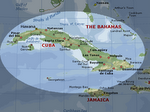
U.S.-Cuba travel picking up steam
Miami Herald Posted on Mon, Oct. 12, 2009
http://www.miamiherald.com/news/miami-dade/breaking-news/story/1279295.html
BY JUAN O. TAMAYO
El Nuevo Herald
A powerful campaign to allow all Americans to travel to Cuba is rumbling through Congress, with both backers and opponents predicting eventual victory and a Cuban-American senator promising a key vote against the effort.
Approval of the measures would have a profound impact on U.S.-Cuba relations, unleashing an estimated one million American tourists to visit the island and undermining White House control of policy toward Havana.
``There would be an explosion of contacts between Americans and Cubans . . . that would almost overshadow what the two governments are doing,'' said Phil Peters, a Cuba expert with the Lexington Institute think tank in suburban Washington.
Cuban officials have told recent U.S. visitors that while President Barack Obama's policy changes so far have been too timid to require a Havana reply, ending the U.S. travel ban would be significant enough to require some sort of Havana concession.
Many Cuba-watchers on Capitol Hill say the effort is likely to fail. But even opponents of the free-travel bills in the House and Senate admit the campaign for approval is powerful. ``I have never seen a stronger effort,'' said Mauricio Claver-Carone of the U.S.-Cuba Democracy political action committee.
Backing the change has been the U.S. travel industry -- Orbitz says it has 100,000 signatures on a petition -- and dozens of newspaper editorials, large agricultural companies, former Secretary of State George Shultz, New Mexico Gov. Bill Richardson and groups that traditionally oppose U.S. sanctions on the island.
``Our goals should be to get rid of the travel ban in the next six months,'' Richardson said Friday during a speech to the National Democratic Network in Washington. ``This is a step in the right direction,'' Shultz declared last month.
Polls show 60-70 percent of all Americans favor lifting the travel restrictions, and one House bill championed by Massachusetts Democrat Bill Delahunt has gathered 180 sponsors -- 38 short of the 218 votes required for passage.
Obama ended all restrictions on Cuban-Americans' travel to the island on Sept. 3. But other U.S. citizens and residents can travel only under special permits for groups such as churches, academics and business -- not for tourism. That was allowed, however, from 1977 to 1982 under former President Jimmy Carter's efforts to normalize relations with Cuba.
Most of the public attention has been focused on the House bill backed by Delahunt and Rep. Sam Farr, D-Calif. Farr, noting that U.S agricultural sales to Cuba are allowed but not tourism, has repeated several variations of the line that ``We can send American potatoes to Cuba, but not American people.''
But a lesser-known version has a better chance of passing because it also eases restrictions on U.S. agricultural and medical sales to Cuba, in hopes of gathering support from those lobbies, said a Senate Republican staffer monitoring the progress of the travel bills.
The main Senate version of the measure -- with 25 co-sponsors from both parties at last count -- is being championed by Sens. Chris Dodd, D-Conn., Byron Dorgan, D-N.D., Michael Enzi, R-Wyo. and Richard Lugar, R-Ind.
But backers of the changes say the bills have not moved forward through the congressional maze so far because of the lack of active support from the Obama administration and the Democratic leadership in both chambers.
``The Obama people are showing timidity. They are sitting on their hands,'' said a Senate aide whose Democratic boss favors lifting all travel restrictions. He asked for anonymity because he was not authorized to comment on the issue.
Administration officials say lifting all travel restrictions would be too drastic and perhaps chaotic, and the the president prefers a more measured warming of relations. They stop short of saying whether Obama would sign or veto the bill if passed by Congress.*
``At the end of the day this is a leadership issue,'' said the Senate Republican aide, who also asked for anonymity. ``Do the Democrats have the will to bring this up [for a vote] with all the other issues -- healthcare, Afghanistan, etc.''
Most of Washington's Cuba watchers agree the full Congress is probably going to pass some bills easing Cuba sanctions, most likely one re-defining the requirement that Havana pay ``cash in advance'' for U.S. food purchases. The change would allow Cuba to pay when the shipments reach Havana, not before they leave U.S. ports as now required.
But the future of the ``Free Travel to Cuba'' initiatives is far more uncertain, with most of those monitoring the struggle saying that some version will likely pass the House, but all will almost certainly die in the Senate.
Delahunt ``has a pretty impressive list of sponsors. That bill looks good in the House,'' said a former Bush administration Cuba expert. ``Delahunt will pass the House,'' added an Obama administration official. Both asked for anonymity so they could speak frankly about the topic.
But most supporters as well as opponents say the travel measures are unlikely to pass the Senate, where the Democrats have a smaller majority and the bills face stiff opposition from Bob Menendez, a powerful Cuban American Democrat from New Jersey and Florida's Bill Nelson, a Democrat, and George LeMieux, a Republican.
Menendez and Nelson have strongly opposed easing the ban on U.S. tourism. LeMieux, who replaced Sen. Mel Martinez, is expected to also oppose easing the travel restrictions.
``This is a battle of perceptions. The pro-travel groups are claiming they will win, in the hope of creating the sense of movement and victory,'' said Claver-Carone. ``But in the end, the Senate will be tough, if not impossible.''
Juan Tamayo can be reached at jtamayo@ElNuevoHerald.com.
-------------
* The Secretary of State said in Congressional testimony that the President will not veto legislation to end the embargo. It does not make sense that the President will veto the partial lifting represented by ending travel limits. Tamayo may also be grasping for straws in whom he chooses to quote about prospects for passage by the Senate. J McA
Thursday, October 15, 2009


Thursday, October 8, 2009
Sen. Dorgan on NY Philharmonic
Tuesday, October 6, 2009
CONGRESSIONAL RECORD - U.S. SENATE PROCEEDINGS - FLOOR SPEECH OF SENATOR BYRON DORGAN, DEMOCRAT OF NORTH DAKOTA
FREEDOM TO TRAVEL TO CUBA-- (Senate - October 05, 2009)
Mr. DORGAN . Mr. President, last Friday the New York Times had an article which caught my eye, and the headline was the following: ``October New York Philharmonic Trip to Cuba is Off.'' I want to talk for a moment about this. I was extraordinarily disappointed to read this because this is an issue of the freedom to travel by the American people, specifically, the freedom to travel to Cuba.
This country has had an embargo against the country of Cuba for a long while. Cuba is a Communist country. Fidel Castro has poked his finger in the eye of America for a long time, so we have had an embargo for a long time. Part of the way to injure the Castro regime, presumably, as a part of this embargo is to prevent the American people from traveling to Cuba. The American people can travel to Communist China, to Communist Vietnam, to North Korea, but the American people are considered taking a criminal act if they travel to Cuba. There are some exceptions; the U.S. Treasury Department gives licenses to travel for certain kinds of educational and cultural things, and for trade.
So the New York Philharmonic orchestra was going to Cuba, but had to cancel the trip. Daniel Wakin wrote about it in the New York Times last Friday October 1, 2009. The reason I wanted to mention this is because it is almost unbelievable what we are still doing with respect to our travel policy with Cuba.
Senator Enzi and I have a piece of legislation that removes all travel restrictions with respect to travel to Cuba. We have over 30 Senators who are cosponsors of that legislation, but while we are waiting to pass our legislation, we are going through this nonsense of having the Federal Government and the Treasury Department tell us who can and who cannot travel, restricting the liberty and the freedom of the American people. It is outrageous, in my judgment.
Trips like the one the New York Philharmonic planned to Havana are not unusual. These kinds of trips happen all of the time. In 1959, at the height of the Cold War with the Soviet Union, the New York Philharmonic played in Moscow. It is a reasonably good thing, in my judgment, to be able to extend our culture and the hand of friendship through music.
One of the reasons I was especially interested in this is that the New York Philharmonic visited North Korea last year, and I asked conductor Loren Maazel and Zarin Mehta, President of the Philharmonic's board, to come and speak to our caucus. They described to us their performances in North Korea. They said the applause went on and on, even after they left the stage. What a great way to exchange with another country, to extend cultural enlightenment and to share with other countries. Again, the New York Philharmonic orchestra played in North Korea last year, but cannot play in Cuba without a special license.
The New York Philharmonic is going to Communist Vietnam this month.
Yes, it is a Communist country. So, too, is North Korea, as is China, as is Russia. But the New York Philharmonic orchestra has no difficulty being able to play music in those countries because there are no travel restrictions with respect to those countries.
Let me describe, if I might, the absurdity of all of this. The Office of Foreign Assets Control is a little agency in the Treasury Department that is in charge of granting licenses that, under certain conditions, will allow you to travel to Cuba. The license they decided to allow the New York Philharmonic to go to Cuba and play their music did not include allowing the benefactors of the Philharmonic to travel with them and the Philharmonic decided that was unacceptable. Frankly, I understand why it is unacceptable for them. That doesn't make any sense to me.
The OFAC regulations says
Unless otherwise authorized, any person subject to U.S. jurisdiction who engages in any travel-related transaction in Cuba violates the regulations.
That is unbelievable to me. That has been around, I think, for 40 years, 50 years.
Let me give examples of some people who have traveled to Cuba who our Federal Government has chased and harassed. By the way, this little agency called OFAC, somewhere in the bowels of the U.S. Treasury Department, the Office of Foreign Assets Control, is supposed to be tracking terrorist money, protecting us from terrorists. Instead they have been busy chasing people who go to Cuba. In the previous administration, up to a quarter of their time was spent trying to track Americans who were under suspicion of taking a vacation in Cuba. It is pretty absurd, it seems to me.
This is Joan Slote. She was a senior citizen and bicyclist who was fined $7,630. Do you know why? Because she joined a Canadian bicycling group that took a bicycle tour of Cuba and, as a result of that, her government--under the previous administration--tracked her down, threatened to attach her Social Security checks, and fined her $7,630 for riding a bicycle in Cuba.
Here is a picture of a woman I have met named Joni Scott. Joni Scott's transgression? She is a very religious woman, a devout Christian. She went to Cuba to hand out free Bibles on the streets of Cuba and her government tried to track her down and fine her $10,000 for handing out free Bibles on the streets of Cuba because she violated the travel ban. The travel ban, that means restricting the liberty of the American people. We do not ban travel to other countries. We do not do it for communist China, for communist Russia, communist Vietnam--just for Cuba.
This is SGT Carlos Lazo. A number of years ago, Carlos Lazo went and fought in the country of Iraq, wearing America's uniform. He is a Cuban-American. He was in Iraq as a fighting soldier for this country. He won the Bronze Star for gallantry. He had two children in Cuba, one of whom was sick, and his government that he fought for and won the Bronze Star for, told him he was not able to travel to Cuba to see his own sick child. Hat shows how unbelievably wrong this policy is.
Let me describe what the policy is about traveling to other countries. The rules say:
All transactions ordinarily incident to travel to or from Iran ..... are permitted.
If you want to go to Iran, no problem; that is not an issue. You are welcome to go to Iran.
If you want to see Kim Jong-il in North Korea, it is not a problem. The rules say:
U.S. passports are valid for travel in North Korea and individuals do not need U.S. Government permission to travel there.
Here are the 10 Presidents we have had since we decided to punish the American people with a travel ban to Cuba--10 Presidents. You talk about failure--it is one thing just to fail; it is another thing to insist that failure is a good thing for 50 years. This Government of Cuba has lasted through 10 Presidents. What we have decided to do is, over all these years, to ban travel to Cuba by the American people.
You can go to Cuba in certain capacities. You can go in certain educational capacities, or cultural capacities, provided you get a license. I have been to Cuba. I have been to Havana. I have visited with government officials, I visited with all the dissidents in Cuba. Many of my colleagues here in Congress have undoubtedly traveled to Cuba. But we have a licensing requirement with respect to travel to Cuba.
We also had this trade embargo for all of these years. I was one who, some years ago, lifted that embargo slightly to be able to sell food and medicine into Cuba. I think it is fundamentally immoral to use food as a weapon. We had an embargo against selling food to Cuba. The Europeans were selling into Cuba, the Canadians were selling into Cuba; the American farmers were told you can't sell food into Cuba. As a result of my amendment, the amendment I offered with then Senator Ashcroft, that amendment opened just a bit the sale of food into Cuba and allowed medicine to go into Cuba as well, but that is the only thing that has happened in all of these years.
Senator Enzi and I have offered a bipartisan piece of legislation that would allow travel, allow the American people the freedom to travel in Cuba.
My colleagues in this Chamber talk a lot about freedom. What about the freedom of the American people to travel? Why is it we have decided to punish the Cuban regime by restricting Americans' freedoms?
I come back to the basic proposition. That is, one of the great music groups in the world, the New York Philharmonic, which has played in North Korea, in Russia, and is about to play in Vietnam, is told: Here are the circumstances and conditions in which you can play in Cuba. By the way, they are onerous. The New York Philharmonic found those circumstances and conditions unacceptable and I understand why.
I am writing to the Office of Assets Control to see if we could not get them to think straight a bit. It makes no sense at all to decide that this kind of exchange is unworthy. Does anybody really think that having the New York Philharmonic play beautiful music in the city of Havana, in the country of Cuba, is in any way going to threaten anybody? Wouldn't it perhaps do at least what it did for those who were able to experience that wonderful music in North Korea? I saw the photographs, I saw the video. I believe ``60 Minutes'' did a piece on it, that showed how unbelievably they were responded to by the North Korean people who heard them, who listened to the New York Philharmonic. Wouldn't that be the same with respect to Cuba?
Why on Earth should our government be interpreting this travel restriction in the way that is designed to try to restrict rather than expand these opportunities? I have seen how OFAC, over these years, tries to find ways to tighten, find ways to create opportunity to restrict travel. That makes no sense to me at all.
When I read this, this weekend, I thought what on Earth could they be thinking of? Where is the deep reservoir of common sense that you should expect from people who are confronted with this issue? When confronted with the issue of granting a license to the New York Philharmonic Orchestra to represent our country in doing concerts in Havana, why should OFAC be trying to find ways to make that too restrictive for the Philharmonic and its benefactors to travel to Cuba and do what they had intended to do?
This kind of opportunity to connect with other countries has a long history. I showed a picture of the New York Philharmonic, conducted by Leonard Bernstein, performing in the Great Hall in the Moscow Conservatory. Let me show that again. It raises the question about common sense. If we are able, in 1959, with all of the tensions with Moscow and the Soviet Union at that point, and we sent our New York Philharmonic Orchestra in an exchange and Leonard Bernstein conducted, and they, too, were greeted with long, sustained applause because people were so appreciative of them being in Moscow; if that has been the case--and it has been in every circumstance and last year especially it was with respect to the appearance in North Korea--if that is the case, why on Earth would our Government do anything other than encourage the New York Philharmonic to do the concert in Havana, instead of discourage it, instead of finding ways to tighten this down so the New York Philharmonic and their benefactors had decided they simply couldn't go under those conditions?
Common sense ought to apply on this issue of the liberty and the freedom of the American people to travel. There ought not be travel restrictions to Cuba at all. They ought to be gone and we ought to pass the Dorgan -Enzi bill that strikes the travel restrictions with respect to Cuba. We have not yet found a way to get it to the floor. When we do, I guarantee we will have sufficient votes on the floor of the Senate to offer the American people the freedom they should have had in the last 50 or 60 years, and that is freedom to travel. In this case that freedom has been taken from them and it is outrageous.
I mentioned Joan Slote. When I became involved in this issue of what this embargo costs our country, I was furious to find an elderly woman riding a bicycle in Cuba and then fined $7,300 by her government.
By the way, when she came back, her son had brain cancer so she wasn't home, she was attending to her son who had brain cancer down in California, and she didn't get the mailing to her house and then they threatened to take her Social Security away. Why? Because she was suspected of vacationing in Cuba, riding a bicycle with a Canadian bicycle group.
All of this I think is nuts and I hope at some point the New York Philharmonic will be given the license, with their benefactors, to go down and do the concert in Havana, Cuba; do the concert there. In the meantime, I hope the Office of Foreign Asset Control will take a look at this and make a new decision. They have the right to make a better decision. In my judgment they didn't make the right decision here. I hope they overturn that decision. I have written them a letter today asking them to do that. Let's use a little common sense here.
Following that, I hope Senator Enzi and I will get our legislation on the floor of the Senate and remove the travel restrictions that now impede the freedom of the American people to travel to Cuba.
The country of Cuba has been a thorn in our side for a long time; I understand that. But attempting to punish the leaders of Cuba by punishing the American people makes no sense at all. That is exactly what has happened since the early 1960s. My hope is that some day, despite the news last Friday that the New York Philharmonic has canceled this trip--my hope is some day very soon we will have a policy that doesn't have anybody canceling trips because they didn't get their license to travel. My hope is anybody can travel anywhere, representing the best of this country.
The New York Philharmonic is a wonderful cultural ambassador--to the Soviet Union, and North Korea, and Vietnam, all communist countries--and it can also be with Cuba. I hope that will happen soon.
CONGRESSIONAL RECORD - U.S. SENATE PROCEEDINGS - FLOOR SPEECH OF SENATOR BYRON DORGAN, DEMOCRAT OF NORTH DAKOTA
FREEDOM TO TRAVEL TO CUBA-- (Senate - October 05, 2009)
Mr. DORGAN . Mr. President, last Friday the New York Times had an article which caught my eye, and the headline was the following: ``October New York Philharmonic Trip to Cuba is Off.'' I want to talk for a moment about this. I was extraordinarily disappointed to read this because this is an issue of the freedom to travel by the American people, specifically, the freedom to travel to Cuba.
This country has had an embargo against the country of Cuba for a long while. Cuba is a Communist country. Fidel Castro has poked his finger in the eye of America for a long time, so we have had an embargo for a long time. Part of the way to injure the Castro regime, presumably, as a part of this embargo is to prevent the American people from traveling to Cuba. The American people can travel to Communist China, to Communist Vietnam, to North Korea, but the American people are considered taking a criminal act if they travel to Cuba. There are some exceptions; the U.S. Treasury Department gives licenses to travel for certain kinds of educational and cultural things, and for trade.
So the New York Philharmonic orchestra was going to Cuba, but had to cancel the trip. Daniel Wakin wrote about it in the New York Times last Friday October 1, 2009. The reason I wanted to mention this is because it is almost unbelievable what we are still doing with respect to our travel policy with Cuba.
Senator Enzi and I have a piece of legislation that removes all travel restrictions with respect to travel to Cuba. We have over 30 Senators who are cosponsors of that legislation, but while we are waiting to pass our legislation, we are going through this nonsense of having the Federal Government and the Treasury Department tell us who can and who cannot travel, restricting the liberty and the freedom of the American people. It is outrageous, in my judgment.
Trips like the one the New York Philharmonic planned to Havana are not unusual. These kinds of trips happen all of the time. In 1959, at the height of the Cold War with the Soviet Union, the New York Philharmonic played in Moscow. It is a reasonably good thing, in my judgment, to be able to extend our culture and the hand of friendship through music.
One of the reasons I was especially interested in this is that the New York Philharmonic visited North Korea last year, and I asked conductor Loren Maazel and Zarin Mehta, President of the Philharmonic's board, to come and speak to our caucus. They described to us their performances in North Korea. They said the applause went on and on, even after they left the stage. What a great way to exchange with another country, to extend cultural enlightenment and to share with other countries. Again, the New York Philharmonic orchestra played in North Korea last year, but cannot play in Cuba without a special license.
The New York Philharmonic is going to Communist Vietnam this month.
Yes, it is a Communist country. So, too, is North Korea, as is China, as is Russia. But the New York Philharmonic orchestra has no difficulty being able to play music in those countries because there are no travel restrictions with respect to those countries.
Let me describe, if I might, the absurdity of all of this. The Office of Foreign Assets Control is a little agency in the Treasury Department that is in charge of granting licenses that, under certain conditions, will allow you to travel to Cuba. The license they decided to allow the New York Philharmonic to go to Cuba and play their music did not include allowing the benefactors of the Philharmonic to travel with them and the Philharmonic decided that was unacceptable. Frankly, I understand why it is unacceptable for them. That doesn't make any sense to me.
The OFAC regulations says
Unless otherwise authorized, any person subject to U.S. jurisdiction who engages in any travel-related transaction in Cuba violates the regulations.
That is unbelievable to me. That has been around, I think, for 40 years, 50 years.
Let me give examples of some people who have traveled to Cuba who our Federal Government has chased and harassed. By the way, this little agency called OFAC, somewhere in the bowels of the U.S. Treasury Department, the Office of Foreign Assets Control, is supposed to be tracking terrorist money, protecting us from terrorists. Instead they have been busy chasing people who go to Cuba. In the previous administration, up to a quarter of their time was spent trying to track Americans who were under suspicion of taking a vacation in Cuba. It is pretty absurd, it seems to me.
This is Joan Slote. She was a senior citizen and bicyclist who was fined $7,630. Do you know why? Because she joined a Canadian bicycling group that took a bicycle tour of Cuba and, as a result of that, her government--under the previous administration--tracked her down, threatened to attach her Social Security checks, and fined her $7,630 for riding a bicycle in Cuba.
Here is a picture of a woman I have met named Joni Scott. Joni Scott's transgression? She is a very religious woman, a devout Christian. She went to Cuba to hand out free Bibles on the streets of Cuba and her government tried to track her down and fine her $10,000 for handing out free Bibles on the streets of Cuba because she violated the travel ban. The travel ban, that means restricting the liberty of the American people. We do not ban travel to other countries. We do not do it for communist China, for communist Russia, communist Vietnam--just for Cuba.
This is SGT Carlos Lazo. A number of years ago, Carlos Lazo went and fought in the country of Iraq, wearing America's uniform. He is a Cuban-American. He was in Iraq as a fighting soldier for this country. He won the Bronze Star for gallantry. He had two children in Cuba, one of whom was sick, and his government that he fought for and won the Bronze Star for, told him he was not able to travel to Cuba to see his own sick child. Hat shows how unbelievably wrong this policy is.
Let me describe what the policy is about traveling to other countries. The rules say:
All transactions ordinarily incident to travel to or from Iran ..... are permitted.
If you want to go to Iran, no problem; that is not an issue. You are welcome to go to Iran.
If you want to see Kim Jong-il in North Korea, it is not a problem. The rules say:
U.S. passports are valid for travel in North Korea and individuals do not need U.S. Government permission to travel there.
Here are the 10 Presidents we have had since we decided to punish the American people with a travel ban to Cuba--10 Presidents. You talk about failure--it is one thing just to fail; it is another thing to insist that failure is a good thing for 50 years. This Government of Cuba has lasted through 10 Presidents. What we have decided to do is, over all these years, to ban travel to Cuba by the American people.
You can go to Cuba in certain capacities. You can go in certain educational capacities, or cultural capacities, provided you get a license. I have been to Cuba. I have been to Havana. I have visited with government officials, I visited with all the dissidents in Cuba. Many of my colleagues here in Congress have undoubtedly traveled to Cuba. But we have a licensing requirement with respect to travel to Cuba.
We also had this trade embargo for all of these years. I was one who, some years ago, lifted that embargo slightly to be able to sell food and medicine into Cuba. I think it is fundamentally immoral to use food as a weapon. We had an embargo against selling food to Cuba. The Europeans were selling into Cuba, the Canadians were selling into Cuba; the American farmers were told you can't sell food into Cuba. As a result of my amendment, the amendment I offered with then Senator Ashcroft, that amendment opened just a bit the sale of food into Cuba and allowed medicine to go into Cuba as well, but that is the only thing that has happened in all of these years.
Senator Enzi and I have offered a bipartisan piece of legislation that would allow travel, allow the American people the freedom to travel in Cuba.
My colleagues in this Chamber talk a lot about freedom. What about the freedom of the American people to travel? Why is it we have decided to punish the Cuban regime by restricting Americans' freedoms?
I come back to the basic proposition. That is, one of the great music groups in the world, the New York Philharmonic, which has played in North Korea, in Russia, and is about to play in Vietnam, is told: Here are the circumstances and conditions in which you can play in Cuba. By the way, they are onerous. The New York Philharmonic found those circumstances and conditions unacceptable and I understand why.
I am writing to the Office of Assets Control to see if we could not get them to think straight a bit. It makes no sense at all to decide that this kind of exchange is unworthy. Does anybody really think that having the New York Philharmonic play beautiful music in the city of Havana, in the country of Cuba, is in any way going to threaten anybody? Wouldn't it perhaps do at least what it did for those who were able to experience that wonderful music in North Korea? I saw the photographs, I saw the video. I believe ``60 Minutes'' did a piece on it, that showed how unbelievably they were responded to by the North Korean people who heard them, who listened to the New York Philharmonic. Wouldn't that be the same with respect to Cuba?
Why on Earth should our government be interpreting this travel restriction in the way that is designed to try to restrict rather than expand these opportunities? I have seen how OFAC, over these years, tries to find ways to tighten, find ways to create opportunity to restrict travel. That makes no sense to me at all.
When I read this, this weekend, I thought what on Earth could they be thinking of? Where is the deep reservoir of common sense that you should expect from people who are confronted with this issue? When confronted with the issue of granting a license to the New York Philharmonic Orchestra to represent our country in doing concerts in Havana, why should OFAC be trying to find ways to make that too restrictive for the Philharmonic and its benefactors to travel to Cuba and do what they had intended to do?
This kind of opportunity to connect with other countries has a long history. I showed a picture of the New York Philharmonic, conducted by Leonard Bernstein, performing in the Great Hall in the Moscow Conservatory. Let me show that again. It raises the question about common sense. If we are able, in 1959, with all of the tensions with Moscow and the Soviet Union at that point, and we sent our New York Philharmonic Orchestra in an exchange and Leonard Bernstein conducted, and they, too, were greeted with long, sustained applause because people were so appreciative of them being in Moscow; if that has been the case--and it has been in every circumstance and last year especially it was with respect to the appearance in North Korea--if that is the case, why on Earth would our Government do anything other than encourage the New York Philharmonic to do the concert in Havana, instead of discourage it, instead of finding ways to tighten this down so the New York Philharmonic and their benefactors had decided they simply couldn't go under those conditions?
Common sense ought to apply on this issue of the liberty and the freedom of the American people to travel. There ought not be travel restrictions to Cuba at all. They ought to be gone and we ought to pass the Dorgan -Enzi bill that strikes the travel restrictions with respect to Cuba. We have not yet found a way to get it to the floor. When we do, I guarantee we will have sufficient votes on the floor of the Senate to offer the American people the freedom they should have had in the last 50 or 60 years, and that is freedom to travel. In this case that freedom has been taken from them and it is outrageous.
I mentioned Joan Slote. When I became involved in this issue of what this embargo costs our country, I was furious to find an elderly woman riding a bicycle in Cuba and then fined $7,300 by her government.
By the way, when she came back, her son had brain cancer so she wasn't home, she was attending to her son who had brain cancer down in California, and she didn't get the mailing to her house and then they threatened to take her Social Security away. Why? Because she was suspected of vacationing in Cuba, riding a bicycle with a Canadian bicycle group.
All of this I think is nuts and I hope at some point the New York Philharmonic will be given the license, with their benefactors, to go down and do the concert in Havana, Cuba; do the concert there. In the meantime, I hope the Office of Foreign Asset Control will take a look at this and make a new decision. They have the right to make a better decision. In my judgment they didn't make the right decision here. I hope they overturn that decision. I have written them a letter today asking them to do that. Let's use a little common sense here.
Following that, I hope Senator Enzi and I will get our legislation on the floor of the Senate and remove the travel restrictions that now impede the freedom of the American people to travel to Cuba.
The country of Cuba has been a thorn in our side for a long time; I understand that. But attempting to punish the leaders of Cuba by punishing the American people makes no sense at all. That is exactly what has happened since the early 1960s. My hope is that some day, despite the news last Friday that the New York Philharmonic has canceled this trip--my hope is some day very soon we will have a policy that doesn't have anybody canceling trips because they didn't get their license to travel. My hope is anybody can travel anywhere, representing the best of this country.
The New York Philharmonic is a wonderful cultural ambassador--to the Soviet Union, and North Korea, and Vietnam, all communist countries--and it can also be with Cuba. I hope that will happen soon.
Wednesday, September 30, 2009
House and Senate Cosponsors of Freedom to Travel Bills
Cosponsors of HR 874, Freedom to Travel Bill
161 are listed with the date they signed on; unofficially an additional 20 Representatives are reported to have agreed to cosponsor
text of bill can be seen at
Rep Abercrombie, Neil [HI-1] - 3/30/2009
Rep Alexander, Rodney [LA-5] - 5/4/2009
Rep Baird, Brian [WA-3] - 3/30/2009
Rep Baldwin, Tammy [WI-2] - 3/30/2009
Rep Berry, Marion [AR-1] - 3/30/2009
Rep Biggert, Judy [IL-13] - 3/30/2009
Rep Bishop, Sanford D., Jr. [GA-2] - 5/7/2009
Rep Bishop, Timothy H. [NY-1] - 3/30/2009
Rep Blumenauer, Earl [OR-3] - 3/30/2009
Rep Boozman, John [AR-3] - 3/30/2009
Rep Boswell, Leonard L. [IA-3] - 3/30/2009
Rep Boucher, Rick [VA-9] - 5/7/2009
Rep Brady, Robert A. [PA-1] - 3/30/2009
Rep Brown, Henry E., Jr. [SC-1] - 3/30/2009
Rep Capps, Lois [CA-23] - 3/30/2009
Rep Capuano, Michael E. [MA-8] - 3/30/2009
Rep Chaffetz, Jason [UT-3] - 3/30/2009
Rep Clarke, Yvette D. [NY-11] - 3/30/2009
Rep Clay, Wm. Lacy [MO-1] - 3/30/2009
Rep Cleaver, Emanuel [MO-5] - 3/30/2009
Rep Clyburn, James E. [SC-6] - 5/20/2009
Rep Cohen, Steve [TN-9] - 3/30/2009
Rep Conyers, John, Jr. [MI-14] - 3/30/2009
Rep Cooper, Jim [TN-5] - 3/30/2009
Rep Costa, Jim [CA-20] - 3/30/2009
Rep Costello, Jerry F. [IL-12] - 3/30/2009
Rep Courtney, Joe [CT-2] - 3/30/2009
Rep Crowley, Joseph [NY-7] - 3/30/2009
Rep Cummings, Elijah E. [MD-7] - 3/30/2009
Rep Davis, Danny K. [IL-7] - 4/30/2009
Rep Davis, Lincoln [TN-4] - 3/30/2009
Rep Davis, Susan A. [CA-53] - 4/22/2009
Rep DeFazio, Peter A. [OR-4] - 3/30/2009
Rep DeGette, Diana [CO-1] - 4/2/2009
Rep DeLauro, Rosa L. [CT-3] - 2/4/2009
Rep Dicks, Norman D. [WA-6] - 5/21/2009
Rep Doggett, Lloyd [TX-25] - 3/30/2009
Rep Doyle, Michael F. [PA-14] - 3/30/2009
Rep Driehaus, Steve [OH-1] - 5/13/2009
Rep Edwards, Donna F. [MD-4] - 2/4/2009
Rep Ehlers, Vernon J. [MI-3] - 3/30/2009
Rep Ellison, Keith [MN-5] - 3/30/2009
Rep Emerson, Jo Ann [MO-8] - 2/4/2009
Rep Eshoo, Anna G. [CA-14] - 3/30/2009
Rep Etheridge, Bob [NC-2] - 3/30/2009
Rep Farr, Sam [CA-17] - 2/4/2009
Rep Fattah, Chaka [PA-2] - 3/30/2009
Rep Filner, Bob [CA-51] - 3/30/2009
Rep Flake, Jeff [AZ-6] - 2/4/2009
Rep Frank, Barney [MA-4] - 3/30/2009
Rep Fudge, Marcia L. [OH-11] - 4/22/2009
Rep Gonzalez, Charles A. [TX-20] - 3/30/2009
Rep Gordon, Bart [TN-6] - 3/30/2009
Rep Grijalva, Raul M. [AZ-7] - 3/30/2009
Rep Gutierrez, Luis V. [IL-4] - 5/7/2009
Rep Hall, John J. [NY-19] - 7/9/2009
Rep Harman, Jane [CA-36] - 3/30/2009
Rep Herseth Sandlin, Stephanie [SD] - 5/7/2009
Rep Hinchey, Maurice D. [NY-22] - 3/30/2009
Rep Holden, Tim [PA-17] - 5/7/2009
Rep Holt, Rush D. [NJ-12] - 4/22/2009
Rep Honda, Michael M. [CA-15] - 3/30/2009
Rep Inslee, Jay [WA-1] - 5/7/2009
Rep Israel, Steve [NY-2] - 3/30/2009
Rep Jackson, Jesse L., Jr. [IL-2] - 3/30/2009
Rep Jackson-Lee, Sheila [TX-18] - 3/30/2009
Rep Johnson, Eddie Bernice [TX-30] - 3/30/2009
Rep Johnson, Henry C. "Hank," Jr. [GA-4] - 3/30/2009
Rep Johnson, Timothy V. [IL-15] - 3/30/2009
Rep Kagen, Steve [WI-8] - 3/30/2009
Rep Kanjorski, Paul E. [PA-11] - 5/7/2009
Rep Kaptur, Marcy [OH-9] - 3/30/2009
Rep Kildee, Dale E. [MI-5] - 4/28/2009
Rep Kilpatrick, Carolyn C. [MI-13] - 3/30/2009
Rep Kilroy, Mary Jo [OH-15] - 3/30/2009
Rep Kind, Ron [WI-3] - 3/30/2009
Rep Kucinich, Dennis J. [OH-10] - 3/30/2009
Rep Langevin, James R. [RI-2] - 5/14/2009
Rep Larsen, Rick [WA-2] - 3/30/2009
Rep Larson, John B. [CT-1] - 3/30/2009
Rep Lee, Barbara [CA-9] - 3/30/2009
Rep Levin, Sander M. [MI-12] - 5/20/2009
Rep Lewis, John [GA-5] - 4/30/2009
Rep Loebsack, David [IA-2] - 5/20/2009
Rep Lofgren, Zoe [CA-16] - 3/30/2009
Rep Lowey, Nita M. [NY-18] - 3/30/2009
Rep Lummis, Cynthia M. [WY] - 3/30/2009
Rep Lynch, Stephen F. [MA-9] - 3/30/2009
Rep Maloney, Carolyn B. [NY-14] - 3/30/2009
Rep Markey, Edward J. [MA-7] - 3/30/2009
Rep Matheson, Jim [UT-2] - 3/30/2009
Rep Matsui, Doris O. [CA-5] - 3/30/2009
Rep McCarthy, Carolyn [NY-4] - 3/30/2009
Rep McCollum, Betty [MN-4] - 3/30/2009
Rep McDermott, Jim [WA-7] - 3/30/2009
Rep McGovern, James P. [MA-3] - 2/4/2009
Rep Meeks, Gregory W. [NY-6] - 3/30/2009
Rep Michaud, Michael H. [ME-2] - 3/30/2009
Rep Miller, George [CA-7] - 3/30/2009
Rep Mollohan, Alan B. [WV-1] - 3/30/2009
Rep Moore, Dennis [KS-3] - 3/30/2009
Rep Moore, Gwen [WI-4] - 3/30/2009
Rep Moran, James P. [VA-8] - 3/30/2009
Rep Moran, Jerry [KS-1] - 2/4/2009
Rep Murtha, John P. [PA-12] - 5/7/2009
Rep Nadler, Jerrold [NY-8] - 3/30/2009
Rep Napolitano, Grace F. [CA-38] - 5/14/2009
Rep Neal, Richard E. [MA-2] - 3/30/2009
Rep Norton, Eleanor Holmes [DC] - 3/30/2009
Rep Oberstar, James L. [MN-8] - 3/30/2009
Rep Olver, John W. [MA-1] - 3/30/2009
Rep Ortiz, Solomon P. [TX-27] - 3/30/2009
Rep Pastor, Ed [AZ-4] - 3/30/2009
Rep Paul, Ron [TX-14] - 2/4/2009
Rep Payne, Donald M. [NJ-10] - 3/30/2009
Rep Peterson, Collin C. [MN-7] - 3/30/2009
Rep Pingree, Chellie [ME-1] - 3/30/2009
Rep Polis, Jared [CO-2] - 3/30/2009
Rep Pomeroy, Earl [ND] - 4/30/2009
Rep Price, David E. [NC-4] - 3/30/2009
Rep Rahall, Nick J., II [WV-3] - 5/14/2009
Rep Rangel, Charles B. [NY-15] - 3/30/2009
Rep Richardson, Laura [CA-37] - 5/6/2009
Rep Ross, Mike [AR-4] - 3/30/2009
Rep Roybal-Allard, Lucille [CA-34] - 5/14/2009
Rep Ruppersberger, C. A. Dutch [MD-2] - 5/7/2009
Rep Rush, Bobby L. [IL-1] - 4/2/2009
Rep Ryan, Tim [OH-17] - 3/30/2009
Rep Sanchez, Linda T. [CA-39] - 4/30/2009
Rep Sanchez, Loretta [CA-47] - 3/30/2009
Rep Schakowsky, Janice D. [IL-9] - 3/30/2009
Rep Schwartz, Allyson Y. [PA-13] - 3/30/2009
Rep Scott, David [GA-13] - 4/1/2009
Rep Scott, Robert C. "Bobby" [VA-3] - 5/12/2009
Rep Serrano, Jose E. [NY-16] - 3/30/2009
Rep Sestak, Joe [PA-7] - 7/30/2009
Rep Slaughter, Louise McIntosh [NY-28] - 3/30/2009
Rep Smith, Adam [WA-9] - 3/30/2009
Rep Snyder, Vic [AR-2] - 3/30/2009
Rep Speier, Jackie [CA-12] - 7/7/2009
Rep Stark, Fortney Pete [CA-13] - 3/30/2009
Rep Stupak, Bart [MI-1] - 5/21/2009
Rep Tanner, John S. [TN-8] - 3/30/2009
Rep Tauscher, Ellen O. [CA-10] - 3/30/2009
Rep Taylor, Gene [MS-4] - 5/7/2009
Rep Thompson, Bennie G. [MS-2] - 3/30/2009
Rep Thompson, Mike [CA-1] - 3/30/2009
Rep Tierney, John F. [MA-6] - 3/30/2009
Rep Towns, Edolphus [NY-10] - 3/30/2009
Rep Tsongas, Niki [MA-5] - 5/12/2009
Rep Van Hollen, Chris [MD-8] - 3/30/2009
Rep Velazquez, Nydia M. [NY-12] - 3/30/2009
Rep Walz, Timothy J. [MN-1] - 3/30/2009
Rep Waters, Maxine [CA-35] - 3/30/2009
Rep Watson, Diane E. [CA-33] - 3/30/2009
Rep Watt, Melvin L. [NC-12] - 5/7/2009
Rep Waxman, Henry A. [CA-30] - 3/30/2009
Rep Weiner, Anthony D. [NY-9] - 5/4/2009
Rep Welch, Peter [VT] - 3/30/2009
Rep Woolsey, Lynn C. [CA-6] - 3/30/2009
Rep Yarmuth, John A. [KY-3] - 3/30/2009
Cosponsors of S 428 32 are listed
Sen Barrasso, John [WY] - 2/23/2009
Sen Baucus, Max [MT] - 3/2/2009
Sen Bingaman, Jeff [NM] - 3/10/2009
Sen Boxer, Barbara [CA] - 3/10/2009
Sen Burris, Roland [IL] - 7/13/2009
Sen Cantwell, Maria [WA] - 3/30/2009
Sen Collins, Susan M. [ME] - 5/21/2009
Sen Conrad, Kent [ND] - 3/17/2009
Sen Crapo, Mike [ID] - 3/30/2009
Sen Dodd, Christopher J. [CT] - 2/12/2009
Sen Durbin, Richard [IL] - 3/2/2009
Sen Enzi, Michael B. [WY] - 2/12/2009
Sen Feingold, Russell D. [WI] - 3/3/2009
Sen Feinstein, Dianne [CA] - 2/26/2009
Sen Franken, Al [MN] - 9/14/2009
Sen Harkin, Tom [IA] - 3/2/2009
Sen Johnson, Tim [SD] - 3/6/2009
Sen Klobuchar, Amy [MN] - 5/11/2009
Sen Landrieu, Mary L. [LA] - 3/30/2009
Sen Leahy, Patrick J. [VT] - 3/6/2009
Sen Levin, Carl [MI] - 7/21/2009
Sen Lincoln, Blanche L. [AR] - 4/30/2009
Sen Lugar, Richard G. [IN] - 2/12/2009
Sen McCaskill, Claire [MO] - 4/29/2009
Sen Murray, Patty [WA] - 5/21/2009
Sen Pryor, Mark L. [AR] - 4/21/2009
Sen Reed, Jack [RI] - 3/12/2009
Sen Sanders, Bernard [VT] - 3/12/2009
Sen Tester, Jon [MT] - 8/5/2009
Sen Udall, Tom [NM] - 4/29/2009
Sen Webb, Jim [VA] - 4/21/2009
Sen Wyden, Ron [OR] - 2/25/2009
Sen Bennet, Michael F. [CO] - 3/11/2009(withdrawn - 3/30/2009)
161 are listed with the date they signed on; unofficially an additional 20 Representatives are reported to have agreed to cosponsor
text of bill can be seen at
Rep Abercrombie, Neil [HI-1] - 3/30/2009
Rep Alexander, Rodney [LA-5] - 5/4/2009
Rep Baird, Brian [WA-3] - 3/30/2009
Rep Baldwin, Tammy [WI-2] - 3/30/2009
Rep Berry, Marion [AR-1] - 3/30/2009
Rep Biggert, Judy [IL-13] - 3/30/2009
Rep Bishop, Sanford D., Jr. [GA-2] - 5/7/2009
Rep Bishop, Timothy H. [NY-1] - 3/30/2009
Rep Blumenauer, Earl [OR-3] - 3/30/2009
Rep Boozman, John [AR-3] - 3/30/2009
Rep Boswell, Leonard L. [IA-3] - 3/30/2009
Rep Boucher, Rick [VA-9] - 5/7/2009
Rep Brady, Robert A. [PA-1] - 3/30/2009
Rep Brown, Henry E., Jr. [SC-1] - 3/30/2009
Rep Capps, Lois [CA-23] - 3/30/2009
Rep Capuano, Michael E. [MA-8] - 3/30/2009
Rep Chaffetz, Jason [UT-3] - 3/30/2009
Rep Clarke, Yvette D. [NY-11] - 3/30/2009
Rep Clay, Wm. Lacy [MO-1] - 3/30/2009
Rep Cleaver, Emanuel [MO-5] - 3/30/2009
Rep Clyburn, James E. [SC-6] - 5/20/2009
Rep Cohen, Steve [TN-9] - 3/30/2009
Rep Conyers, John, Jr. [MI-14] - 3/30/2009
Rep Cooper, Jim [TN-5] - 3/30/2009
Rep Costa, Jim [CA-20] - 3/30/2009
Rep Costello, Jerry F. [IL-12] - 3/30/2009
Rep Courtney, Joe [CT-2] - 3/30/2009
Rep Crowley, Joseph [NY-7] - 3/30/2009
Rep Cummings, Elijah E. [MD-7] - 3/30/2009
Rep Davis, Danny K. [IL-7] - 4/30/2009
Rep Davis, Lincoln [TN-4] - 3/30/2009
Rep Davis, Susan A. [CA-53] - 4/22/2009
Rep DeFazio, Peter A. [OR-4] - 3/30/2009
Rep DeGette, Diana [CO-1] - 4/2/2009
Rep DeLauro, Rosa L. [CT-3] - 2/4/2009
Rep Dicks, Norman D. [WA-6] - 5/21/2009
Rep Doggett, Lloyd [TX-25] - 3/30/2009
Rep Doyle, Michael F. [PA-14] - 3/30/2009
Rep Driehaus, Steve [OH-1] - 5/13/2009
Rep Edwards, Donna F. [MD-4] - 2/4/2009
Rep Ehlers, Vernon J. [MI-3] - 3/30/2009
Rep Ellison, Keith [MN-5] - 3/30/2009
Rep Emerson, Jo Ann [MO-8] - 2/4/2009
Rep Eshoo, Anna G. [CA-14] - 3/30/2009
Rep Etheridge, Bob [NC-2] - 3/30/2009
Rep Farr, Sam [CA-17] - 2/4/2009
Rep Fattah, Chaka [PA-2] - 3/30/2009
Rep Filner, Bob [CA-51] - 3/30/2009
Rep Flake, Jeff [AZ-6] - 2/4/2009
Rep Frank, Barney [MA-4] - 3/30/2009
Rep Fudge, Marcia L. [OH-11] - 4/22/2009
Rep Gonzalez, Charles A. [TX-20] - 3/30/2009
Rep Gordon, Bart [TN-6] - 3/30/2009
Rep Grijalva, Raul M. [AZ-7] - 3/30/2009
Rep Gutierrez, Luis V. [IL-4] - 5/7/2009
Rep Hall, John J. [NY-19] - 7/9/2009
Rep Harman, Jane [CA-36] - 3/30/2009
Rep Herseth Sandlin, Stephanie [SD] - 5/7/2009
Rep Hinchey, Maurice D. [NY-22] - 3/30/2009
Rep Holden, Tim [PA-17] - 5/7/2009
Rep Holt, Rush D. [NJ-12] - 4/22/2009
Rep Honda, Michael M. [CA-15] - 3/30/2009
Rep Inslee, Jay [WA-1] - 5/7/2009
Rep Israel, Steve [NY-2] - 3/30/2009
Rep Jackson, Jesse L., Jr. [IL-2] - 3/30/2009
Rep Jackson-Lee, Sheila [TX-18] - 3/30/2009
Rep Johnson, Eddie Bernice [TX-30] - 3/30/2009
Rep Johnson, Henry C. "Hank," Jr. [GA-4] - 3/30/2009
Rep Johnson, Timothy V. [IL-15] - 3/30/2009
Rep Kagen, Steve [WI-8] - 3/30/2009
Rep Kanjorski, Paul E. [PA-11] - 5/7/2009
Rep Kaptur, Marcy [OH-9] - 3/30/2009
Rep Kildee, Dale E. [MI-5] - 4/28/2009
Rep Kilpatrick, Carolyn C. [MI-13] - 3/30/2009
Rep Kilroy, Mary Jo [OH-15] - 3/30/2009
Rep Kind, Ron [WI-3] - 3/30/2009
Rep Kucinich, Dennis J. [OH-10] - 3/30/2009
Rep Langevin, James R. [RI-2] - 5/14/2009
Rep Larsen, Rick [WA-2] - 3/30/2009
Rep Larson, John B. [CT-1] - 3/30/2009
Rep Lee, Barbara [CA-9] - 3/30/2009
Rep Levin, Sander M. [MI-12] - 5/20/2009
Rep Lewis, John [GA-5] - 4/30/2009
Rep Loebsack, David [IA-2] - 5/20/2009
Rep Lofgren, Zoe [CA-16] - 3/30/2009
Rep Lowey, Nita M. [NY-18] - 3/30/2009
Rep Lummis, Cynthia M. [WY] - 3/30/2009
Rep Lynch, Stephen F. [MA-9] - 3/30/2009
Rep Maloney, Carolyn B. [NY-14] - 3/30/2009
Rep Markey, Edward J. [MA-7] - 3/30/2009
Rep Matheson, Jim [UT-2] - 3/30/2009
Rep Matsui, Doris O. [CA-5] - 3/30/2009
Rep McCarthy, Carolyn [NY-4] - 3/30/2009
Rep McCollum, Betty [MN-4] - 3/30/2009
Rep McDermott, Jim [WA-7] - 3/30/2009
Rep McGovern, James P. [MA-3] - 2/4/2009
Rep Meeks, Gregory W. [NY-6] - 3/30/2009
Rep Michaud, Michael H. [ME-2] - 3/30/2009
Rep Miller, George [CA-7] - 3/30/2009
Rep Mollohan, Alan B. [WV-1] - 3/30/2009
Rep Moore, Dennis [KS-3] - 3/30/2009
Rep Moore, Gwen [WI-4] - 3/30/2009
Rep Moran, James P. [VA-8] - 3/30/2009
Rep Moran, Jerry [KS-1] - 2/4/2009
Rep Murtha, John P. [PA-12] - 5/7/2009
Rep Nadler, Jerrold [NY-8] - 3/30/2009
Rep Napolitano, Grace F. [CA-38] - 5/14/2009
Rep Neal, Richard E. [MA-2] - 3/30/2009
Rep Norton, Eleanor Holmes [DC] - 3/30/2009
Rep Oberstar, James L. [MN-8] - 3/30/2009
Rep Olver, John W. [MA-1] - 3/30/2009
Rep Ortiz, Solomon P. [TX-27] - 3/30/2009
Rep Pastor, Ed [AZ-4] - 3/30/2009
Rep Paul, Ron [TX-14] - 2/4/2009
Rep Payne, Donald M. [NJ-10] - 3/30/2009
Rep Peterson, Collin C. [MN-7] - 3/30/2009
Rep Pingree, Chellie [ME-1] - 3/30/2009
Rep Polis, Jared [CO-2] - 3/30/2009
Rep Pomeroy, Earl [ND] - 4/30/2009
Rep Price, David E. [NC-4] - 3/30/2009
Rep Rahall, Nick J., II [WV-3] - 5/14/2009
Rep Rangel, Charles B. [NY-15] - 3/30/2009
Rep Richardson, Laura [CA-37] - 5/6/2009
Rep Ross, Mike [AR-4] - 3/30/2009
Rep Roybal-Allard, Lucille [CA-34] - 5/14/2009
Rep Ruppersberger, C. A. Dutch [MD-2] - 5/7/2009
Rep Rush, Bobby L. [IL-1] - 4/2/2009
Rep Ryan, Tim [OH-17] - 3/30/2009
Rep Sanchez, Linda T. [CA-39] - 4/30/2009
Rep Sanchez, Loretta [CA-47] - 3/30/2009
Rep Schakowsky, Janice D. [IL-9] - 3/30/2009
Rep Schwartz, Allyson Y. [PA-13] - 3/30/2009
Rep Scott, David [GA-13] - 4/1/2009
Rep Scott, Robert C. "Bobby" [VA-3] - 5/12/2009
Rep Serrano, Jose E. [NY-16] - 3/30/2009
Rep Sestak, Joe [PA-7] - 7/30/2009
Rep Slaughter, Louise McIntosh [NY-28] - 3/30/2009
Rep Smith, Adam [WA-9] - 3/30/2009
Rep Snyder, Vic [AR-2] - 3/30/2009
Rep Speier, Jackie [CA-12] - 7/7/2009
Rep Stark, Fortney Pete [CA-13] - 3/30/2009
Rep Stupak, Bart [MI-1] - 5/21/2009
Rep Tanner, John S. [TN-8] - 3/30/2009
Rep Tauscher, Ellen O. [CA-10] - 3/30/2009
Rep Taylor, Gene [MS-4] - 5/7/2009
Rep Thompson, Bennie G. [MS-2] - 3/30/2009
Rep Thompson, Mike [CA-1] - 3/30/2009
Rep Tierney, John F. [MA-6] - 3/30/2009
Rep Towns, Edolphus [NY-10] - 3/30/2009
Rep Tsongas, Niki [MA-5] - 5/12/2009
Rep Van Hollen, Chris [MD-8] - 3/30/2009
Rep Velazquez, Nydia M. [NY-12] - 3/30/2009
Rep Walz, Timothy J. [MN-1] - 3/30/2009
Rep Waters, Maxine [CA-35] - 3/30/2009
Rep Watson, Diane E. [CA-33] - 3/30/2009
Rep Watt, Melvin L. [NC-12] - 5/7/2009
Rep Waxman, Henry A. [CA-30] - 3/30/2009
Rep Weiner, Anthony D. [NY-9] - 5/4/2009
Rep Welch, Peter [VT] - 3/30/2009
Rep Woolsey, Lynn C. [CA-6] - 3/30/2009
Rep Yarmuth, John A. [KY-3] - 3/30/2009
Cosponsors of S 428 32 are listed
Sen Barrasso, John [WY] - 2/23/2009
Sen Baucus, Max [MT] - 3/2/2009
Sen Bingaman, Jeff [NM] - 3/10/2009
Sen Boxer, Barbara [CA] - 3/10/2009
Sen Burris, Roland [IL] - 7/13/2009
Sen Cantwell, Maria [WA] - 3/30/2009
Sen Collins, Susan M. [ME] - 5/21/2009
Sen Conrad, Kent [ND] - 3/17/2009
Sen Crapo, Mike [ID] - 3/30/2009
Sen Dodd, Christopher J. [CT] - 2/12/2009
Sen Durbin, Richard [IL] - 3/2/2009
Sen Enzi, Michael B. [WY] - 2/12/2009
Sen Feingold, Russell D. [WI] - 3/3/2009
Sen Feinstein, Dianne [CA] - 2/26/2009
Sen Franken, Al [MN] - 9/14/2009
Sen Harkin, Tom [IA] - 3/2/2009
Sen Johnson, Tim [SD] - 3/6/2009
Sen Klobuchar, Amy [MN] - 5/11/2009
Sen Landrieu, Mary L. [LA] - 3/30/2009
Sen Leahy, Patrick J. [VT] - 3/6/2009
Sen Levin, Carl [MI] - 7/21/2009
Sen Lincoln, Blanche L. [AR] - 4/30/2009
Sen Lugar, Richard G. [IN] - 2/12/2009
Sen McCaskill, Claire [MO] - 4/29/2009
Sen Murray, Patty [WA] - 5/21/2009
Sen Pryor, Mark L. [AR] - 4/21/2009
Sen Reed, Jack [RI] - 3/12/2009
Sen Sanders, Bernard [VT] - 3/12/2009
Sen Tester, Jon [MT] - 8/5/2009
Sen Udall, Tom [NM] - 4/29/2009
Sen Webb, Jim [VA] - 4/21/2009
Sen Wyden, Ron [OR] - 2/25/2009
Sen Bennet, Michael F. [CO] - 3/11/2009(withdrawn - 3/30/2009)
Monday, September 21, 2009
Rep. Farr Predicts Passage of Travel Legislation
Overturning Cuba Travel Ban May Pass House This Year, Farr Says
By Fabiola Moura
Sept. 21 (Bloomberg) -- Legislation to end a ban on Americans traveling to Cuba has enough support in the U.S. House of Representatives to win approval by year-end, said Representative Sam Farr, a California Democrat.
The bill to let U.S. citizens resume travel to the Caribbean island except in times of war or cases in which they face imminent danger has 181 votes in the House and needs 218 to pass, said Farr, a co-sponsor of the legislation. The plan is backed by travel groups such as the United States Tour Operators Association and the National Tour Association and human rights groups such as the Washington Office on Latin America and has been helped by President Barack Obama’s election, he said.
“It is believed we can get to this before the end of the year,” Farr, 68, said in an interview in New York. “We haven’t had a policy about Cuba. We’ve had policies about getting votes in Florida and Obama changed that by getting those votes.”
The U.S. ended restrictions on Sept. 3 on Cuban-Americans travel and money transfers to relatives in Cuba. The new rules also allow U.S. telecommunications companies to provide service in Cuba for mobile telephone, satellite radio and television. Exceptions to the 1962 trade embargo on communist Cuba include $500 million per year in agricultural exports, Farr said.
“If you are a potato, you can get to Cuba very easily,” he said. “But if you are a person, you can’t, and that is our problem.”
Pressure
Obama is under pressure from Latin American leaders to end the trade embargo to help improve relations in the region. Brazilian President Luiz Inacio Lula da Silva will ask Obama to end the embargo during the United Nations General Assembly this week, spokesman Marcelo Baumbach said Sept. 17.
Obama announced in April he would lift travel limits for Cuban-Americans visiting family in Cuba. At the same time, Representatives Lincoln Diaz-Balart and Mario Diaz-Balart, both Florida Republicans, issued a statement that the president had made “unilateral concessions to the dictatorship” that would “embolden it to further isolate, imprison and brutalize pro- democracy activists.”
Cuba’s former President Fidel Castro, who handed power to his brother Raul Castro last year, called on Obama to completely lift the trade embargo.
White House officials have said there are no plans to lift the embargo. At the same time, the administration is undertaking a full review of policy toward Cuba with the goal of advancing “the cause of freedom” in the country less than 100 miles (160 kilometers) from the coast of Florida, Daniel Restrepo, a special assistant to Obama, said in April.
March Proposal
A group of House and Senate lawmakers proposed in March ending restrictions to allow all U.S. citizens and residents to travel to Cuba. Farr said the legislation, known as the “Freedom to Travel to Cuba Act,” also has enough votes to clear the Senate, where Senator Byron Dorgan, a North Dakota Democrat, and Republican Senator Michael Enzi of Wyoming introduced the legislation.
“There’s a lot more openness in the Congress,” Geoff Thale, program director in the Washington Office on Latin America, said in an interview in New York. “Support is building. The travel industry and business community are not just formally in support but actively engaged. That’s why I think we’re going to see a difference.”
Senator Robert Menendez, a New Jersey Democrat who is of Cuban descent and sits on the Foreign Relations Committee, has vowed to fight the easing of travel restrictions.
Philip Peters, a vice president and Cuba expert at the Lexington Institute, a public policy research group in Arlington, Virginia, said proponents of the bill may succeed in winning congressional approval as public opinion grows among Americans that U.S. rules on Cuba aren’t in line with much of the country’s foreign policy.
‘Good Shot’
“They’ve got a good shot,” Peters said in an interview. “Certainly right now they’re in striking distance and they’ve got plenty of time left in the session.”
Ending the travel ban may lead as many as 1 million Americans to visit the island every year, Lisa Simon, president of the National Tour Association, known as NTA, said in an interview. It would also help push forward talks on human rights issues, Thale said.
“We’ve had a policy for 50 years of isolating Cuba and it hasn’t done anything about the human rights situation,” Thale said. “I don’t think there is some magic solution. I don’t think ending the travel ban will cause Fidel to say let’s have elections, let’s release all the political prisoners tomorrow. What it will do is open the process of dialogue.”
Obama’s administration has been showing a “gradual relaxation and diplomatic opening” toward Cuba, Thale said. He cited the government’s decision to reinitiate talks on migration and direct mail, and also to put down the billboard operated by the U.S. government outside its special interests section in Havana, which he said often displayed anti-Cuba messages.
To contact the reporter on this story: Fabiola Moura in New York at fdemoura@bloomberg.netJoshua Goodman in Rio de Janeiro at jgoodman19@bloomberg.net;
Last Updated: September 21, 2009 16:47 EDT
******************
my comment
This useful article does not discuss the role of the White House in passage of legislation to end travel restrictions.
By implication, but not by explicit statement, the President will not follow the Bush policy of threatening to veto a travel bill. (Secretary Clinton did testify that they would not veto a bill to end the embargo.)
The question is whether House Committees with jurisdiction and key Senators will allow the legislation to proceed without a signal from President Obama that this is consistent with his foreign policy.
The signal could be verbal to the House and Senate leadership, or it could be by example. The President has complete authority to grant general licenses for non-tourist travel for educational, cultural, humanitarian, religious and other people-to-people purposes.
When he declines to use this authority and leaves in place a policy imposed by George Bush in 2004, he is sending exactly the opposite signal and missing an opportunity to ease the way to larger reform.
By Fabiola Moura
Sept. 21 (Bloomberg) -- Legislation to end a ban on Americans traveling to Cuba has enough support in the U.S. House of Representatives to win approval by year-end, said Representative Sam Farr, a California Democrat.
The bill to let U.S. citizens resume travel to the Caribbean island except in times of war or cases in which they face imminent danger has 181 votes in the House and needs 218 to pass, said Farr, a co-sponsor of the legislation. The plan is backed by travel groups such as the United States Tour Operators Association and the National Tour Association and human rights groups such as the Washington Office on Latin America and has been helped by President Barack Obama’s election, he said.
“It is believed we can get to this before the end of the year,” Farr, 68, said in an interview in New York. “We haven’t had a policy about Cuba. We’ve had policies about getting votes in Florida and Obama changed that by getting those votes.”
The U.S. ended restrictions on Sept. 3 on Cuban-Americans travel and money transfers to relatives in Cuba. The new rules also allow U.S. telecommunications companies to provide service in Cuba for mobile telephone, satellite radio and television. Exceptions to the 1962 trade embargo on communist Cuba include $500 million per year in agricultural exports, Farr said.
“If you are a potato, you can get to Cuba very easily,” he said. “But if you are a person, you can’t, and that is our problem.”
Pressure
Obama is under pressure from Latin American leaders to end the trade embargo to help improve relations in the region. Brazilian President Luiz Inacio Lula da Silva will ask Obama to end the embargo during the United Nations General Assembly this week, spokesman Marcelo Baumbach said Sept. 17.
Obama announced in April he would lift travel limits for Cuban-Americans visiting family in Cuba. At the same time, Representatives Lincoln Diaz-Balart and Mario Diaz-Balart, both Florida Republicans, issued a statement that the president had made “unilateral concessions to the dictatorship” that would “embolden it to further isolate, imprison and brutalize pro- democracy activists.”
Cuba’s former President Fidel Castro, who handed power to his brother Raul Castro last year, called on Obama to completely lift the trade embargo.
White House officials have said there are no plans to lift the embargo. At the same time, the administration is undertaking a full review of policy toward Cuba with the goal of advancing “the cause of freedom” in the country less than 100 miles (160 kilometers) from the coast of Florida, Daniel Restrepo, a special assistant to Obama, said in April.
March Proposal
A group of House and Senate lawmakers proposed in March ending restrictions to allow all U.S. citizens and residents to travel to Cuba. Farr said the legislation, known as the “Freedom to Travel to Cuba Act,” also has enough votes to clear the Senate, where Senator Byron Dorgan, a North Dakota Democrat, and Republican Senator Michael Enzi of Wyoming introduced the legislation.
“There’s a lot more openness in the Congress,” Geoff Thale, program director in the Washington Office on Latin America, said in an interview in New York. “Support is building. The travel industry and business community are not just formally in support but actively engaged. That’s why I think we’re going to see a difference.”
Senator Robert Menendez, a New Jersey Democrat who is of Cuban descent and sits on the Foreign Relations Committee, has vowed to fight the easing of travel restrictions.
Philip Peters, a vice president and Cuba expert at the Lexington Institute, a public policy research group in Arlington, Virginia, said proponents of the bill may succeed in winning congressional approval as public opinion grows among Americans that U.S. rules on Cuba aren’t in line with much of the country’s foreign policy.
‘Good Shot’
“They’ve got a good shot,” Peters said in an interview. “Certainly right now they’re in striking distance and they’ve got plenty of time left in the session.”
Ending the travel ban may lead as many as 1 million Americans to visit the island every year, Lisa Simon, president of the National Tour Association, known as NTA, said in an interview. It would also help push forward talks on human rights issues, Thale said.
“We’ve had a policy for 50 years of isolating Cuba and it hasn’t done anything about the human rights situation,” Thale said. “I don’t think there is some magic solution. I don’t think ending the travel ban will cause Fidel to say let’s have elections, let’s release all the political prisoners tomorrow. What it will do is open the process of dialogue.”
Obama’s administration has been showing a “gradual relaxation and diplomatic opening” toward Cuba, Thale said. He cited the government’s decision to reinitiate talks on migration and direct mail, and also to put down the billboard operated by the U.S. government outside its special interests section in Havana, which he said often displayed anti-Cuba messages.
To contact the reporter on this story: Fabiola Moura in New York at fdemoura@bloomberg.netJoshua Goodman in Rio de Janeiro at jgoodman19@bloomberg.net;
Last Updated: September 21, 2009 16:47 EDT
******************
my comment
This useful article does not discuss the role of the White House in passage of legislation to end travel restrictions.
By implication, but not by explicit statement, the President will not follow the Bush policy of threatening to veto a travel bill. (Secretary Clinton did testify that they would not veto a bill to end the embargo.)
The question is whether House Committees with jurisdiction and key Senators will allow the legislation to proceed without a signal from President Obama that this is consistent with his foreign policy.
The signal could be verbal to the House and Senate leadership, or it could be by example. The President has complete authority to grant general licenses for non-tourist travel for educational, cultural, humanitarian, religious and other people-to-people purposes.
When he declines to use this authority and leaves in place a policy imposed by George Bush in 2004, he is sending exactly the opposite signal and missing an opportunity to ease the way to larger reform.
In Castro Country, Giving a Concert for Peace (Washington Post)
Cuban Exiles Decry Event, but Leading Latin Music Acts Perform Before Hundreds of Thousands in Havana
By William Booth
Washington Post Foreign Service
Monday, September 21, 2009
HAVANA, Sept. 20 -- Rock-and-roll diplomacy came to the communist isle on a smoldering afternoon, as hundreds of thousands of Cubans filled the Plaza of the Revolution on Sunday and sang along to a dozen international musical acts led by the Colombian singer and peace activist Juanes.
The free "Peace without Borders" concert was criticized by hard-line Cuban exiles in Miami as a propaganda coup for the Castro brothers, and that it might have been. But for thousands of young Cubans, it was a rare treat to hear a lineup of global Latin music stars, such as Olga Tanon of Puerto Rico and Miguel Bosé of Spain.
Under the watchful gaze of a huge mural of Ernesto "Che" Guevara, and beneath the socialist slogan "Always Toward Victory!" on the side of the Ministry of Interior building, there was no trouble from the mostly young crowd. Many were dressed in white, in keeping with the peaceful vibe.
From the stage, framed by giant posters of a white dove, musicians offered hopeful but admittedly vague appeals for change, solidarity and, of course, peace. Bosé told the crowd that "the greatest dream we can live is to dream the dream of peace." He also announced that there were more than a million people in the square, though there were no official estimates.
Tanon shouted that she brought greetings from Miami -- home of many Cuban exiles who live in opposition to the Cuban government -- and no one in the crowd booed, but instead whistled and cheered.
The United States has pursued a policy of economic embargo and diplomatic freeze against Cuba for almost 50 years, hoping to topple the government, to no avail. Despite promises by President Obama, change in the U.S.-Cuba relationship has been slow in coming.
In an interview aired Sunday on the Spanish-language network Univision, Obama acknowledged that the concert would only go so far. "I certainly don't think it hurts U.S.-Cuban relations," he said. "I wouldn't overstate the degree that it helps."
The plaza is iconic as the scene of some of Fidel Castro's biggest rallies and longest speeches, though he has not been seen in public for almost three years, after intestinal surgery. Anti-Castro Cuban exiles in Miami have voiced heated opposition to the concert, saying it only served to support the government here, which would milk the event for publicity even as it imprisons hundreds of political dissidents.
Because of his participation, Juanes has received death threats. But some of the pressure on him eased when, earlier this month, 24 of the 75 Cuban opposition leaders arrested in a 2003 crackdown on dissent signed a letter saying the show must go on.
"We came to Cuba with love. We have overcome fear to be with you, and we hope that you too can overcome it," Juanes told the masses. "All the young people, from Miami in the United States and in all the cities, must understand the importance of turning hate into love."
More than 100 buses could be counted bringing young people to the concert. "This is the best concert to come to Cuba in, like, 50 years," said Yeilene Fernandez, a student at the University of Havana who was dancing with friends.
Sitting in his hotel room on the eighth floor of the Hotel Nacional the night before the show, Juanes was typing out messages for his Twitter followers. He was wearing a silver crucifix, jeans and a T-shirt. "It's important to do this. I know this in my heart," he said. "Our region, Latin America, is very complicated right now. We're all going our separate ways because of our ideologies. It's time to change our minds, to do something beyond politics, for young people."
Juanes had previously met with Obama administration officials, and being a 17-time Latin Grammy winner who has become a kind of roving diplomat in Latin America, he got to see Secretary of State Hillary Rodham Clinton. She gave her blessing to his participation in the concert.
"We asked what they thought, and they said, 'Go ahead.' She was very positive," he said. "Me, I am Colombian, so I didn't need to ask permission. But we did need permission for all our staff, and they said sure."
Juanes said he asked some artists to come, "but they were afraid. Latin artists, we live in Miami, and when you live in Miami, anything to do with Cuba is always a challenge. Some people in Miami are against anything to do with Cuba. Some are in the middle. And the young people, they definitely support cultural exchange."
Next up in that exchange: The New York Philharmonic is coming to play a series of concerts at the Teatro Amadeo Roldan in Havana at the end of October.
"I see an increase in these cultural exchanges, and I think it's healthy, it's a step in the right direction," said Bill Richardson, governor of New Mexico, in an interview. He traveled this month to Cuba to discuss trade issues with the government.
In Havana on Sunday, those who were not at the Plaza of the Revolution watched the concert on rickety old TV sets in airless living rooms** -- or sat in their front courtyards to catch the breeze and listened to the show on the radio.
The artists performed free and covered the cost of shipping stage and sound equipment from Miami for the mega-concert. The Cuban government provided logistical and technical support. Juanes insisted that the signal from the show is free to use, download or broadcast anywhere in the world.
Juanes performed his first "Peace without Borders" concert on the frontier between Colombia and Venezuela last year during a time of heightened animosity between the countries. He said he would like to perform a third peace concert at the border between El Paso and Ciudad Juarez, Mexico. A vicious battle between street dealers and drug cartels, fighting among themselves and against federal troops, has left more than 1,600 people dead this year, making Juarez the most violent city in the world.
Juanes said: "I am from Colombia. I have no idea what it means to live in peace."
http://www.washingtonpost.com/wp-dyn/content/article/2009/09/20/AR2009092000739_pf.html
** The author has obviously not spent a lot of time in Cuban living rooms or watched many televisions there.
By William Booth
Washington Post Foreign Service
Monday, September 21, 2009
HAVANA, Sept. 20 -- Rock-and-roll diplomacy came to the communist isle on a smoldering afternoon, as hundreds of thousands of Cubans filled the Plaza of the Revolution on Sunday and sang along to a dozen international musical acts led by the Colombian singer and peace activist Juanes.
The free "Peace without Borders" concert was criticized by hard-line Cuban exiles in Miami as a propaganda coup for the Castro brothers, and that it might have been. But for thousands of young Cubans, it was a rare treat to hear a lineup of global Latin music stars, such as Olga Tanon of Puerto Rico and Miguel Bosé of Spain.
Under the watchful gaze of a huge mural of Ernesto "Che" Guevara, and beneath the socialist slogan "Always Toward Victory!" on the side of the Ministry of Interior building, there was no trouble from the mostly young crowd. Many were dressed in white, in keeping with the peaceful vibe.
From the stage, framed by giant posters of a white dove, musicians offered hopeful but admittedly vague appeals for change, solidarity and, of course, peace. Bosé told the crowd that "the greatest dream we can live is to dream the dream of peace." He also announced that there were more than a million people in the square, though there were no official estimates.
Tanon shouted that she brought greetings from Miami -- home of many Cuban exiles who live in opposition to the Cuban government -- and no one in the crowd booed, but instead whistled and cheered.
The United States has pursued a policy of economic embargo and diplomatic freeze against Cuba for almost 50 years, hoping to topple the government, to no avail. Despite promises by President Obama, change in the U.S.-Cuba relationship has been slow in coming.
In an interview aired Sunday on the Spanish-language network Univision, Obama acknowledged that the concert would only go so far. "I certainly don't think it hurts U.S.-Cuban relations," he said. "I wouldn't overstate the degree that it helps."
The plaza is iconic as the scene of some of Fidel Castro's biggest rallies and longest speeches, though he has not been seen in public for almost three years, after intestinal surgery. Anti-Castro Cuban exiles in Miami have voiced heated opposition to the concert, saying it only served to support the government here, which would milk the event for publicity even as it imprisons hundreds of political dissidents.
Because of his participation, Juanes has received death threats. But some of the pressure on him eased when, earlier this month, 24 of the 75 Cuban opposition leaders arrested in a 2003 crackdown on dissent signed a letter saying the show must go on.
"We came to Cuba with love. We have overcome fear to be with you, and we hope that you too can overcome it," Juanes told the masses. "All the young people, from Miami in the United States and in all the cities, must understand the importance of turning hate into love."
More than 100 buses could be counted bringing young people to the concert. "This is the best concert to come to Cuba in, like, 50 years," said Yeilene Fernandez, a student at the University of Havana who was dancing with friends.
Sitting in his hotel room on the eighth floor of the Hotel Nacional the night before the show, Juanes was typing out messages for his Twitter followers. He was wearing a silver crucifix, jeans and a T-shirt. "It's important to do this. I know this in my heart," he said. "Our region, Latin America, is very complicated right now. We're all going our separate ways because of our ideologies. It's time to change our minds, to do something beyond politics, for young people."
Juanes had previously met with Obama administration officials, and being a 17-time Latin Grammy winner who has become a kind of roving diplomat in Latin America, he got to see Secretary of State Hillary Rodham Clinton. She gave her blessing to his participation in the concert.
"We asked what they thought, and they said, 'Go ahead.' She was very positive," he said. "Me, I am Colombian, so I didn't need to ask permission. But we did need permission for all our staff, and they said sure."
Juanes said he asked some artists to come, "but they were afraid. Latin artists, we live in Miami, and when you live in Miami, anything to do with Cuba is always a challenge. Some people in Miami are against anything to do with Cuba. Some are in the middle. And the young people, they definitely support cultural exchange."
Next up in that exchange: The New York Philharmonic is coming to play a series of concerts at the Teatro Amadeo Roldan in Havana at the end of October.
"I see an increase in these cultural exchanges, and I think it's healthy, it's a step in the right direction," said Bill Richardson, governor of New Mexico, in an interview. He traveled this month to Cuba to discuss trade issues with the government.
In Havana on Sunday, those who were not at the Plaza of the Revolution watched the concert on rickety old TV sets in airless living rooms** -- or sat in their front courtyards to catch the breeze and listened to the show on the radio.
The artists performed free and covered the cost of shipping stage and sound equipment from Miami for the mega-concert. The Cuban government provided logistical and technical support. Juanes insisted that the signal from the show is free to use, download or broadcast anywhere in the world.
Juanes performed his first "Peace without Borders" concert on the frontier between Colombia and Venezuela last year during a time of heightened animosity between the countries. He said he would like to perform a third peace concert at the border between El Paso and Ciudad Juarez, Mexico. A vicious battle between street dealers and drug cartels, fighting among themselves and against federal troops, has left more than 1,600 people dead this year, making Juarez the most violent city in the world.
Juanes said: "I am from Colombia. I have no idea what it means to live in peace."
http://www.washingtonpost.com/wp-dyn/content/article/2009/09/20/AR2009092000739_pf.html
** The author has obviously not spent a lot of time in Cuban living rooms or watched many televisions there.
Sunday, September 20, 2009
Former US Ambassador Sees Movement to End Embargo
Ex-ambassador: Jacksonville should get ready for US-Cuban trade
Florida Times-Union - September 16
By David Bauerlein / david.bauerlein@jacksonville.com, (904) 359-4581
Jacksonville should prepare for a future boom in trade between the United States and Cuba because "change is in the air" regarding the decades-old embargo that has stifled interaction between the countries, a former U.S. ambassador to Bolivia said Tuesday.
V. Manuel Rocha, who is senior adviser on international business at Foley & Lardner LLP, said it's not realistic to predict how many more years the embargo will remain in place.
But he said there are changes occurring in both the U.S. and Cuba that favor the U.S. eventually lifting the embargo that dates back to the 1950s.
"There is a set of forces moving in a direction that should give you a sense that something is going to happen," Rocha said in a speech at Foley & Lardner's office in Jacksonville.
Rocha said it wouldn't necessarily be better for U.S. businesses if Cuba were to change its communist government. He said the current leadership of Cuba wants to ensure a "successor" form of government so future leaders maintain a connection with the revolution that brought the Communist Party to power.
He said that scenario would be comparable to how the U.S. has dealt with Communist Party-led China and Vietnam, whose top trading partners are the U.S.
He said the other alternative for Cuba would entail a tumultuous "transition" from the Communist Party to another form of government. He compared that possibility to the turmoil that occurred after the break-up of the Soviet Union.
"There are more McDonald's in 'successor' China than in 'transition' Russia because of the stability" in China, he said.
Cuba's top trading partner for exports is China, accounting for about 28 percent of Cuban products shipped abroad, according to the Central Intelligence Agency's World Factbook. Canada is second with about 25 percent of Cuba's exports followed by Spain at about 7 percent, Netherlands at 5 percent and Iran at 4 percent.
Cuba gets 32 percent of its imports from Venezuela, 11.8 percent from China, 10.6 percent from Spain, about 7 percent from Canada and 6.6 percent from the U.S. The imports from the U.S. are for certain goods exempted from the embargo.
Rocha said Jacksonville officials should be planning for more future trade with Cuba and identify what products the city wants to target for shipment through Jacksonville's port, and then make contact with those manufacturers. He said the cities that establish those relationships in advance will be able to capitalize on increased trade.
"You don't necessarily have to take big steps," he said.
Florida Times-Union - September 16
By David Bauerlein / david.bauerlein@jacksonville.com, (904) 359-4581
Jacksonville should prepare for a future boom in trade between the United States and Cuba because "change is in the air" regarding the decades-old embargo that has stifled interaction between the countries, a former U.S. ambassador to Bolivia said Tuesday.
V. Manuel Rocha, who is senior adviser on international business at Foley & Lardner LLP, said it's not realistic to predict how many more years the embargo will remain in place.
But he said there are changes occurring in both the U.S. and Cuba that favor the U.S. eventually lifting the embargo that dates back to the 1950s.
"There is a set of forces moving in a direction that should give you a sense that something is going to happen," Rocha said in a speech at Foley & Lardner's office in Jacksonville.
Rocha said it wouldn't necessarily be better for U.S. businesses if Cuba were to change its communist government. He said the current leadership of Cuba wants to ensure a "successor" form of government so future leaders maintain a connection with the revolution that brought the Communist Party to power.
He said that scenario would be comparable to how the U.S. has dealt with Communist Party-led China and Vietnam, whose top trading partners are the U.S.
He said the other alternative for Cuba would entail a tumultuous "transition" from the Communist Party to another form of government. He compared that possibility to the turmoil that occurred after the break-up of the Soviet Union.
"There are more McDonald's in 'successor' China than in 'transition' Russia because of the stability" in China, he said.
Cuba's top trading partner for exports is China, accounting for about 28 percent of Cuban products shipped abroad, according to the Central Intelligence Agency's World Factbook. Canada is second with about 25 percent of Cuba's exports followed by Spain at about 7 percent, Netherlands at 5 percent and Iran at 4 percent.
Cuba gets 32 percent of its imports from Venezuela, 11.8 percent from China, 10.6 percent from Spain, about 7 percent from Canada and 6.6 percent from the U.S. The imports from the U.S. are for certain goods exempted from the embargo.
Rocha said Jacksonville officials should be planning for more future trade with Cuba and identify what products the city wants to target for shipment through Jacksonville's port, and then make contact with those manufacturers. He said the cities that establish those relationships in advance will be able to capitalize on increased trade.
"You don't necessarily have to take big steps," he said.
Tuesday, September 1, 2009
Reports of Governor Richardson's Visit, Press Conference Video
In Cuba, Richardson says US travel ban should end
By JAMES ANDERSON
Associated Press Writer
New Mexico Gov. Bill Richardson said Wednesday that he's just a governor on a trade mission and carries no message from the U.S. government as he visits Cuba this week. But he does plan to report his impressions to President Barack Obama.
Richardson spoke outside Havana while visiting Ernest Hemingway's former home, where he donated a replica of a telephone used by Hemingway to curators on behalf of his state. He said all U.S. citizens should be able to visit such cultural gems.
"I think enhancing cultural and artistic and educational ties is a prelude to diplomatic and commercial ties. It always happens that way," Richardson told The As
ociated Press.
"I'm for enhanced tourism travel for Americans." Richardson said that travel should go beyond the so-called people-to-people educational and cultural contacts promoted by the Bill Clinton administration.
Richardson insisted he is not in Cuba on Washington's behalf and is not bringing any message from the U.S. government. But he is meeting with senior Cuban officials, including a scheduled encounter Thursday with Foreign Minister Bruno Rodriguez and a Monday meeting with Ricardo Alarcon, president of parliament.
So far, everyone has brought up the U.S. embargo and other aspects of U.S. policy, Richardson said, without elaborating.
"I'm not an envoy of the (Obama) administration. I'm carrying no message. I'm here as a governor seeking agricultural trade," he said.
"Obviously I do plan to submit my impressions to the administration after I conclude," he said. "I will do that as a citizen and as a governor. They're my impressions alone."
As a congressman, Richardson secured the release of three Cuban political prisoners during talks with then-President Fidel Castro in Havana in 1996. As U.N. ambassador in 1997, he held talks on terrorism with then-Foreign Minister Roberto Robaina.
Richardson supported Obama's declaration during last year's U.S. presidential campaign that he would be open to meeting current President Raul Castro without preconditions. The governor also has opposed lifting the U.S. embargo, while advocating negotiations with Cuba to promote human rights.
The Obama administration has relaxed restrictions on Cuban Americans' travel and money transfers to family on the island. Most U.S. citizens cannot visit — technically, the U.S. Treasury Department bars them from spending money in Cuba — in tandem with the U.S. embargo imposed in 1962 to weaken Cuba's Communist government.
The U.S. and Cuba also are resuming talks on migration and direct mail, but they have sparred over a U.S. suggestion that Havana release its political prisoners. Cuba insists that any dialogue have no preconditions.
Richardson and state Cabinet officials are promoting exports of New Mexico beef, corn, wheat, potatoes and apples. Despite the embargo, U.S. states can sell agricultural and certain other products to Cuba, though sales on credit are prohibited.
To promote cultural ties, New Mexico will inaugurate an exhibition of Cuban modern art next week.
http://license.icopyright.net/user/viewFreeUse.act?fuid=NDY1MzcyOA%3D%3D
****************
NM Gov. cheers US, Cuban openness to better ties
By WILL WEISSERT (AP) – 1 hour ago
HAVANA — The U.S. and Cuba need time to reverse nearly a half-century of bad blood, but both sides are more open to doing so than they have been in years, New Mexico Gov. Bill Richardson said Friday.
A Democrat and former top U.S. diplomat who knows ex-President Fidel Castro personally, Richardson said that he would like to facilitate dialogue between the communist government and the Cuban-American exile community — but has no interest in being a special U.S. envoy tasked with repairing relations with Cuba.
"There is a good atmosphere. It's the best atmosphere I've seen for an improvement," Richardson told a news conference at the historic Hotel Nacional. "What is needed is concrete steps from both sides. It's very important that we build more confidence in each other before we tackle the bold, divisive issues."
Richardson did not see Fidel or his younger brother, current President Raul Castro, but met twice with Ricardo Alarcon, the head of Cuba's parliament, as well as officials in the Foreign Relations and Tourism Ministries before leaving the island Friday after a four-day visit.
Fidel Castro did send him a note containing a "positive message," however. "He just basically said 'Hello,'" said Richardson, who refused to comment further.
The governor said Washington and Havana aren't ready to discuss lifting the 47-year-old American trade embargo or the release of political prisoners on the island.
Instead, the U.S. government should better solidify President Barack Obama's decision to ease restrictions on Cuban-Americans who want to travel or send money to Cuba, allow more American business leaders, athletes, artists and academics to come to this country, let Cuban biotechnology products be sold on the U.S. market and permit Cubans to attend scientific and business conferences in the United States.
Cuba should allow its citizens to travel to the U.S. with fewer restrictions and fees, accept Washington's proposal to let diplomats from both countries travel more freely in each other's territories and open a dialogue with Cuban-Americans, Richardson said.
"I did raise these issues with Cuban officials. They are considering some steps," he said.
Richardson said the economic meltdown and the health care debate have distracted U.S. officials, but "the United States needs to pay more attention to the Cuban issue."
"On the Cuban side, I note a lack of flexibility in their positions," he said. "There needs to be reciprocity when one side takes action."
The Obama White House has loosened restrictions on family travel and remittances but suggested it would like to see Cuba respond with small political or economic reforms — calls Havana has ignored.
Richardson said a wild card could be Cuban-Americans, who are divided between support for the U.S. embargo and hopes that the relationship between both countries will improve. He said he "would be happy to broker" dialogue between the Cuban government and Cuban exiles in the U.S.
"This should not be a substitute for government-to-government talks," he said. "But I believe if there is going to be a solution to normalization of the relationship between Cuba and the United States, Cuban-Americans must play a role and will play a role."
The declared purpose of Richardson's visit was to promote trade for his state, but he said he would present a report about the situation in Cuba to Obama administration officials.
As a congressman, Richardson secured the 1996 release of three Cuban political prisoners during talks with Castro in Havana. As U.N. ambassador a year later, he held discussions about terrorism with then Cuban Foreign Minister Roberto Robaina.
Obama had tapped Richardson to be his commerce secretary but the governor withdrew his name from consideration amid an investigation into how lucrative New Mexico bond work went to one of his large political donors.
Richardson refused to confirm or comment on reports published Thursday that the U.S. Justice Department will not pursue criminal charges against him, saying only, "I'm not talking about that."
****************
Videos of Richardson press conference
http://www.cbsnews.com/video/watch/?id=5272636n&tag=cbsnewsMainColumnArea;cbsnewsMainColumnArea.0
http://edition.cnn.com/2009/WORLD/americas/08/29/cuba.us.relations/#cnnSTCVideo
*************
Hará recomendaciones a Obama, informa en La Habana el gobernador estadunidense
Discutió en Cuba plan de acciones recíprocas para normalizar vínculos, dice Bill Richardson
Gerardo Arreola
Corresponsal
La Habana, 28 de agosto. El gobernador de Nuevo México, Bill Richardson, informó hoy a la prensa que discutió aquí con autoridades cubanas un plan de acciones recíprocas para normalizar las relaciones entre Estados Unidos y Cuba y que reportará su viaje y hará recomendaciones al presidente Barack Obama.
Richardson concluyó una estancia de cinco días en la isla sin hablar con los hermanos Castro, pero dijo que apreció un ambiente muy bueno, el mejor que he visto en muchos años, para arreglar el conflicto de medio siglo y que su viaje fue muy productivo.
Muy cauto y buscando precisión en la mayoría de sus respuestas, el veterano negociador demócrata dijo que vino a Cuba como gobernador de Nuevo México, no como representante de la administración Obama.
Además, subrayó que no es necesario un enviado especial de Washington para Cuba y que no cree que él mismo vaya a tener un papel en el proceso. Es asunto del Departamento de Estado.
Richardson habló dos veces con Ricardo Alarcón, líder del Parlamento, experto en las relaciones con Estados Unidos e integrante del poderoso Buró Político del Partido Comunista.
Formalmente no fueron reuniones entre gobiernos, pero sí el contacto de mayor rango político que hayan tenido ambos países durante la gestión de Obama.
Richardson advirtió que cualquier solución tomará tiempo y será difícil: Cincuenta años de mala relación no se pueden resolver en un año. Pero agregó que Alarcón le dijo que los cubanos están considerando el plan.
El plan consiste en que, antes de entrar a temas de fondo, como el bloqueo económico y la base naval de Guantánamo, las dos naciones tendrían que dar pasos humanitarios: Estados Unidos debería poner en práctica las medidas anunciadas por Obama en abril pasado (como la liberación de viajes y las remesas de los cubanos emigrados), permitir los intercambios deportivos, culturales, científicos, académicos y de negocios, así como los viajes de los estadunidenses a la isla.
Cuba debería eliminar las restricciones burocráticas y las altas tarifas que frenan los viajes de sus ciudadanos a Estados Unidos, aceptar una propuesta de Washington para que tengan mayor movilidad los diplomáticos de ambos países e iniciar un diálogo informal con los cubanoestadunidenses.
Richardson evitó responder directamente a una pregunta sobre quiénes exactamente serían los interlocutores de La Habana entre la emigración cubana en Estados Unidos, pero reconoció que antes de venir a la isla se reunió con sus amigos de esa comunidad que están en la política.
Aceptó que con Alarcón habló de la propuesta cubana de intercambiar opositores presos en la isla por los cinco agentes cubanos encarcelados en Estados Unidos, pero que el énfasis estuvo en los citados pasos humanitarios.
Ahora el problema principal es que Estados Unidos tiene otras prioridades y tendría que prestar más atención a Cuba y América Latina, mientras que en la isla falta flexibilidad y debería haber más reciprocidad hacia las medidas que tome Washington, señaló el gobernador estadunidense.
Indicó que estaba muy satisfecho del alto nivel al que fue recibido aquí (un vicecanciller y otros funcionarios equivalentes, además de Alarcón).
Dijo que de antemano sabía que no hablaría con Raúl o Fidel Castro, pero que el ex mandatario le hizo llegar el jueves por la noche un mensaje personal.
http://www.jornada.unam.mx/2009/08/29/index.php?section=mundo&article=018n1mun&b=Aceptar
By JAMES ANDERSON
Associated Press Writer
New Mexico Gov. Bill Richardson said Wednesday that he's just a governor on a trade mission and carries no message from the U.S. government as he visits Cuba this week. But he does plan to report his impressions to President Barack Obama.
Richardson spoke outside Havana while visiting Ernest Hemingway's former home, where he donated a replica of a telephone used by Hemingway to curators on behalf of his state. He said all U.S. citizens should be able to visit such cultural gems.
"I think enhancing cultural and artistic and educational ties is a prelude to diplomatic and commercial ties. It always happens that way," Richardson told The As
ociated Press.
"I'm for enhanced tourism travel for Americans." Richardson said that travel should go beyond the so-called people-to-people educational and cultural contacts promoted by the Bill Clinton administration.
Richardson insisted he is not in Cuba on Washington's behalf and is not bringing any message from the U.S. government. But he is meeting with senior Cuban officials, including a scheduled encounter Thursday with Foreign Minister Bruno Rodriguez and a Monday meeting with Ricardo Alarcon, president of parliament.
So far, everyone has brought up the U.S. embargo and other aspects of U.S. policy, Richardson said, without elaborating.
"I'm not an envoy of the (Obama) administration. I'm carrying no message. I'm here as a governor seeking agricultural trade," he said.
"Obviously I do plan to submit my impressions to the administration after I conclude," he said. "I will do that as a citizen and as a governor. They're my impressions alone."
As a congressman, Richardson secured the release of three Cuban political prisoners during talks with then-President Fidel Castro in Havana in 1996. As U.N. ambassador in 1997, he held talks on terrorism with then-Foreign Minister Roberto Robaina.
Richardson supported Obama's declaration during last year's U.S. presidential campaign that he would be open to meeting current President Raul Castro without preconditions. The governor also has opposed lifting the U.S. embargo, while advocating negotiations with Cuba to promote human rights.
The Obama administration has relaxed restrictions on Cuban Americans' travel and money transfers to family on the island. Most U.S. citizens cannot visit — technically, the U.S. Treasury Department bars them from spending money in Cuba — in tandem with the U.S. embargo imposed in 1962 to weaken Cuba's Communist government.
The U.S. and Cuba also are resuming talks on migration and direct mail, but they have sparred over a U.S. suggestion that Havana release its political prisoners. Cuba insists that any dialogue have no preconditions.
Richardson and state Cabinet officials are promoting exports of New Mexico beef, corn, wheat, potatoes and apples. Despite the embargo, U.S. states can sell agricultural and certain other products to Cuba, though sales on credit are prohibited.
To promote cultural ties, New Mexico will inaugurate an exhibition of Cuban modern art next week.
http://license.icopyright.net/user/viewFreeUse.act?fuid=NDY1MzcyOA%3D%3D
****************
NM Gov. cheers US, Cuban openness to better ties
By WILL WEISSERT (AP) – 1 hour ago
HAVANA — The U.S. and Cuba need time to reverse nearly a half-century of bad blood, but both sides are more open to doing so than they have been in years, New Mexico Gov. Bill Richardson said Friday.
A Democrat and former top U.S. diplomat who knows ex-President Fidel Castro personally, Richardson said that he would like to facilitate dialogue between the communist government and the Cuban-American exile community — but has no interest in being a special U.S. envoy tasked with repairing relations with Cuba.
"There is a good atmosphere. It's the best atmosphere I've seen for an improvement," Richardson told a news conference at the historic Hotel Nacional. "What is needed is concrete steps from both sides. It's very important that we build more confidence in each other before we tackle the bold, divisive issues."
Richardson did not see Fidel or his younger brother, current President Raul Castro, but met twice with Ricardo Alarcon, the head of Cuba's parliament, as well as officials in the Foreign Relations and Tourism Ministries before leaving the island Friday after a four-day visit.
Fidel Castro did send him a note containing a "positive message," however. "He just basically said 'Hello,'" said Richardson, who refused to comment further.
The governor said Washington and Havana aren't ready to discuss lifting the 47-year-old American trade embargo or the release of political prisoners on the island.
Instead, the U.S. government should better solidify President Barack Obama's decision to ease restrictions on Cuban-Americans who want to travel or send money to Cuba, allow more American business leaders, athletes, artists and academics to come to this country, let Cuban biotechnology products be sold on the U.S. market and permit Cubans to attend scientific and business conferences in the United States.
Cuba should allow its citizens to travel to the U.S. with fewer restrictions and fees, accept Washington's proposal to let diplomats from both countries travel more freely in each other's territories and open a dialogue with Cuban-Americans, Richardson said.
"I did raise these issues with Cuban officials. They are considering some steps," he said.
Richardson said the economic meltdown and the health care debate have distracted U.S. officials, but "the United States needs to pay more attention to the Cuban issue."
"On the Cuban side, I note a lack of flexibility in their positions," he said. "There needs to be reciprocity when one side takes action."
The Obama White House has loosened restrictions on family travel and remittances but suggested it would like to see Cuba respond with small political or economic reforms — calls Havana has ignored.
Richardson said a wild card could be Cuban-Americans, who are divided between support for the U.S. embargo and hopes that the relationship between both countries will improve. He said he "would be happy to broker" dialogue between the Cuban government and Cuban exiles in the U.S.
"This should not be a substitute for government-to-government talks," he said. "But I believe if there is going to be a solution to normalization of the relationship between Cuba and the United States, Cuban-Americans must play a role and will play a role."
The declared purpose of Richardson's visit was to promote trade for his state, but he said he would present a report about the situation in Cuba to Obama administration officials.
As a congressman, Richardson secured the 1996 release of three Cuban political prisoners during talks with Castro in Havana. As U.N. ambassador a year later, he held discussions about terrorism with then Cuban Foreign Minister Roberto Robaina.
Obama had tapped Richardson to be his commerce secretary but the governor withdrew his name from consideration amid an investigation into how lucrative New Mexico bond work went to one of his large political donors.
Richardson refused to confirm or comment on reports published Thursday that the U.S. Justice Department will not pursue criminal charges against him, saying only, "I'm not talking about that."
****************
Videos of Richardson press conference
http://www.cbsnews.com/video/watch/?id=5272636n&tag=cbsnewsMainColumnArea;cbsnewsMainColumnArea.0
http://edition.cnn.com/2009/WORLD/americas/08/29/cuba.us.relations/#cnnSTCVideo
*************
Hará recomendaciones a Obama, informa en La Habana el gobernador estadunidense
Discutió en Cuba plan de acciones recíprocas para normalizar vínculos, dice Bill Richardson
Gerardo Arreola
Corresponsal
La Habana, 28 de agosto. El gobernador de Nuevo México, Bill Richardson, informó hoy a la prensa que discutió aquí con autoridades cubanas un plan de acciones recíprocas para normalizar las relaciones entre Estados Unidos y Cuba y que reportará su viaje y hará recomendaciones al presidente Barack Obama.
Richardson concluyó una estancia de cinco días en la isla sin hablar con los hermanos Castro, pero dijo que apreció un ambiente muy bueno, el mejor que he visto en muchos años, para arreglar el conflicto de medio siglo y que su viaje fue muy productivo.
Muy cauto y buscando precisión en la mayoría de sus respuestas, el veterano negociador demócrata dijo que vino a Cuba como gobernador de Nuevo México, no como representante de la administración Obama.
Además, subrayó que no es necesario un enviado especial de Washington para Cuba y que no cree que él mismo vaya a tener un papel en el proceso. Es asunto del Departamento de Estado.
Richardson habló dos veces con Ricardo Alarcón, líder del Parlamento, experto en las relaciones con Estados Unidos e integrante del poderoso Buró Político del Partido Comunista.
Formalmente no fueron reuniones entre gobiernos, pero sí el contacto de mayor rango político que hayan tenido ambos países durante la gestión de Obama.
Richardson advirtió que cualquier solución tomará tiempo y será difícil: Cincuenta años de mala relación no se pueden resolver en un año. Pero agregó que Alarcón le dijo que los cubanos están considerando el plan.
El plan consiste en que, antes de entrar a temas de fondo, como el bloqueo económico y la base naval de Guantánamo, las dos naciones tendrían que dar pasos humanitarios: Estados Unidos debería poner en práctica las medidas anunciadas por Obama en abril pasado (como la liberación de viajes y las remesas de los cubanos emigrados), permitir los intercambios deportivos, culturales, científicos, académicos y de negocios, así como los viajes de los estadunidenses a la isla.
Cuba debería eliminar las restricciones burocráticas y las altas tarifas que frenan los viajes de sus ciudadanos a Estados Unidos, aceptar una propuesta de Washington para que tengan mayor movilidad los diplomáticos de ambos países e iniciar un diálogo informal con los cubanoestadunidenses.
Richardson evitó responder directamente a una pregunta sobre quiénes exactamente serían los interlocutores de La Habana entre la emigración cubana en Estados Unidos, pero reconoció que antes de venir a la isla se reunió con sus amigos de esa comunidad que están en la política.
Aceptó que con Alarcón habló de la propuesta cubana de intercambiar opositores presos en la isla por los cinco agentes cubanos encarcelados en Estados Unidos, pero que el énfasis estuvo en los citados pasos humanitarios.
Ahora el problema principal es que Estados Unidos tiene otras prioridades y tendría que prestar más atención a Cuba y América Latina, mientras que en la isla falta flexibilidad y debería haber más reciprocidad hacia las medidas que tome Washington, señaló el gobernador estadunidense.
Indicó que estaba muy satisfecho del alto nivel al que fue recibido aquí (un vicecanciller y otros funcionarios equivalentes, además de Alarcón).
Dijo que de antemano sabía que no hablaría con Raúl o Fidel Castro, pero que el ex mandatario le hizo llegar el jueves por la noche un mensaje personal.
http://www.jornada.unam.mx/2009/08/29/index.php?section=mundo&article=018n1mun&b=Aceptar
Subscribe to:
Posts (Atom)