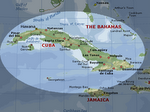
Time to lift the embargo on Cuba
BY MICHAEL HONDA
honda.house.gov
Few know that Cuba, infamous for its socialism, cigars and salsa, was recently the United States' largest rice export market and is the fifth largest export market in Latin America for U.S. farm exports. Cuba holds $20 billion in trade with America over a three-year term. Our economy could benefit mightily from better relations, yet we alienate this potential ally.
When I traveled to Cuba with a congressional delegation, it became clear that the embargo is imprudent politically, economically and socially. Everyone we met with -- U.S. and Cuban government officials, trade organizations, journalists, cultural attachés, foreign diplomats and rural farmers -- confirmed this point.
Politically, now that Latin America stands beside Cuba -- as evidenced by diplomatic reinstatements with holdouts El Salvador and Costa Rica -- and the reintegration of Cuba into the Organization for American States and the Community of Latin American and Caribbean States (CLACS) -- the United States risks ruinous relations with countries who see the blockade as backward. The United States is already marginalized: CLACS explicitly bars U.S. participation.
The impact of this Latin tack towards insularity is not insignificant. Consider grandstanding by Brazil's President Lula da Silva, who rebuffed Secretary of State Hillary Clinton's efforts to bring Brazil in on Iran sanctions while courting Cuba's leadership. Lula, capitalizing on Cuba's appetite for growth, proposed investments in industrial, agriculture and infrastructure projects, including ports and hotels, and an agreement with Brazil's oil company.
We will see more of this. The Cubans are seeking suitors. Like the Bank of the South, Latin America's attempt to wean countries off U.S. institutions like the World Bank, the longer we keep Cuba at arm's length, the more likely Brazil and others will take our place. The longer we keep Cuba listed as a state sponsor of terrorism, an allegation roundly criticized by diplomats, the more we risk the credibility of our national security regime and reputation in the region.
Economically, the case for cooperation is even clearer. Despite the trade embargo, there is some engagement. Cuba continues to be reliant on U.S. agriculture. Since 2002, we have been Cuba's largest supplier of food and agricultural products, with Cuba purchasing more than $3.2 billion worth of products since 2001.
This agricultural reliance is in jeopardy, which puts American farmers at risk. In 2008, U.S. food imports to Cuba totaled $712 million, declined to $533 million last year and are declining this year. Cuba, having witnessed strong economic growth in the early 2000s at 11 and 13 percent, is now struggling to make ends meet, slipping below 2 percent in 2009. Beyond foodstuffs, other natural resources offer potential for partnership. The U.S. Geological Survey estimates nine billion barrels of oil are available in Cuba, plus an estimated nine billion cubic meters of natural gas. The Cuban government cites higher oil numbers, at 20 billion barrels. Either way, there's money to be made, and Cubans welcome participation. While the United States disengages, countries like Brazil, Russia, Venezuela and China are talking. We are clearly missing investment opportunities.
Socially, Cubans emphatically embrace the cultural convergences between our countries. Their love of music, art, dance, history and architecture is ubiquitous, drawing 2.5 million tourists annually to Cuba, 800,000 of which are Canadian. If the travel ban was lifted, two million Americans are expected to travel there immediately, and ultimately growing to four million. This is hardly surprising. Havana retains the Caribbean's largest, oldest, and best-preserved Spanish colonial architecture. The city's charm is intoxicating.
We should expand cooperation on education, medicine, science and sports through nonpolitical, people-to-people exchanges. The U.S. president has the authority to return the rules for academic, science, religious and other ``purposeful travel'' so that exchange can flourish again. This is how we rebuild relations.
None of this negates the sobering negatives characterizing U.S.-Cuba relations. Cubans remain poor, irrespective of education (at nearly 100 percent literacy) and healthcare (everyone is covered, for everything). The government is inadequately serving the population, and there is a palpable, public rethink surfacing within society, from government officials to academics to farmers. Reform is coming, though not as soon as, or in the form, the United States prefers.
America's annual $60 million in democracy-building, which is covertly distributed for explicitly stated regime change, exacerbates the problem by goading the government, jeopardizing the safety of reformers and marginalizing the U.S. Interests Section there. The American penchant for positioning Cuba-related communiqués as primarily human-rights reprimands resonates rankly as an inconsistent singling out.
Amid the acrimony, the United States and Cuba are cautiously coordinating on areas of mutual interest, like migration, counter-narcotics and disaster preparedness. The United States must build on this sooner rather than later, before others opt in while we opt out.
Cuba is not the enemy. She may frustrate the American proclivity for democracy promotion, but her behavior is nothing near as nefarious as U.S. allies elsewhere. The time to engage is now. Cubans are increasingly confabbing about reform while we sideline ourselves from the conversation.
Michael Honda is a U.S. congressman from the 15th District in California.
Read more: http://www.miamiherald.com/2010/04/13/v-fullstory/1577713/time-to-lift-the-embargo-on-cuba.html#ixzz0lbVZM0tV
Monday, April 19, 2010


Monday, April 12, 2010
Secretary of State at University of Louisville
Hillary Rodham Clinton
Secretary of State
University of Louisville
Louisville, KY
April 9, 2010
QUESTION: Thank you, Senator Clinton. Given the fact that probably the Cuban missile crisis may be the greatest example of a deterrent, that’s been almost 50 years ago. Is there any talk within the Department of maybe normalizing relationships with Cuba?
SECRETARY CLINTON: That’s a really – that’s a topic of conversation a lot. I don’t think that there is any question that, at some point, the people of Cuba should have democratically elected leaders and should have a chance to chart their own future. But unfortunately, I don’t see that happening while the Castros are still in charge. And so what President Obama has done is to create more space, more family travel, more business opportunities to sell our farm products or for our telecom companies to compete dealing with common issues that we have with Cuba like migration or drug trafficking. In fact, during the height of the terrible catastrophe in Haiti because of the earthquake, we actually helped some of the Cuban doctors get medical supplies who were already operating there.
So there are ways in which we’re trying to enhance our cooperation. But it is my personal belief that the Castros do not want to see an end to the embargo and do not want to see normalization with the United States, because they would then lose all of their excuses for what hasn’t happened in Cuba in the last 50 years. And I find that very sad, because there should be an opportunity for a transition to a full democracy in Cuba. And it’s going to happen at some point, but it may not happen anytime soon.
And just – if you look at any opening to Cuba, you can almost chart how the Castro regime does something to try to stymie it. So back when my husband was president and he was willing to make overtures to Cuba and they were beginning to open some doors, Castro ordered the – his military to shoot down these two little unarmed planes that were dropping pamphlets on Cuba that came from Miami. And just recently, the Cubans arrested an American who was passing out information and helping elderly Cubans communicate through the internet, and they’ve thrown him in jail. And they recently let a Cuban prisoner die from a hunger strike. So it’s a dilemma.
And I think for the first time, because we came in and said, look, we’re willing to talk and we’re willing to open up, and we saw the way the Cubans responded. For the first time, a lot of countries that have done nothing but berate the United States for our failure to be more open to Cuba have now started criticizing Cuba because they’re letting people die. They’re letting these hunger strikers die. They’ve got 200 political prisoners who are there for trivial reasons. And so I think that many in the world are starting to see what we have seen a long time, which is a very intransigent, entrenched regime that has stifled opportunity for the Cuban people, and I hope will begin to change and we’re open to changing with them, but I don’t know that that will happen before some more time goes by (Applause.)
Secretary of State
University of Louisville
Louisville, KY
April 9, 2010
QUESTION: Thank you, Senator Clinton. Given the fact that probably the Cuban missile crisis may be the greatest example of a deterrent, that’s been almost 50 years ago. Is there any talk within the Department of maybe normalizing relationships with Cuba?
SECRETARY CLINTON: That’s a really – that’s a topic of conversation a lot. I don’t think that there is any question that, at some point, the people of Cuba should have democratically elected leaders and should have a chance to chart their own future. But unfortunately, I don’t see that happening while the Castros are still in charge. And so what President Obama has done is to create more space, more family travel, more business opportunities to sell our farm products or for our telecom companies to compete dealing with common issues that we have with Cuba like migration or drug trafficking. In fact, during the height of the terrible catastrophe in Haiti because of the earthquake, we actually helped some of the Cuban doctors get medical supplies who were already operating there.
So there are ways in which we’re trying to enhance our cooperation. But it is my personal belief that the Castros do not want to see an end to the embargo and do not want to see normalization with the United States, because they would then lose all of their excuses for what hasn’t happened in Cuba in the last 50 years. And I find that very sad, because there should be an opportunity for a transition to a full democracy in Cuba. And it’s going to happen at some point, but it may not happen anytime soon.
And just – if you look at any opening to Cuba, you can almost chart how the Castro regime does something to try to stymie it. So back when my husband was president and he was willing to make overtures to Cuba and they were beginning to open some doors, Castro ordered the – his military to shoot down these two little unarmed planes that were dropping pamphlets on Cuba that came from Miami. And just recently, the Cubans arrested an American who was passing out information and helping elderly Cubans communicate through the internet, and they’ve thrown him in jail. And they recently let a Cuban prisoner die from a hunger strike. So it’s a dilemma.
And I think for the first time, because we came in and said, look, we’re willing to talk and we’re willing to open up, and we saw the way the Cubans responded. For the first time, a lot of countries that have done nothing but berate the United States for our failure to be more open to Cuba have now started criticizing Cuba because they’re letting people die. They’re letting these hunger strikers die. They’ve got 200 political prisoners who are there for trivial reasons. And so I think that many in the world are starting to see what we have seen a long time, which is a very intransigent, entrenched regime that has stifled opportunity for the Cuban people, and I hope will begin to change and we’re open to changing with them, but I don’t know that that will happen before some more time goes by (Applause.)
Wednesday, March 17, 2010
US, Cuban officials discuss Haiti quake assistance
US, Cuban officials discuss Haiti quake assistance
17 Mar 2010 23:40:07 GMT
Source: Reuters
* Meeting held at experts' conference in Santo Domingo
* Cuba, U.S. involved in huge Haiti relief effort
By Manuel Jimenez
SANTO DOMINGO, March 17 (Reuters) - U.S. and Cuban officials met in the Dominican Republic on Wednesday to discuss international cooperation on assistance for Haiti after the catastrophic earthquake there, diplomats said.
The meeting took place in Santo Domingo on the sidelines of an international conference of experts and officials from the Haitian government, donor nations, United Nations agencies and humanitarian groups to draft a reconstruction plan for the poor, quake-stricken Caribbean nation.
The United States sent thousands of soldiers and aid workers to Haiti after the Jan. 12 earthquake, and Cuba sent hundreds of doctors and health personnel, all part of a huge international relief effort. Haiti says more than 300,000 people may have been killed in the catastrophe.
Diplomats said Cheryl Mills, counselor and chief of staff to U.S. Secretary of State Hillary Clinton, and another senior State Department official, Julissa Reynoso, met in Santo Domingo with Cuban Deputy Foreign Minister Rogelio Sierra and a senior Cuban Health Ministry official.
Washington maintains a longstanding trade embargo against communist-ruled Cuba and nearly a half-century of hostile relations means that high-level meetings between the two countries are few and far between.
The diplomats, who asked not to be named, said the U.S. and Cuban officials discussed aid for Haiti, including Cuba's capacity to help provide medical care for the hundreds of thousands of injured and homeless Haitian quake victims. More details of what they discussed were not immediately known.
The U.S. delegation also held separate meetings with delegations from several other countries, including Venezuela, the diplomats said.
Venezuelan President Hugo Chavez, like his ally Cuba, is a fierce critic of U.S. policies. Shortly after the quake, Chavez accused the United States of using the disaster as a pretext to occupy the devastated Caribbean country by sending troops. He recommended Washington should send doctors instead.
Three days after the quake, U.S. officials announced the Cuban government had agreed to let the U.S. military use restricted Cuban air space for medical evacuation flights carrying Haitian victims, sharply reducing the flight time to Miami.
Some analysts expressed hopes that this kind of U.S.-Cuban cooperation could lead to a thaw in frosty ties between Havana and Washington, which U.S. President Barack Obama said last year he would like to restore to a better footing.
But the Feb. 23 death of a Cuban political prisoner on a hunger strike, and the continuing detention in Cuba of a U.S. contractor accused by Havana of distributing illegal communications equipment have stoked mutual criticisms between the two longtime ideological enemies.
The experts meeting in Santo Domingo this week worked on a draft of a reconstruction plan for Haiti, whose leaders say $11.5 billion will be needed for recovery and rebuilding in what was already the Western Hemisphere's poorest state.
The plan will be presented for approval and funding at an international donors conference in New York on March 31. (Editing by Pascal Fletcher and Eric Beech)
17 Mar 2010 23:40:07 GMT
Source: Reuters
* Meeting held at experts' conference in Santo Domingo
* Cuba, U.S. involved in huge Haiti relief effort
By Manuel Jimenez
SANTO DOMINGO, March 17 (Reuters) - U.S. and Cuban officials met in the Dominican Republic on Wednesday to discuss international cooperation on assistance for Haiti after the catastrophic earthquake there, diplomats said.
The meeting took place in Santo Domingo on the sidelines of an international conference of experts and officials from the Haitian government, donor nations, United Nations agencies and humanitarian groups to draft a reconstruction plan for the poor, quake-stricken Caribbean nation.
The United States sent thousands of soldiers and aid workers to Haiti after the Jan. 12 earthquake, and Cuba sent hundreds of doctors and health personnel, all part of a huge international relief effort. Haiti says more than 300,000 people may have been killed in the catastrophe.
Diplomats said Cheryl Mills, counselor and chief of staff to U.S. Secretary of State Hillary Clinton, and another senior State Department official, Julissa Reynoso, met in Santo Domingo with Cuban Deputy Foreign Minister Rogelio Sierra and a senior Cuban Health Ministry official.
Washington maintains a longstanding trade embargo against communist-ruled Cuba and nearly a half-century of hostile relations means that high-level meetings between the two countries are few and far between.
The diplomats, who asked not to be named, said the U.S. and Cuban officials discussed aid for Haiti, including Cuba's capacity to help provide medical care for the hundreds of thousands of injured and homeless Haitian quake victims. More details of what they discussed were not immediately known.
The U.S. delegation also held separate meetings with delegations from several other countries, including Venezuela, the diplomats said.
Venezuelan President Hugo Chavez, like his ally Cuba, is a fierce critic of U.S. policies. Shortly after the quake, Chavez accused the United States of using the disaster as a pretext to occupy the devastated Caribbean country by sending troops. He recommended Washington should send doctors instead.
Three days after the quake, U.S. officials announced the Cuban government had agreed to let the U.S. military use restricted Cuban air space for medical evacuation flights carrying Haitian victims, sharply reducing the flight time to Miami.
Some analysts expressed hopes that this kind of U.S.-Cuban cooperation could lead to a thaw in frosty ties between Havana and Washington, which U.S. President Barack Obama said last year he would like to restore to a better footing.
But the Feb. 23 death of a Cuban political prisoner on a hunger strike, and the continuing detention in Cuba of a U.S. contractor accused by Havana of distributing illegal communications equipment have stoked mutual criticisms between the two longtime ideological enemies.
The experts meeting in Santo Domingo this week worked on a draft of a reconstruction plan for Haiti, whose leaders say $11.5 billion will be needed for recovery and rebuilding in what was already the Western Hemisphere's poorest state.
The plan will be presented for approval and funding at an international donors conference in New York on March 31. (Editing by Pascal Fletcher and Eric Beech)
Sunday, March 7, 2010
Minnesota Agricultural Delegation
MARSHALL, Minn. — Kari Howe, regional economic development program specialist with the Minnesota Department of Employment and Economic Development, was part of the Minnesota Agriculture and Rural Leadership program international mission to Cuba Feb. 15 - 25
Howe of Bemidji was a member of the 36-person MARL Class V delegation that departed from Minneapolis for Miami on Feb. 15.
Florida provided a preamble for the group of the culture and agriculture it would see in Cuba. The group spent Monday and Tuesday in Florida to learn about U.S. agricultural industries comparable to those it would see in Cuba.
The charter flight from Miami to Havana departed on Wednesday.
“This was a valuable experience for MARL participants,” said Tim Alcorn, MARL executive director. “Our time in Florida was a great primer for the Cuba agriculture we saw. We left Cuba with a far better feel for the economic issues facing the communist country as a result of the U.S. embargo that has been in place since the Cuban revolution in 1959.”
MARL program leader Mike Liepold said the current state of U.S. and Cuban relations impacted the trip. “It was like being in time travel. There was 100 years of technology differences living side by side everywhere, Liepold said.
“There were 1950 Chevys all over. We saw 20,000-acre farms, next to people working fields with oxen. We saw homes constructed with marble interiors and basic one-room houses in the country. We met with government farm managers and workers as well as a few independent growers. It was meeting with the Cuban people that we found especially memorable. The trip was truly a life-changing experience,” he said.
The group’s agenda during its nine days in Cuba included stops that helped participants understand the country’s food distribution systems, both the staple commodity grain markets for the ration stores and the higher value restaurant and tourist food markets. Both are current markets for Minnesota farmers. Estimates place the growth potential of the market at over $1 billion if the current travel ban were ended.
Examples of food distribution system stops include a farmers’ market where Cubans with higher incomes purchase food to supplement the rations of staples provided by the government. Also, a grocery much like a U.S. supermarket, but with far more limited types and quantities of food available, including processed and frozen foods. The market and store were busy, but only a small percentage of Cubans can afford to purchase food at either business.
The group also saw portions of the Cuban agricultural production systems, including a state-run farm called Finca Cimex, where vegetables and ornamental plants, primarily cactus, are grown.
The time spent learning about the cane sugar industry in Florida proved beneficial as a stop was made at a closed cane sugar mill. Nearly half of the mills in Cuba were shuttered from 2000–2009. While the local mill was closed, cane is still produced in the area for processing at a different mill 200 kilometers away.
The Cuban market also holds good potential for tourism, which translates into demand for higher quality foods, particularly dairy and meat products that Minnesota could provide in the future. Cuban restaurant menus already heavily feature pork, chicken and cheese, but good quality beef and dairy products are in short supply. The proximity to Cuba gives the U.S. a natural advantage in the delivery of fresh, high quality food products simply because of transportation advantages.
However, the barrier to shipping beef, dairy, and many other products for that matter, into Cuba is price. The route that many products must take to get to Cuba under the U.S. trade embargo makes them extremely expensive, which places U.S. products at a competitive disadvantage when trying to serve the tourists to the country, who come primarily from Canada and Europe, with a smaller percentage from Mexico and South American countries.
The state of relations with Cuba is an ongoing political process in the U.S. Congress. While the MARL group was in Cuba, U.S. Rep. Collin Peterson, chairman of the U.S. House Agriculture Committee, was preparing legislation for introduction to make the sale of agricultural products to Cuba easier. Also included in the bill is language to ease the tight travel restrictions that prevent most U.S. citizens from being allowed to travel to Cuba.
The MARL program is a public-private partnership. Southwest Minnesota State University administers it and the University of Minnesota Extension coordinates the curriculum. The program is privately funded. Class members pay a participation fee, but the majority of funding comes from contributions from private sector associations, organizations, businesses, corporations, foundations, and individuals provide the majority of the funds to operate the program.
Two-thirds of the participants are agricultural producers and the other third are agribusiness people and other types of rural leaders.
http://www.bemidjipioneer.com/event/article/id/100016621/
Howe of Bemidji was a member of the 36-person MARL Class V delegation that departed from Minneapolis for Miami on Feb. 15.
Florida provided a preamble for the group of the culture and agriculture it would see in Cuba. The group spent Monday and Tuesday in Florida to learn about U.S. agricultural industries comparable to those it would see in Cuba.
The charter flight from Miami to Havana departed on Wednesday.
“This was a valuable experience for MARL participants,” said Tim Alcorn, MARL executive director. “Our time in Florida was a great primer for the Cuba agriculture we saw. We left Cuba with a far better feel for the economic issues facing the communist country as a result of the U.S. embargo that has been in place since the Cuban revolution in 1959.”
MARL program leader Mike Liepold said the current state of U.S. and Cuban relations impacted the trip. “It was like being in time travel. There was 100 years of technology differences living side by side everywhere, Liepold said.
“There were 1950 Chevys all over. We saw 20,000-acre farms, next to people working fields with oxen. We saw homes constructed with marble interiors and basic one-room houses in the country. We met with government farm managers and workers as well as a few independent growers. It was meeting with the Cuban people that we found especially memorable. The trip was truly a life-changing experience,” he said.
The group’s agenda during its nine days in Cuba included stops that helped participants understand the country’s food distribution systems, both the staple commodity grain markets for the ration stores and the higher value restaurant and tourist food markets. Both are current markets for Minnesota farmers. Estimates place the growth potential of the market at over $1 billion if the current travel ban were ended.
Examples of food distribution system stops include a farmers’ market where Cubans with higher incomes purchase food to supplement the rations of staples provided by the government. Also, a grocery much like a U.S. supermarket, but with far more limited types and quantities of food available, including processed and frozen foods. The market and store were busy, but only a small percentage of Cubans can afford to purchase food at either business.
The group also saw portions of the Cuban agricultural production systems, including a state-run farm called Finca Cimex, where vegetables and ornamental plants, primarily cactus, are grown.
The time spent learning about the cane sugar industry in Florida proved beneficial as a stop was made at a closed cane sugar mill. Nearly half of the mills in Cuba were shuttered from 2000–2009. While the local mill was closed, cane is still produced in the area for processing at a different mill 200 kilometers away.
The Cuban market also holds good potential for tourism, which translates into demand for higher quality foods, particularly dairy and meat products that Minnesota could provide in the future. Cuban restaurant menus already heavily feature pork, chicken and cheese, but good quality beef and dairy products are in short supply. The proximity to Cuba gives the U.S. a natural advantage in the delivery of fresh, high quality food products simply because of transportation advantages.
However, the barrier to shipping beef, dairy, and many other products for that matter, into Cuba is price. The route that many products must take to get to Cuba under the U.S. trade embargo makes them extremely expensive, which places U.S. products at a competitive disadvantage when trying to serve the tourists to the country, who come primarily from Canada and Europe, with a smaller percentage from Mexico and South American countries.
The state of relations with Cuba is an ongoing political process in the U.S. Congress. While the MARL group was in Cuba, U.S. Rep. Collin Peterson, chairman of the U.S. House Agriculture Committee, was preparing legislation for introduction to make the sale of agricultural products to Cuba easier. Also included in the bill is language to ease the tight travel restrictions that prevent most U.S. citizens from being allowed to travel to Cuba.
The MARL program is a public-private partnership. Southwest Minnesota State University administers it and the University of Minnesota Extension coordinates the curriculum. The program is privately funded. Class members pay a participation fee, but the majority of funding comes from contributions from private sector associations, organizations, businesses, corporations, foundations, and individuals provide the majority of the funds to operate the program.
Two-thirds of the participants are agricultural producers and the other third are agribusiness people and other types of rural leaders.
http://www.bemidjipioneer.com/event/article/id/100016621/
Thursday, February 25, 2010
H.R. 4645 Travel Restriction Reform and Export Enhancement Act
Travel Restriction Reform and Export Enhancement Act (Introduced in House)
HR 4645 IH
111th CONGRESS
2d Session
H. R. 4645
To remove obstacles to legal sales of United States agricultural commodities to Cuba and to end travel restrictions on all Americans to Cuba.
IN THE HOUSE OF REPRESENTATIVES
February 23, 2010
Mr. PETERSON (for himself, Mr. MORAN of Kansas, Ms. DELAURO, Mrs. EMERSON, Mr. DELAHUNT, Mr. FLAKE, Mr. MCGOVERN, Mr. BERMAN, Mr. BERRY, Ms. EDDIE BERNICE JOHNSON of Texas, Mr. CHILDERS, Mr. MINNICK, Mr. BOSWELL, Ms. HERSETH SANDLIN, Mr. SCOTT of Georgia, Mr. MASSA, Mr. BRIGHT, Mr. ELLSWORTH, Mr. HOLDEN, Mr. KAGEN, Mr. SNYDER, Mr. POMEROY, Mr. KIND, Mr. DAVIS of Tennessee, Mr. BOUSTANY, Mr. COSTA, Mr. BISHOP of Georgia, Mr. ROSS, Mr. TANNER, Mr. JOHNSON of Illinois, Mr. RYAN of Ohio, Mr. HINCHEY, Ms. LEE of California, and Mr. BOUCHER) introduced the following bill; which was referred to the Committee on Foreign Affairs, and in addition to the Committees on Agriculture and Financial Services, for a period to be subsequently determined by the Speaker, in each case for consideration of such provisions as fall within the jurisdiction of the committee concerned
A BILL
To remove obstacles to legal sales of United States agricultural commodities to Cuba and to end travel restrictions on all Americans to Cuba.
Be it enacted by the Senate and House of Representatives of the United States of America in Congress assembled,
SECTION 1. SHORT TITLE.
This Act may be cited as the `Travel Restriction Reform and Export Enhancement Act'.
SEC. 2. TRAVEL TO CUBA.
(a) In General- On and after the date of the enactment of this Act, and subject to subsection (b)--
(1) the President may not regulate or prohibit, directly or indirectly, travel to or from Cuba by United States citizens or lawful permanent residents, or any of the transactions incident to such travel; and
(2) any regulation in effect on such date of enactment that regulates or prohibits travel to or from Cuba by United States citizens or lawful permanent residents or transactions incident to such travel shall cease to have any force or effect.
(b) Exceptions- Subsection (a) shall not apply in a case in which the United States is at war with Cuba, armed hostilities between the two countries are in progress, or there is imminent danger to the public health or the physical safety of United States travelers.
(c) Applicability- This section applies to actions taken by the President before the date of the enactment of this Act that are in effect on such date of enactment, and to actions taken on or after such date.
(d) Inapplicability of Other Provisions- The provisions of this section apply notwithstanding section 102(h) of the Cuban Liberty and Democratic Solidarity (LIBERTAD) Act of 1996 (22 U.S.C. 6032(h)) and section 910(b) of the Trade Sanctions Reform and Export Enhancement Act of 2000 (22 U.S.C. 7210(b)).
SEC. 3. CLARIFICATION OF PAYMENT TERMS UNDER THE TRADE SANCTIONS REFORM AND EXPORT ENHANCEMENT ACT OF 2000.
Section 908(b)(4) of the Trade Sanctions Reform and Export Enhancement Act of 2000 (22 U.S.C. 7207(b)(4)) is amended--
(1) in subparagraph (B), by striking `and' at the end;
(2) in subparagraph (C), by striking the period at the end and inserting `; and'; and
(3) by adding at the end the following:
`(D) the term `payment of cash in advance' means, notwithstanding any other provision of law, the payment by the purchaser of an agricultural commodity or product and the receipt of such payment by the seller prior to--
`(i) the transfer of title of such commodity or product to the purchaser; and
`(ii) the release of control of such commodity or product to the purchaser.'.
SEC. 4. AUTHORIZATION OF DIRECT TRANSFERS BETWEEN CUBAN AND UNITED STATES FINANCIAL INSTITUTIONS UNDER THE TRADE SANCTIONS REFORM AND EXPORT ENHANCEMENT ACT OF 2000.
Notwithstanding any other provision of law, the President may not restrict direct transfers from a Cuban financial institution to a United States financial institution executed in payment for a product authorized for sale under the Trade Sanctions Reform and Export Enhancement Act of 2000 (22 U.S.C. 7201 et seq.).
HR 4645 IH
111th CONGRESS
2d Session
H. R. 4645
To remove obstacles to legal sales of United States agricultural commodities to Cuba and to end travel restrictions on all Americans to Cuba.
IN THE HOUSE OF REPRESENTATIVES
February 23, 2010
Mr. PETERSON (for himself, Mr. MORAN of Kansas, Ms. DELAURO, Mrs. EMERSON, Mr. DELAHUNT, Mr. FLAKE, Mr. MCGOVERN, Mr. BERMAN, Mr. BERRY, Ms. EDDIE BERNICE JOHNSON of Texas, Mr. CHILDERS, Mr. MINNICK, Mr. BOSWELL, Ms. HERSETH SANDLIN, Mr. SCOTT of Georgia, Mr. MASSA, Mr. BRIGHT, Mr. ELLSWORTH, Mr. HOLDEN, Mr. KAGEN, Mr. SNYDER, Mr. POMEROY, Mr. KIND, Mr. DAVIS of Tennessee, Mr. BOUSTANY, Mr. COSTA, Mr. BISHOP of Georgia, Mr. ROSS, Mr. TANNER, Mr. JOHNSON of Illinois, Mr. RYAN of Ohio, Mr. HINCHEY, Ms. LEE of California, and Mr. BOUCHER) introduced the following bill; which was referred to the Committee on Foreign Affairs, and in addition to the Committees on Agriculture and Financial Services, for a period to be subsequently determined by the Speaker, in each case for consideration of such provisions as fall within the jurisdiction of the committee concerned
A BILL
To remove obstacles to legal sales of United States agricultural commodities to Cuba and to end travel restrictions on all Americans to Cuba.
Be it enacted by the Senate and House of Representatives of the United States of America in Congress assembled,
SECTION 1. SHORT TITLE.
This Act may be cited as the `Travel Restriction Reform and Export Enhancement Act'.
SEC. 2. TRAVEL TO CUBA.
(a) In General- On and after the date of the enactment of this Act, and subject to subsection (b)--
(1) the President may not regulate or prohibit, directly or indirectly, travel to or from Cuba by United States citizens or lawful permanent residents, or any of the transactions incident to such travel; and
(2) any regulation in effect on such date of enactment that regulates or prohibits travel to or from Cuba by United States citizens or lawful permanent residents or transactions incident to such travel shall cease to have any force or effect.
(b) Exceptions- Subsection (a) shall not apply in a case in which the United States is at war with Cuba, armed hostilities between the two countries are in progress, or there is imminent danger to the public health or the physical safety of United States travelers.
(c) Applicability- This section applies to actions taken by the President before the date of the enactment of this Act that are in effect on such date of enactment, and to actions taken on or after such date.
(d) Inapplicability of Other Provisions- The provisions of this section apply notwithstanding section 102(h) of the Cuban Liberty and Democratic Solidarity (LIBERTAD) Act of 1996 (22 U.S.C. 6032(h)) and section 910(b) of the Trade Sanctions Reform and Export Enhancement Act of 2000 (22 U.S.C. 7210(b)).
SEC. 3. CLARIFICATION OF PAYMENT TERMS UNDER THE TRADE SANCTIONS REFORM AND EXPORT ENHANCEMENT ACT OF 2000.
Section 908(b)(4) of the Trade Sanctions Reform and Export Enhancement Act of 2000 (22 U.S.C. 7207(b)(4)) is amended--
(1) in subparagraph (B), by striking `and' at the end;
(2) in subparagraph (C), by striking the period at the end and inserting `; and'; and
(3) by adding at the end the following:
`(D) the term `payment of cash in advance' means, notwithstanding any other provision of law, the payment by the purchaser of an agricultural commodity or product and the receipt of such payment by the seller prior to--
`(i) the transfer of title of such commodity or product to the purchaser; and
`(ii) the release of control of such commodity or product to the purchaser.'.
SEC. 4. AUTHORIZATION OF DIRECT TRANSFERS BETWEEN CUBAN AND UNITED STATES FINANCIAL INSTITUTIONS UNDER THE TRADE SANCTIONS REFORM AND EXPORT ENHANCEMENT ACT OF 2000.
Notwithstanding any other provision of law, the President may not restrict direct transfers from a Cuban financial institution to a United States financial institution executed in payment for a product authorized for sale under the Trade Sanctions Reform and Export Enhancement Act of 2000 (22 U.S.C. 7201 et seq.).
Tuesday, February 9, 2010
Is travel legislation in trouble?
Cuba travel bill buried in political agenda
1:05am EST
By Esteban Israel
WASHINGTON (Reuters) - A bipartisan drive in Congress to end a Cold War-era travel ban on Cuba was buried during the healthcare reform debate but its supporters hope to dig it out this year.
Sponsors of two bills allowing Americans to travel freely to Cuba, introduced last year in the Senate and the House of Representatives, say a flood of dollars from the pro-embargo Cuban-American lobby might also have played a part.
"Support has not waned but it's clear that the debate over healthcare has consumed the first year of the (Obama) administration and has had a similar impact in terms of congressional action," Representative Bill Delahunt, a Democrat and one of the authors of the bill, told Reuters.
Co-sponsor Jeff Flake, a Republican representative, said the votes were there to pass the Freedom to Travel to Cuba Act this year but the Democratic majority in the House was divided over whether to take it to the floor for a vote.
"This is not an issue that is at the top of their agenda or anywhere close and it's also an issue that splits part of their caucus," he said. "I still think it could happen this year."
The bill has 178 backers in the House, 40 votes short of the 218 needed but still a "big number," Flake said.
If passed, the act would be a bold step toward ending the 48-year U.S. trade embargo against Cuba and likely would flood the communist-run Caribbean island with American tourists attracted by its beaches and revolutionary mystique.
The U.S. National Tour Association estimates at least 850,000 Americans would fly to Cuba, just 90 miles off the Florida coast, in the first year after sanctions were lifted. U.S. and Cuban tour operators will meet next month in the Mexican resort of Cancun to draw up plans for that day.
The Cuba travel bills were introduced last year as President Barack Obama promised to "recast" troubled relations with Cuba. But the expectations raised when Obama lifted travel restrictions for Cuba-Americans are now all but gone.
"MONEY TALKS"
The explanation may lay, in part, in a strategy change by Cuban-Americans opposed to the Castro leadership. In the last few years, they have given Democratic lawmakers generous donations in the hopes of preventing any relaxation of the U.S. trade embargo.
Public Campaign, a non-partisan group, estimated hardline Cuban-Americans gave more than $10 million in contributions to politicians since 2004.
Mauricio Claver-Carone, director of the pro-embargo U.S.-Cuba Democracy Public Action Committee, sees a clear link between those money flows and the apparent stall of the bills.
"There is undoubtedly a connection," he told Reuters. "One of our goals was to break the political barrier and make Cuba policy a bipartisan issue."
U.S. tourism would be a life-line for the cash-strapped Cuban government, he said, allowing it to almost double the island's gross domestic product in the first year.
Divisions among Democrats emerged in November when 53 representatives signed a letter against any changes in the U.S. Cuba policy based on human rights concerns.
Public Campaign said 51 of the 53 had received a total of more than $850,000 in contributions from the U.S.-Cuba Democracy Public Action Committee and other pro-embargo donors.
"The letter, I think, was a strong indication the votes are not there," Representative Debbie Wasserman Schultz, a Democrat from Florida who gathered the signatures, told Reuters.
"I have about 20 more Democrats who didn't sign the letter but would not vote to lift the travel ban. That, combined with the overwhelming majority of Republicans, indicates the votes are just not there."
Supporters of the bill acknowledge the Public Action Committee has been effective.
"They've always had money and, in Washington, money talks," said Delahunt.
BACKGROUND NOISE
Supporters of the bill play down the impact of recent rifts between Washington and Havana, notably Cuba's detention last December of a U.S. contractor accused of distributing illegal satellite communications gear.
Cuban President Raul Castro, who took over from his ailing older brother Fidel in 2008, said the contractor incident showed Obama was committed to destroying the island's socialist system, just as his 10 predecessors were.
The renewed tension was reflected in The Washington Post's editorial page, where a recent piece said the travel bill should be frozen until Cuba frees the detained contractor.
But supporters called it "background noise" and said the act was not so much about rewarding the Cuban government as guaranteeing the right of Americans to travel.
Senator Byron Dorgan, a Democrat whose bill has 38 co-sponsors, said the current policy only punishes Americans.
"This describes the goofy position we put ourselves in by inhibiting the right of the American people to travel," Dorgan said. "Do you think there will be a ghost of a chance of saying we are going to now restrict the right of the American people to travel to China? You will be run out of town."
(Editing by John O'Callaghan)
http://www.reuters.com/article/idUSTRE6180PP20100209
My comment:
The key to success in Congress is the leadership role of the President. He needs to reverse the Bush Administration's crippling restrictions on educational, cultural, religious and humanitarian people-to-people travel. He should also make clear that he is prepared to sign legislation to end all travel restrictions.
John McAuliff
Fund for Reconciliation and Development
1:05am EST
By Esteban Israel
WASHINGTON (Reuters) - A bipartisan drive in Congress to end a Cold War-era travel ban on Cuba was buried during the healthcare reform debate but its supporters hope to dig it out this year.
Sponsors of two bills allowing Americans to travel freely to Cuba, introduced last year in the Senate and the House of Representatives, say a flood of dollars from the pro-embargo Cuban-American lobby might also have played a part.
"Support has not waned but it's clear that the debate over healthcare has consumed the first year of the (Obama) administration and has had a similar impact in terms of congressional action," Representative Bill Delahunt, a Democrat and one of the authors of the bill, told Reuters.
Co-sponsor Jeff Flake, a Republican representative, said the votes were there to pass the Freedom to Travel to Cuba Act this year but the Democratic majority in the House was divided over whether to take it to the floor for a vote.
"This is not an issue that is at the top of their agenda or anywhere close and it's also an issue that splits part of their caucus," he said. "I still think it could happen this year."
The bill has 178 backers in the House, 40 votes short of the 218 needed but still a "big number," Flake said.
If passed, the act would be a bold step toward ending the 48-year U.S. trade embargo against Cuba and likely would flood the communist-run Caribbean island with American tourists attracted by its beaches and revolutionary mystique.
The U.S. National Tour Association estimates at least 850,000 Americans would fly to Cuba, just 90 miles off the Florida coast, in the first year after sanctions were lifted. U.S. and Cuban tour operators will meet next month in the Mexican resort of Cancun to draw up plans for that day.
The Cuba travel bills were introduced last year as President Barack Obama promised to "recast" troubled relations with Cuba. But the expectations raised when Obama lifted travel restrictions for Cuba-Americans are now all but gone.
"MONEY TALKS"
The explanation may lay, in part, in a strategy change by Cuban-Americans opposed to the Castro leadership. In the last few years, they have given Democratic lawmakers generous donations in the hopes of preventing any relaxation of the U.S. trade embargo.
Public Campaign, a non-partisan group, estimated hardline Cuban-Americans gave more than $10 million in contributions to politicians since 2004.
Mauricio Claver-Carone, director of the pro-embargo U.S.-Cuba Democracy Public Action Committee, sees a clear link between those money flows and the apparent stall of the bills.
"There is undoubtedly a connection," he told Reuters. "One of our goals was to break the political barrier and make Cuba policy a bipartisan issue."
U.S. tourism would be a life-line for the cash-strapped Cuban government, he said, allowing it to almost double the island's gross domestic product in the first year.
Divisions among Democrats emerged in November when 53 representatives signed a letter against any changes in the U.S. Cuba policy based on human rights concerns.
Public Campaign said 51 of the 53 had received a total of more than $850,000 in contributions from the U.S.-Cuba Democracy Public Action Committee and other pro-embargo donors.
"The letter, I think, was a strong indication the votes are not there," Representative Debbie Wasserman Schultz, a Democrat from Florida who gathered the signatures, told Reuters.
"I have about 20 more Democrats who didn't sign the letter but would not vote to lift the travel ban. That, combined with the overwhelming majority of Republicans, indicates the votes are just not there."
Supporters of the bill acknowledge the Public Action Committee has been effective.
"They've always had money and, in Washington, money talks," said Delahunt.
BACKGROUND NOISE
Supporters of the bill play down the impact of recent rifts between Washington and Havana, notably Cuba's detention last December of a U.S. contractor accused of distributing illegal satellite communications gear.
Cuban President Raul Castro, who took over from his ailing older brother Fidel in 2008, said the contractor incident showed Obama was committed to destroying the island's socialist system, just as his 10 predecessors were.
The renewed tension was reflected in The Washington Post's editorial page, where a recent piece said the travel bill should be frozen until Cuba frees the detained contractor.
But supporters called it "background noise" and said the act was not so much about rewarding the Cuban government as guaranteeing the right of Americans to travel.
Senator Byron Dorgan, a Democrat whose bill has 38 co-sponsors, said the current policy only punishes Americans.
"This describes the goofy position we put ourselves in by inhibiting the right of the American people to travel," Dorgan said. "Do you think there will be a ghost of a chance of saying we are going to now restrict the right of the American people to travel to China? You will be run out of town."
(Editing by John O'Callaghan)
http://www.reuters.com/article/idUSTRE6180PP20100209
My comment:
The key to success in Congress is the leadership role of the President. He needs to reverse the Bush Administration's crippling restrictions on educational, cultural, religious and humanitarian people-to-people travel. He should also make clear that he is prepared to sign legislation to end all travel restrictions.
John McAuliff
Fund for Reconciliation and Development
Thursday, January 14, 2010
Questions about detained DAI subcontractor
The subcontractor is named, but little else is clear
La Alborada - January 13
It has taken a long time, but finally the subcontractor has been named. He is Alan P. Gross, head of Joint Business Development Center (JBDC) in the Chevy Chase suburb of Washington, D.C.
The New York Times and the Washington Post both covered the news yesterday in reports not from wire services but by respective teams of assigned staff writers, each including a team member in Mexico City. The Times gave as its primary source unnamed "American officials"; the Post cited "former colleagues and other sources." It sounds like the State Department gave selected information to the two chosen newspapers, but not for attribution, and did so in Mexico City --not in New York and Washington-- for whatever reasons.
The reports suggested the understanding that readers should reach. That is, essentially, that Gross is a social worker who likes to help people in other countries, and would certainly not be a government agent. The Times transmitted the unofficial official story this way: "American officials say that Mr. Gross had gone to Cuba as part of a United States government program and was providing encouragement and financial assistance to religious nonprofit groups...[the unnamed officials] flatly dispute any allegations that he is a spy."
The Times cited also unnamed people who know Gross: "Mr. Gross has visited Cuba several times, delivering computer and satellite equipment to three Jewish community groups, according to people with knowledge of his work...The people who know about his work, who spoke on the condition of anonymity because they were not authorized to comment on the matter, said Mr. Gross was sent to research how the groups were making use of the equipment he had previously distributed to them."
This information contradicts the version of the American officials. While the officials talked about "encouragement and financial assistance," people "with knowledge of his work" said that Gross was sent to research how groups were making use of the computer and satellite equipment he had previously delivered. And the latter statement, of course, contradicts earlier assertions from the contracting company, DAI, that Gross was in Havana handing out equipment to underserved Cubans. As we point out below, all of this is contradicted in turn by the Post's account.
The Times did cite someone by name, a friend, who offered that "The Alan I know is someone who is concerned only about helping improve the human condition, not meddling in people’s politics." But another unidentified source, an unnamed "aide to a Democratic Senator," opined that "This is the kind of thing we do all over the world when we are trying to reach people their governments don’t want us to reach. It’s naïve to think that if we asked Cuba for permission, we’d get it."
The Post, for its part, cited its own unidentified sources to the effect that Gross was "working on a U.S. government project to help the island's Jewish community access the Internet." Matching the Times, it also cited an acquaintance's opinion that Gross was innocent: "It was probably pure naiveness, innocence -- not seeing anything wrong with what he was doing...He's definitely not a shrewd, calculating person. He's someone who genuinely gets into situations because he thinks he can help."
The Post's unnamed "sources familiar with Gross' work" explained that "he was helping Cubans download music, access Wikipedia and read the Encyclopaedia Britannica, which was provided on flash drives. The project is also aimed at helping members of the small Cuban Jewish community communicate among themselves and with Jews overseas," activities different from those mentioned by all of the other sources cited. The president of the contracting corporation, Development Alternatives, said that Gross "was trying to facilitate communications in 'a nonviolent, non-dissident religious organization."
Given the kaleidoscopic series of opinions, we looked on Internet for information on Gross' corporation. A direct link to the company was inactive, but on a page in cache, dated November 24, 2009, the company had this to say about itself:
The World Is Your Marketplace!
JBDC provides practical 21st century solutions to business, government, associations, and humanitarian aid organizations, globally. JBDC brings three decades of experience from completing successful results-oriented projects in more than 50 countries, with expertise in:
1. Economic and Community Development
2. New Media Technical Implementation Strategies
3. Rural Internet Access and Intranet Development
4. Global Managed VSAT Services
5. Business and ICT Development Services
6. Trade Facilitation
JBDC is described elsewhere as "a 501(c)(3) non-profit corporation that fosters economic strength and independence of emerging free-market business communities," and, more specifically, in these terms:
JBDC brings 21st century solutions to business, associations, government and aid organizations in emerging markets, globally.
JBDC is dedicated to designing, funding and implementing programs to advance economic and business development locally and globally. In recent years JBDC has supported Internet connectivity in locations where there was little or no access. In the past two years JBDC has installed more than 60 satellite terminals, bringing Internet access, email, VoIP, fax and the like to remote locations in Iraq, Afghanistan, Armenia, and Kuwait.
The site also lists the following areas of operation for JDBC: "Africa, Caribbean, Latin America, Middle East, Fr. Soviet Union." The areas of work are listed on another site as "Iraq, Afghanistan, Central and Eastern Europe, Former Soviet Union, Middle East".
The latter site, with information dated 2005, provides the following data, which highlight the underlying tension between JDBC's status as a tax-exempt non-profit organization helping people to communicate and its market-driven and business-oriented mission:
Chief Executive Profile
Mr. Gross is founder and executive director of JBDC. He has worked in nearly 60 countries in areas of economic and business development, trade and investment, market development, institutional monitoring and evaluation, and organizational development.
Mission
Advance the business, economic and independent development of emerging communities as they progress toward free-market economies and enterprise systems. Foster the development of private enterprise in emerging markets by using reliable, results-oriented business practices.
Programs
These are to be accomplished by infusing human, technical and financial capital in "next phase" businesses. JBDC sponsors MicroNet, providing broadband internet access for microenterprises in remote locations, globally. JBDC collaborates with private industry to address development issues with 21st century solutions.
Accomplishments for Fiscal Year Ending December 31, 2005
1. Established new VSAT installations in Afghanistan, Armenia, Iraq and Kuwait.
2. Continues to support MicroNet activities and USAID-funded IQCs, such as RAISE PLUS and AMAP.
3. Continued support for humanitarian activities in Cuba, Palestine and Israel.
Objectives for Fiscal Year Beginning January 1, 2006
1. Secure new funding as appropriate to accomplish mission.
2. Expand operations in new target countries.
3. Manage ongoing activities worldwide.
For calendar year 2004, the company reported revenue of $405,419 in Program Services (Contributions and Government Grants were zero). Apparently, its micro-clients were able to come up with almost half a million dollars collectively to pay for the company's services that year.
In sum, we now know the name of the subcontractor, but not what his company really does, although the company itself says that it focuses on creating access to Internet through its own satellite network. Mr. Gross is described as a social worker, but his small charitable company, ranging worldwide, advances expert market-driven "solutions." Information published by the Times and the Post is contradictory internally to the respective reports and between them, as well as compared to what the company that contracted him says. "American officials" were a source for both newspaper stories, but declined to identify themselves.
Surely, there is more to this story.
We still have not heard from Cuba. New and contradictory information from that country, but from named officials, can be expected.
La Alborada - January 13
It has taken a long time, but finally the subcontractor has been named. He is Alan P. Gross, head of Joint Business Development Center (JBDC) in the Chevy Chase suburb of Washington, D.C.
The New York Times and the Washington Post both covered the news yesterday in reports not from wire services but by respective teams of assigned staff writers, each including a team member in Mexico City. The Times gave as its primary source unnamed "American officials"; the Post cited "former colleagues and other sources." It sounds like the State Department gave selected information to the two chosen newspapers, but not for attribution, and did so in Mexico City --not in New York and Washington-- for whatever reasons.
The reports suggested the understanding that readers should reach. That is, essentially, that Gross is a social worker who likes to help people in other countries, and would certainly not be a government agent. The Times transmitted the unofficial official story this way: "American officials say that Mr. Gross had gone to Cuba as part of a United States government program and was providing encouragement and financial assistance to religious nonprofit groups...[the unnamed officials] flatly dispute any allegations that he is a spy."
The Times cited also unnamed people who know Gross: "Mr. Gross has visited Cuba several times, delivering computer and satellite equipment to three Jewish community groups, according to people with knowledge of his work...The people who know about his work, who spoke on the condition of anonymity because they were not authorized to comment on the matter, said Mr. Gross was sent to research how the groups were making use of the equipment he had previously distributed to them."
This information contradicts the version of the American officials. While the officials talked about "encouragement and financial assistance," people "with knowledge of his work" said that Gross was sent to research how groups were making use of the computer and satellite equipment he had previously delivered. And the latter statement, of course, contradicts earlier assertions from the contracting company, DAI, that Gross was in Havana handing out equipment to underserved Cubans. As we point out below, all of this is contradicted in turn by the Post's account.
The Times did cite someone by name, a friend, who offered that "The Alan I know is someone who is concerned only about helping improve the human condition, not meddling in people’s politics." But another unidentified source, an unnamed "aide to a Democratic Senator," opined that "This is the kind of thing we do all over the world when we are trying to reach people their governments don’t want us to reach. It’s naïve to think that if we asked Cuba for permission, we’d get it."
The Post, for its part, cited its own unidentified sources to the effect that Gross was "working on a U.S. government project to help the island's Jewish community access the Internet." Matching the Times, it also cited an acquaintance's opinion that Gross was innocent: "It was probably pure naiveness, innocence -- not seeing anything wrong with what he was doing...He's definitely not a shrewd, calculating person. He's someone who genuinely gets into situations because he thinks he can help."
The Post's unnamed "sources familiar with Gross' work" explained that "he was helping Cubans download music, access Wikipedia and read the Encyclopaedia Britannica, which was provided on flash drives. The project is also aimed at helping members of the small Cuban Jewish community communicate among themselves and with Jews overseas," activities different from those mentioned by all of the other sources cited. The president of the contracting corporation, Development Alternatives, said that Gross "was trying to facilitate communications in 'a nonviolent, non-dissident religious organization."
Given the kaleidoscopic series of opinions, we looked on Internet for information on Gross' corporation. A direct link to the company was inactive, but on a page in cache, dated November 24, 2009, the company had this to say about itself:
The World Is Your Marketplace!
JBDC provides practical 21st century solutions to business, government, associations, and humanitarian aid organizations, globally. JBDC brings three decades of experience from completing successful results-oriented projects in more than 50 countries, with expertise in:
1. Economic and Community Development
2. New Media Technical Implementation Strategies
3. Rural Internet Access and Intranet Development
4. Global Managed VSAT Services
5. Business and ICT Development Services
6. Trade Facilitation
JBDC is described elsewhere as "a 501(c)(3) non-profit corporation that fosters economic strength and independence of emerging free-market business communities," and, more specifically, in these terms:
JBDC brings 21st century solutions to business, associations, government and aid organizations in emerging markets, globally.
JBDC is dedicated to designing, funding and implementing programs to advance economic and business development locally and globally. In recent years JBDC has supported Internet connectivity in locations where there was little or no access. In the past two years JBDC has installed more than 60 satellite terminals, bringing Internet access, email, VoIP, fax and the like to remote locations in Iraq, Afghanistan, Armenia, and Kuwait.
The site also lists the following areas of operation for JDBC: "Africa, Caribbean, Latin America, Middle East, Fr. Soviet Union." The areas of work are listed on another site as "Iraq, Afghanistan, Central and Eastern Europe, Former Soviet Union, Middle East".
The latter site, with information dated 2005, provides the following data, which highlight the underlying tension between JDBC's status as a tax-exempt non-profit organization helping people to communicate and its market-driven and business-oriented mission:
Chief Executive Profile
Mr. Gross is founder and executive director of JBDC. He has worked in nearly 60 countries in areas of economic and business development, trade and investment, market development, institutional monitoring and evaluation, and organizational development.
Mission
Advance the business, economic and independent development of emerging communities as they progress toward free-market economies and enterprise systems. Foster the development of private enterprise in emerging markets by using reliable, results-oriented business practices.
Programs
These are to be accomplished by infusing human, technical and financial capital in "next phase" businesses. JBDC sponsors MicroNet, providing broadband internet access for microenterprises in remote locations, globally. JBDC collaborates with private industry to address development issues with 21st century solutions.
Accomplishments for Fiscal Year Ending December 31, 2005
1. Established new VSAT installations in Afghanistan, Armenia, Iraq and Kuwait.
2. Continues to support MicroNet activities and USAID-funded IQCs, such as RAISE PLUS and AMAP.
3. Continued support for humanitarian activities in Cuba, Palestine and Israel.
Objectives for Fiscal Year Beginning January 1, 2006
1. Secure new funding as appropriate to accomplish mission.
2. Expand operations in new target countries.
3. Manage ongoing activities worldwide.
For calendar year 2004, the company reported revenue of $405,419 in Program Services (Contributions and Government Grants were zero). Apparently, its micro-clients were able to come up with almost half a million dollars collectively to pay for the company's services that year.
In sum, we now know the name of the subcontractor, but not what his company really does, although the company itself says that it focuses on creating access to Internet through its own satellite network. Mr. Gross is described as a social worker, but his small charitable company, ranging worldwide, advances expert market-driven "solutions." Information published by the Times and the Post is contradictory internally to the respective reports and between them, as well as compared to what the company that contracted him says. "American officials" were a source for both newspaper stories, but declined to identify themselves.
Surely, there is more to this story.
We still have not heard from Cuba. New and contradictory information from that country, but from named officials, can be expected.
Subscribe to:
Posts (Atom)